Frederic W. Lincoln, Jr. by James Harvey Young (American, 1830–1918)
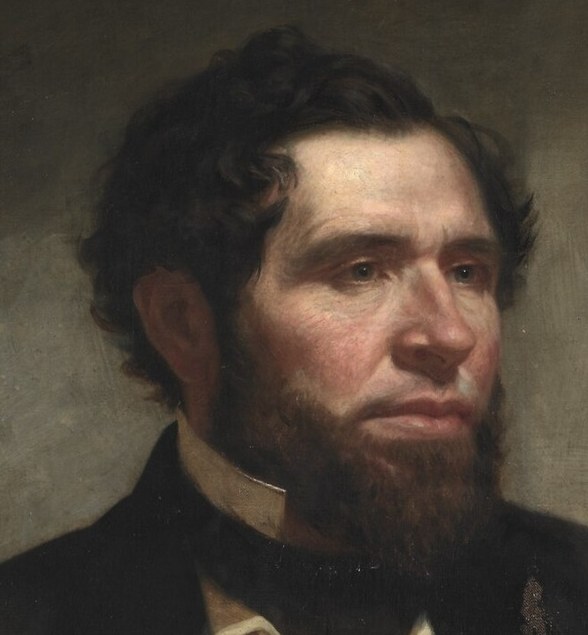
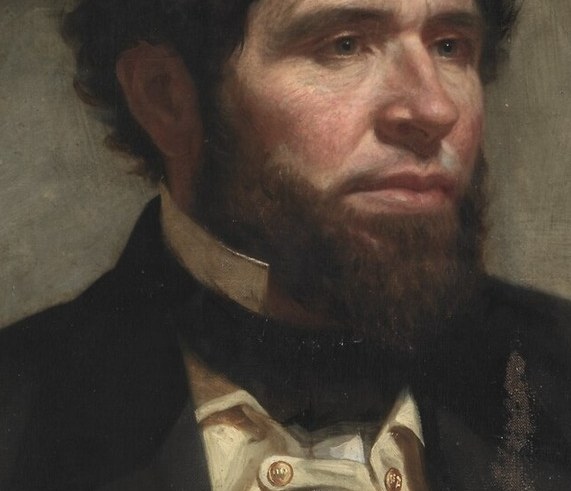
James Harvey Young's 1889 portrait, "Frederic W. Lincoln, Jr.", at The Cleveland Museum of Art, holds a subtle yet powerful message. Young, known for documenting social history, captured not just a likeness, but a purpose.
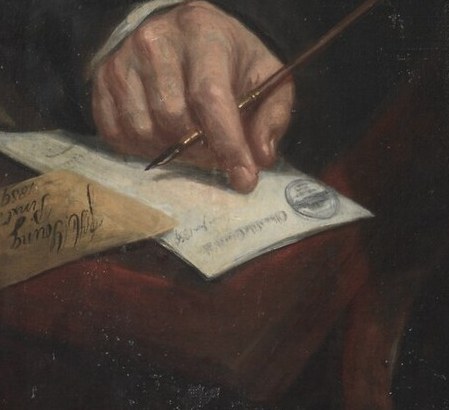
Look closely at the document Frederic W. Lincoln, Jr. is poised to sign. The barely visible inscription, "A Voice for Honest Government," reveals the sitter's dedication to public service and ethical leadership, transforming the portrait from a simple likeness into a statement of his civic identity.
This painting captures the late 19th-century tradition of using portraiture to honor public figures and underscore their societal roles. It's a testament to how even the smallest details can carry profound meaning, reflecting the values and expectations of the era.
What other hidden messages might paintings hold?
Details
Transcript
This man has something important to say. He is captured mid-thought, poised to write. The painter was known for documenting social history. Look closely at the document he's working on. The tiny inscription reads: 'A Voice for Honest Government.' It reveals his true civic purpose in this portrait.