Tea water pump by William P. Chappel
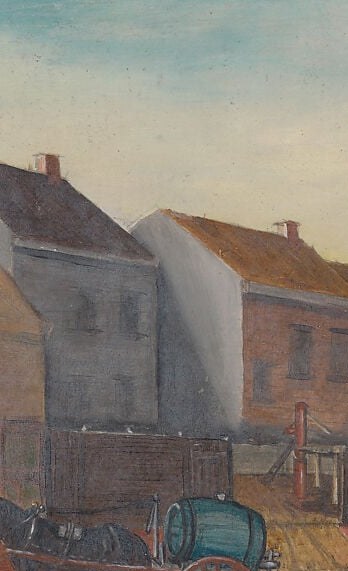
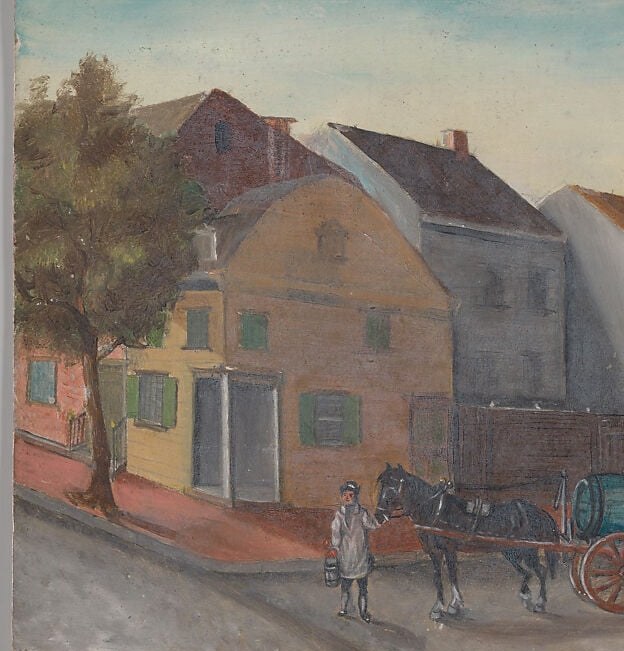
William P. Chappel's "Tea Water Pump" (1870s) is oil paint on slate paper. This unusual ground gives the painting an almost photographic depth, especially in the shadows, a rare trick for its time.
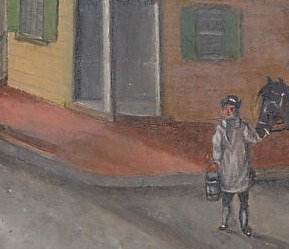
Look closely at the street surface shadows. Notice how the darks absorb light so completely, without the typical paint bloom. This effect is achieved by the unique properties of the slate paper Chappel chose as his canvas.
Chappel worked in the 1870s, an era when photography was emerging. His choice of medium allowed him to mimic photography's tonal range and capture a spontaneous street scene with remarkable clarity.
What other everyday objects might have seemed mundane then but now feel like archaeological finds?
Details


Transcript
This is oil paint on slate paper. The ground makes shadows deeply absorb light. See how darks stay dark, without blooming? It gives the paint an early photograph's depth. Look at the horse's coat. No bloom, just solid dark. Chappel painted in the 1870s.