Docks on Sunday by Joseph De Martini
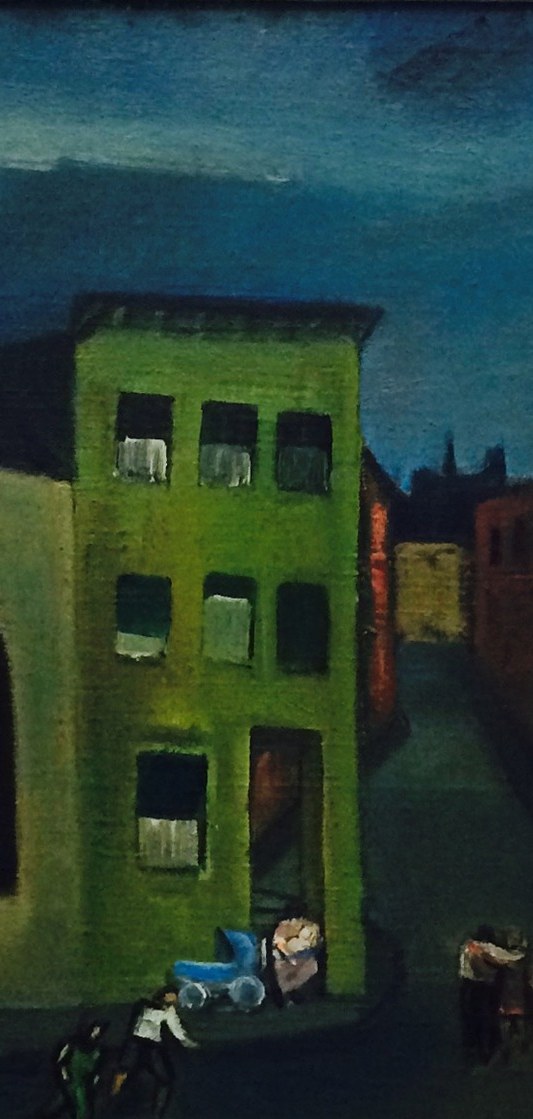
“Docks on Sunday” by Joseph De Martini, painted in 1941 and now at The Metropolitan Museum of Art, is a scene built entirely from memory. The artist did not paint a real dock. He painted the feeling of one, a quiet, colorful pause in a working waterfront, invented in his studio.
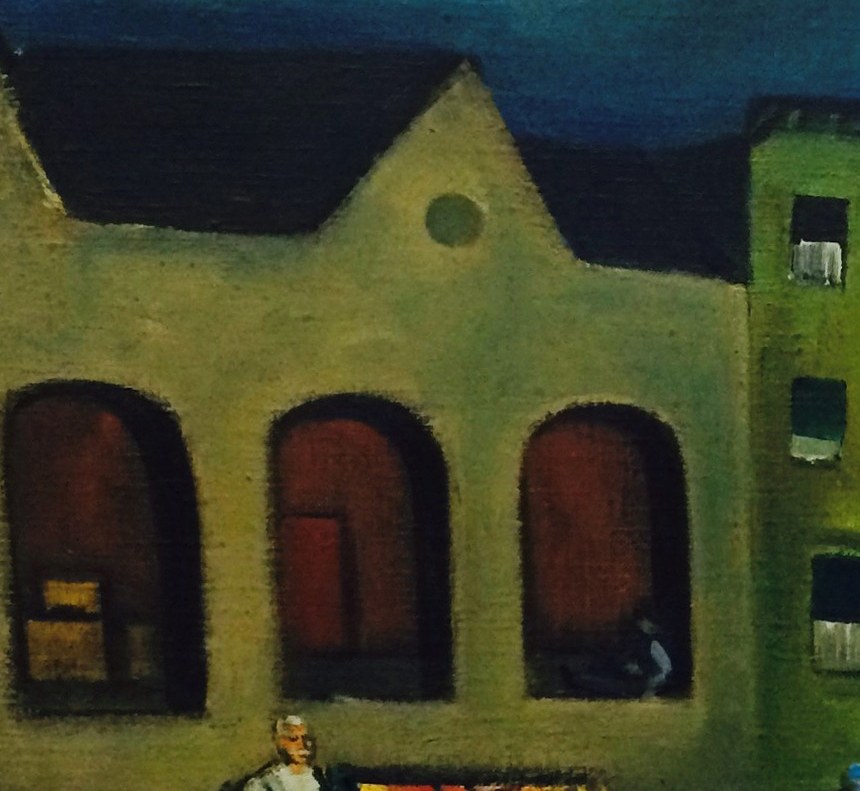
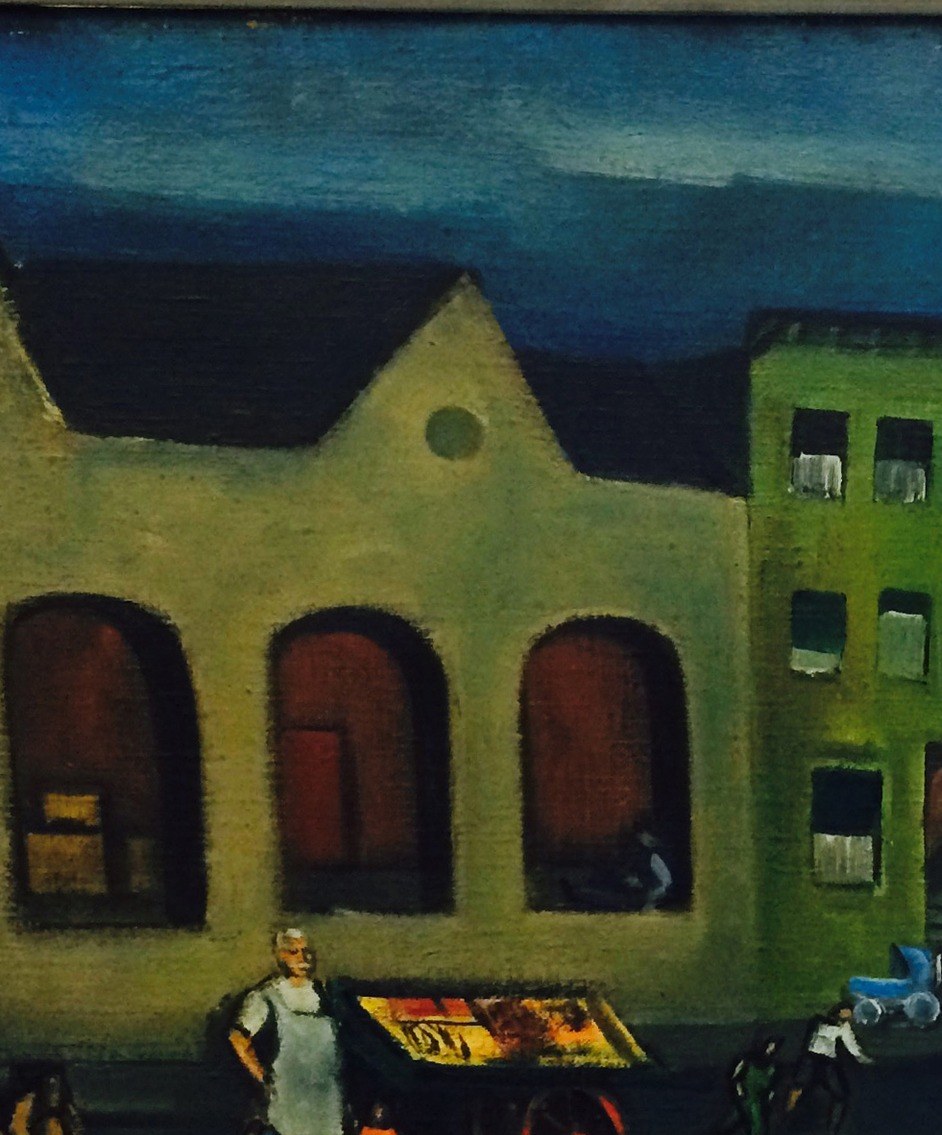
De Martini gives us a tricolor row of buildings in green, terracotta, and cream against a heavy gray sky. The foreground is an almost abstract band of dark, empty stone; the only real activity is a cluster of figures resting at center and a vendor with a produce cart on the left. The title tells us why: it is Sunday, and labor has paused.
Joseph De Martini was born in Mobile, Alabama in 1896 and spent his career in New York, painting the urban landscape with Expressionist intensity. His thick, rough application of paint gives the architecture a tactile, nearly masonry-like quality. Late in his life, a studio fire consumed hundreds of his works, making the surviving pieces held by institutions like the Met a rare window into his intimate, remembered city.
Details


Transcript
These buildings do not exist. This street is a memory. Look at the green facade. The paint is laid on thick, like plaster. No one is working. It is Sunday at the docks. A fire destroyed hundreds of his canvases. This one survived.