Portrait of an Almoner of Antwerp by Antwerp 16th Century
This striking "Portrait of an Almoner of Antwerp," painted in 1542 by an unknown Antwerp artist, captures a civic official with quiet dignity. You can see it at the Rijksmuseum.
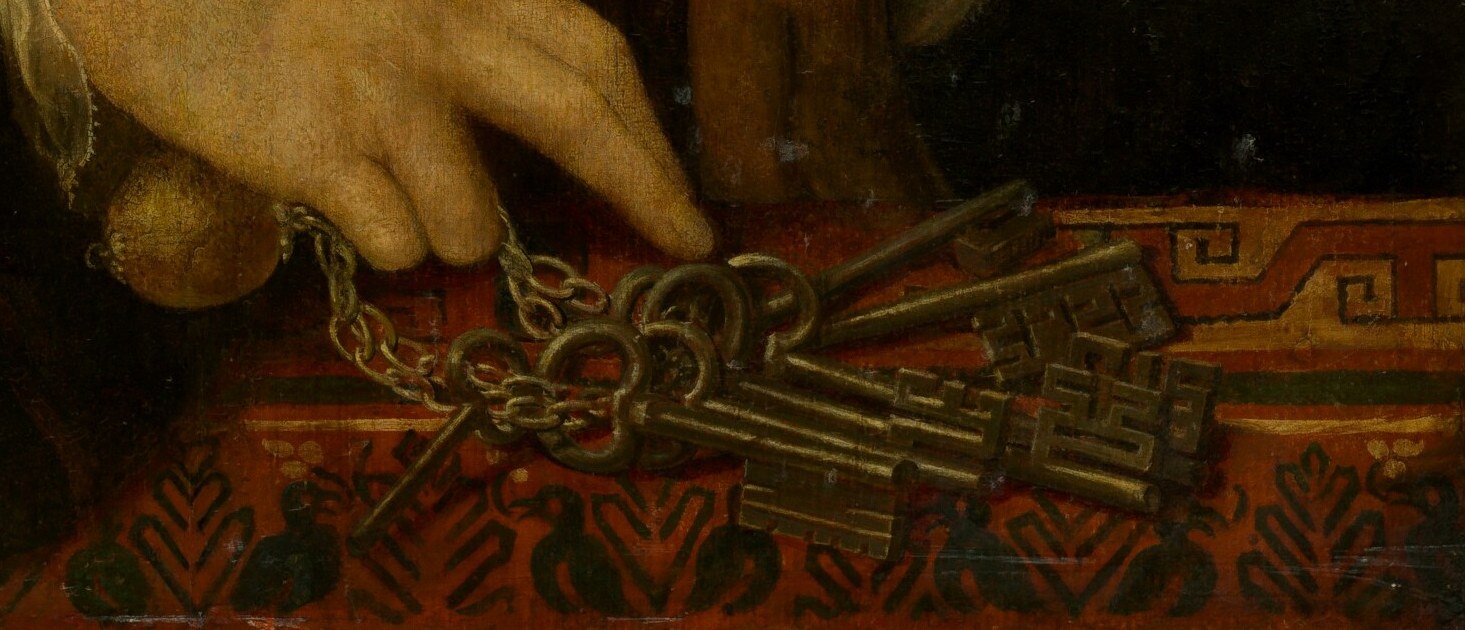
An almoner was an administrator of public charity, a crucial role in 16th-century Antwerp, a bustling economic hub. The inscription at the top tells us he was 48 when this portrait was made. His hands hold a bunch of keys and a ring on a chain, potent symbols of his responsibility and the trust placed in him to manage resources for the poor.
This painting reflects the Northern Renaissance tradition of immortalizing important civic figures, highlighting the era's focus on individual identity and social functions. It's a window into the past, showing us the faces of those who built and sustained their communities.
What details do you notice first in his expression or the objects he holds?
Details


Transcript
This man was an almoner, an administrator of charity. An inscription dates this portrait to 1542, when he was 48. His quiet eyes watch over the city's resources for the poor. In his hands, he holds the keys to those charitable stores. A ring on a chain, further symbols of his authority and trust. His official robe and a rich fabric reinforce his dignified role.