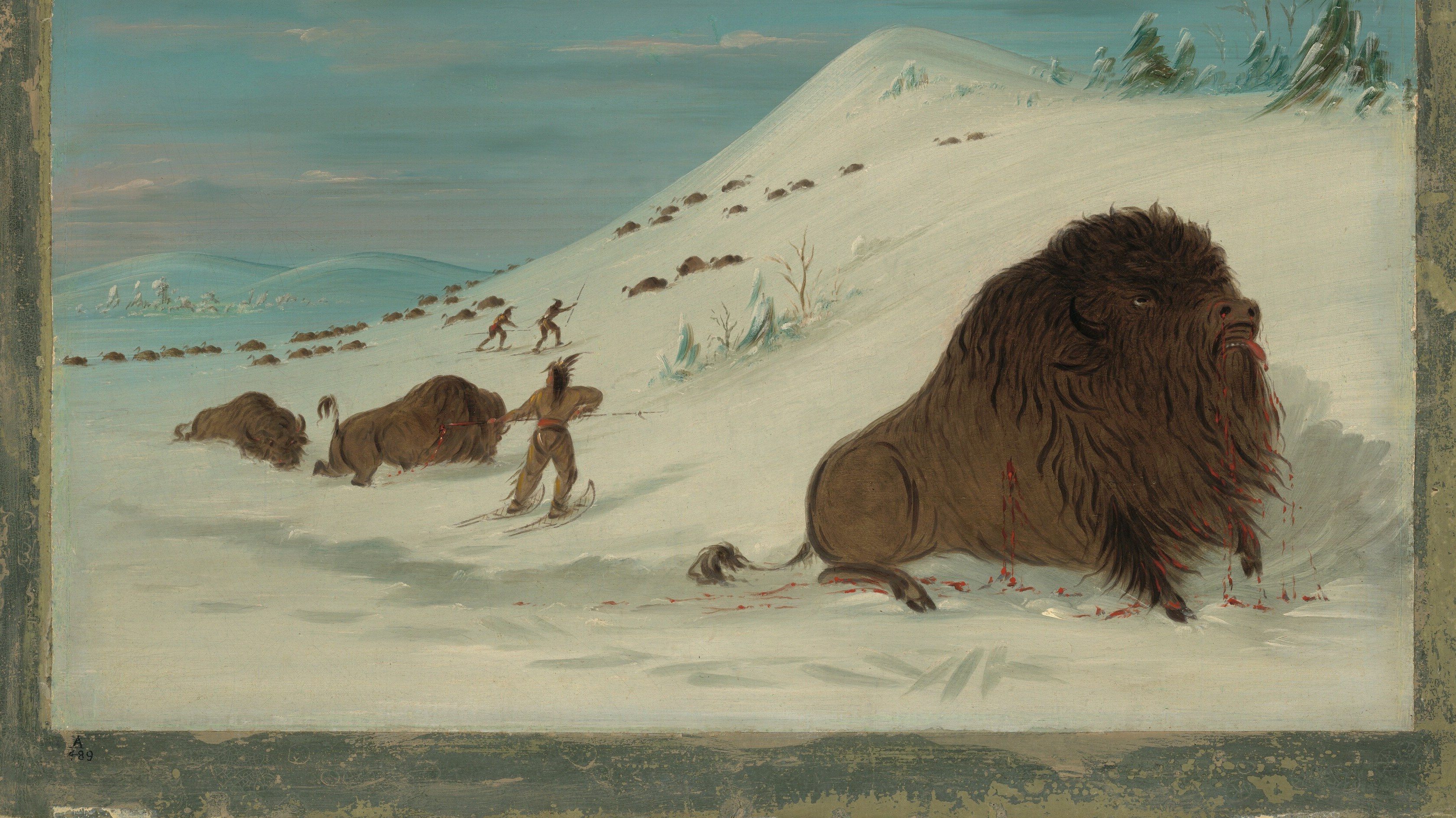
Buffalo Lancing in the Snow Drifts - Sioux by Catlin, George
George Catlin's "Buffalo Lancing in the Snow Drifts - Sioux," painted in 1861, is more than just a depiction of a hunt; it's a visual testimony to a disappearing way of life. Catlin, an American lawyer-turned-artist, spent years in the American West in the 1830s, documenting the Plains Indians.
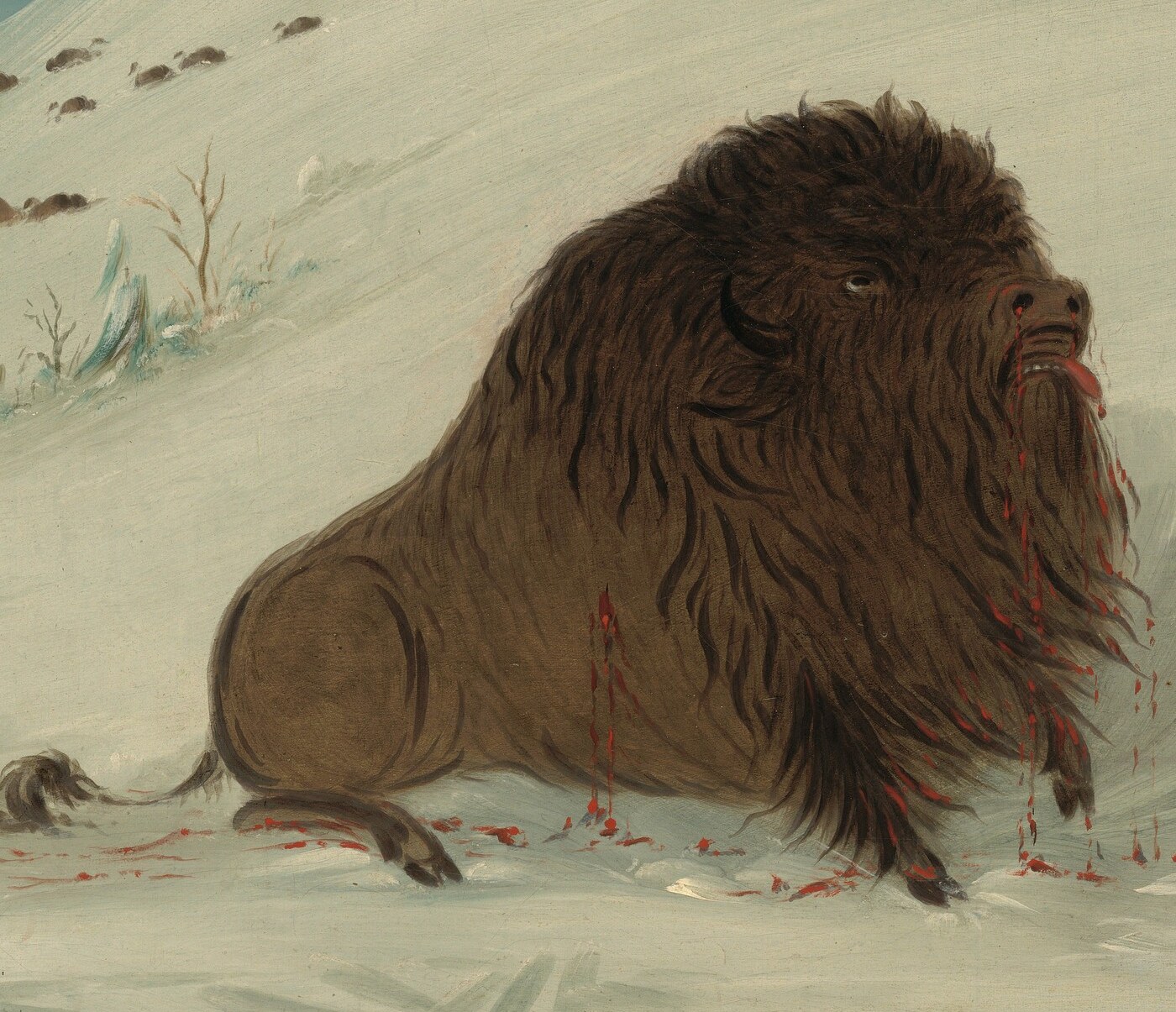
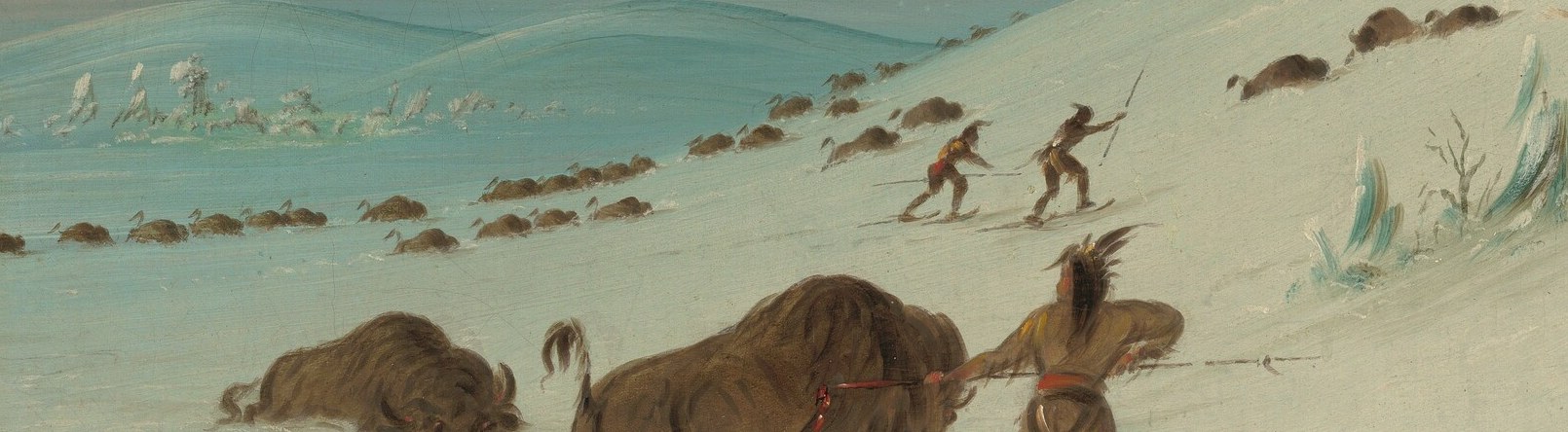
Here, you see Sioux hunters navigating deep snow to pursue buffalo. Look closely at the hunter on skis and the detail of the dying buffalo; these elements highlight both the ingenuity of the hunters and the harsh conditions they faced.
Though Catlin's fieldwork was primarily in the 1830s, he continued to create works like this decades later, demonstrating a sustained commitment to preserving visual records of Indigenous cultures at a time of rapid change and westward expansion. His paintings serve as important historical documents of a world undergoing profound transformation.
What details in this scene capture your attention the most?
Details
Transcript
In the 1830s, this artist traveled the American West five times. He documented Plains Indian life, like this Sioux buffalo hunt. He saw a way of life that was rapidly changing. This painting was made decades later, in the 1860s. It's a visual record of a culture he worked to preserve.