Sentimental Conversation by Quirijn van Brekelenkam
This is Quirijn van Brekelenkam's "Sentimental Conversation," painted in Leiden around 1660. At first glance it looks like a quiet talk between two people, but Dutch genre painting was never just a snapshot. Every object is a word in a visual language the original audience knew how to read.
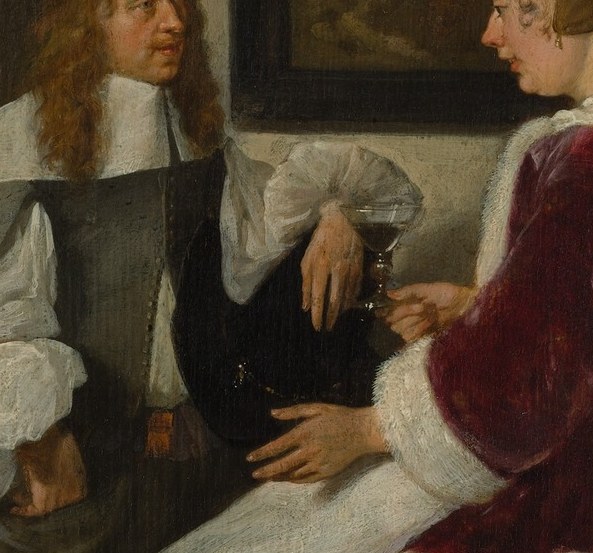
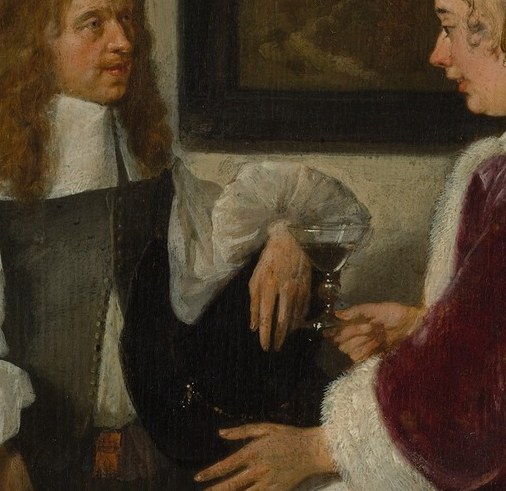
Look first at the folded paper between them. A letter in a darkened room is almost never casual. It is a declaration, a summons, or a farewell. Then look at her dress. That deep vermilion doublet is the most expensive pigment on the palette and the emotional anchor of the whole canvas. Red meant passion, risk, and the urgency of the body. His extended hand, caught mid-gesture, is the hinge. He is not simply speaking. He is asking.
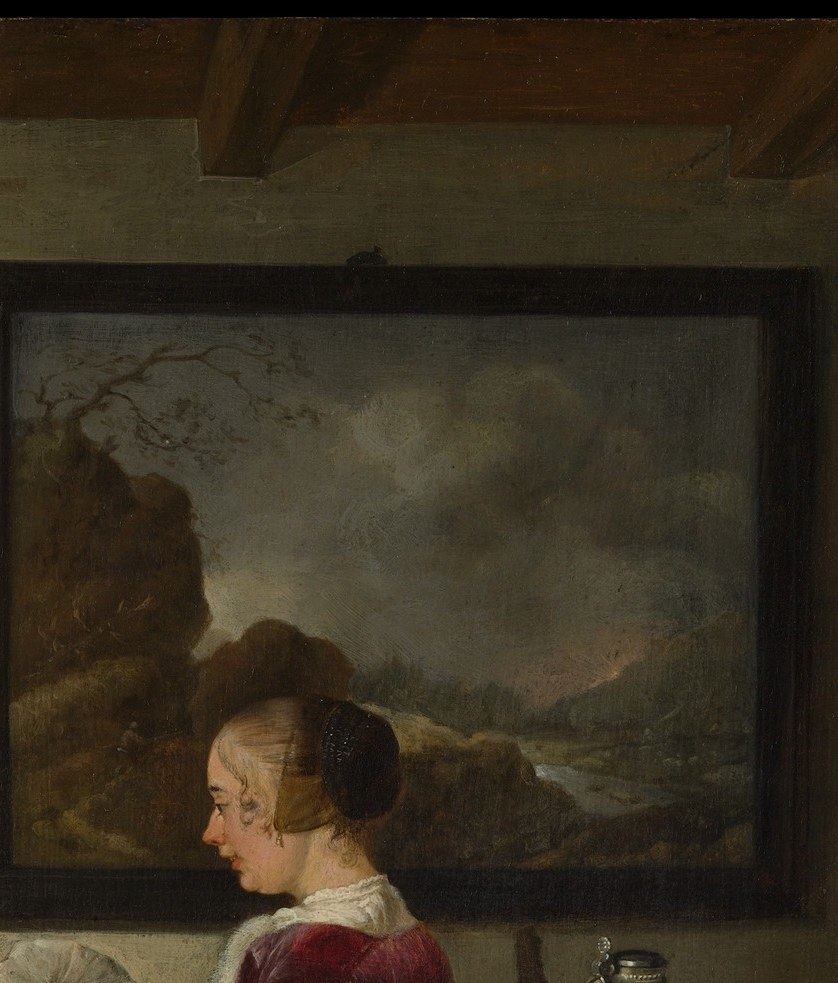
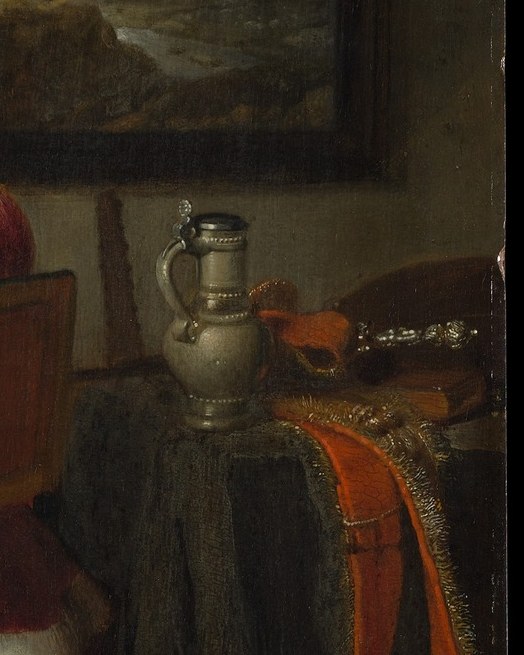
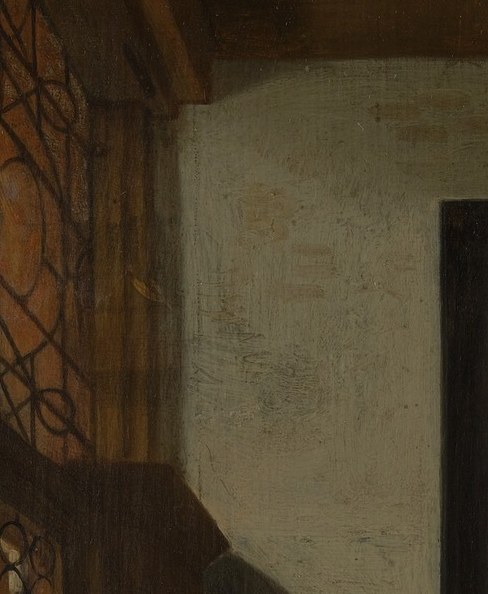
Van Brekelenkam was a Leiden fijnschilder, trained in the meticulous, light-obsessed tradition of Gerard Dou. The chiaroscuro here does more than model faces. It decides what the viewer is permitted to see. A painting hangs on the back wall, a miniature world inside the world, and far in the shadows on the right an indistinct shape waits. Scholars disagree on whether it is a dog or a servant, but either way it is a witness. A private conversation in a Dutch interior is never fully private. Someone is always there.
Once you notice the hidden figure, the whole scene shifts. This is not a duet. It is a triangle. What do you think passed between them in the half-dark?
Details
Transcript
A letter changes hands in the dark. A folded paper in Dutch painting rarely means good news. Her dress burns red. In 1660, red was the color of passion and urgency. He pleads. His hand is the hinge point of the whole story. A painting hangs behind them. Dutch masters used pictures-within-pictures as a second story. And in the farthest shadow: someone, or something, is listening. A private moment, but never a private one. The code adds up to a secret witnessed.