Saint Sebastian Succored by the Holy Women by Corot, Jean-Baptiste-Camille
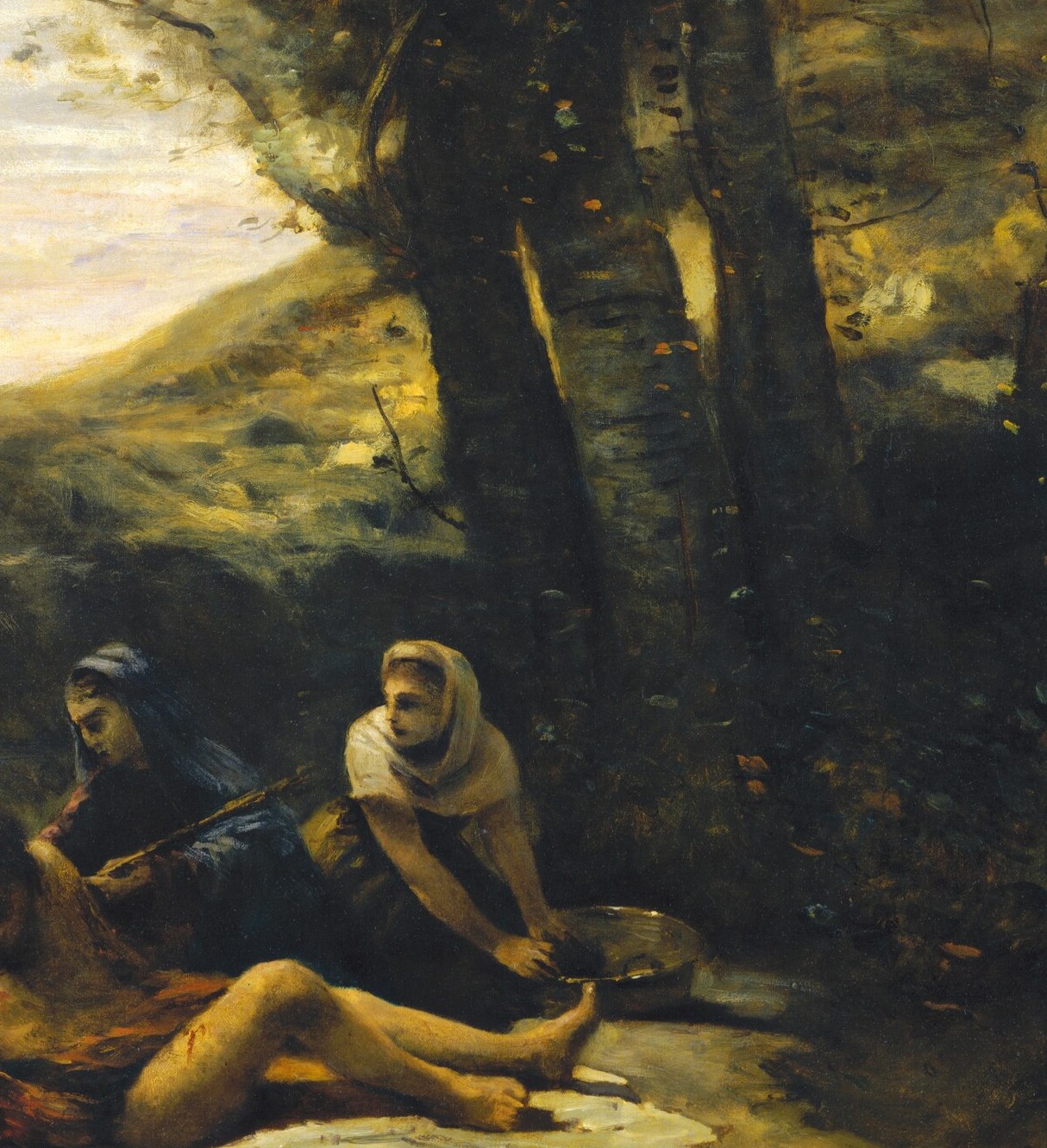
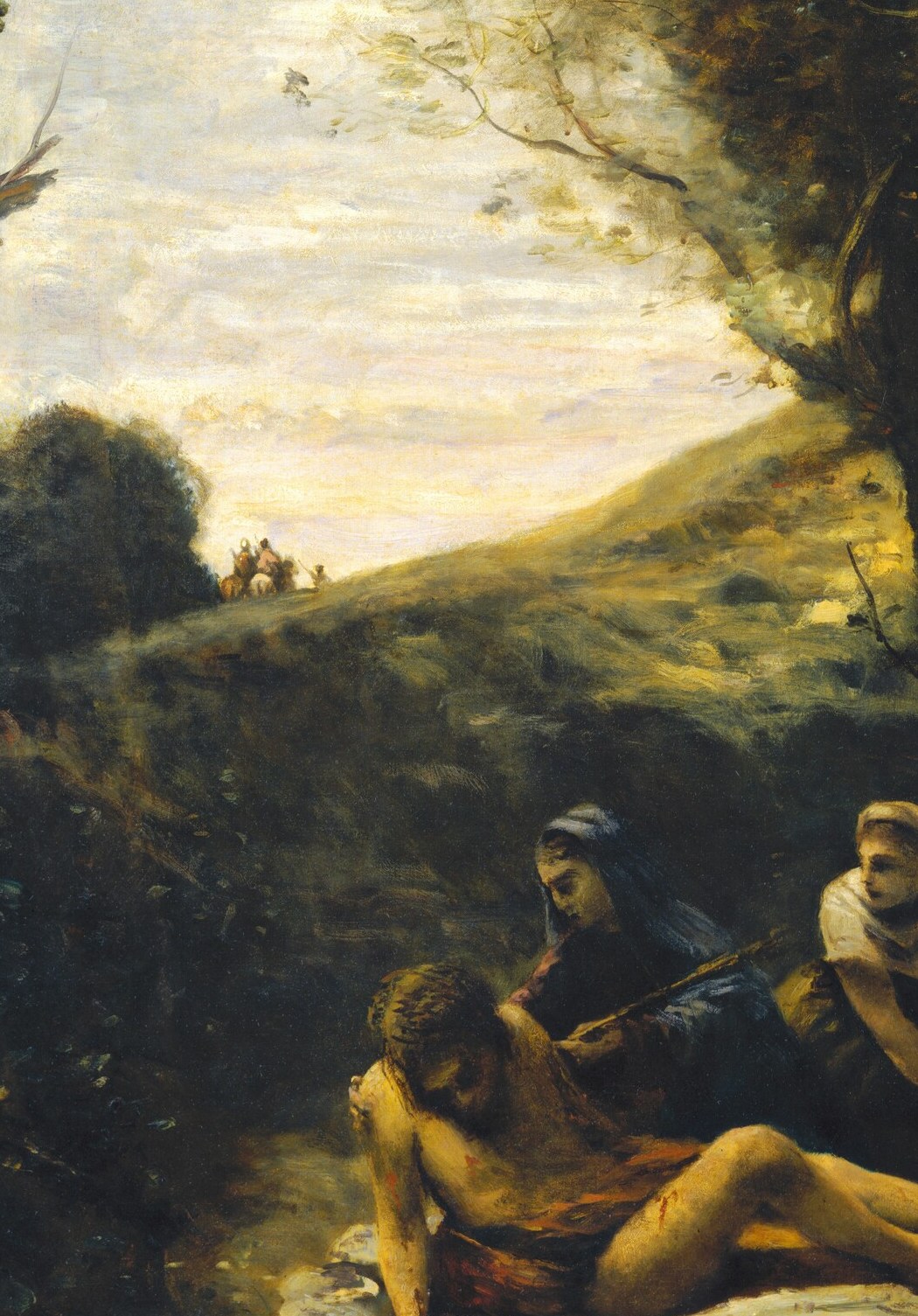
This is Saint Sebastian Succored by the Holy Women, painted by Jean-Baptiste-Camille Corot in 1874, the year before his death. It is a late work, held in a private collection, and it reimagines one of art history's most frequently painted martyrdoms. Corot does the quietest thing possible: he removes the arrows entirely.
The first thing to notice is Sebastian's face. His eyes are closed, his head tilted back, and his expression carries no scream. The woman kneeling over him bows her head with an attitude of simple, unhurried care. Above them, nearly lost in the warm haze of the canopy, a small angel hovers, confirming that this patch of forest has become a sanctuary.
Corot was seventy-eight when he painted this. For decades he had been France's great landscape poet, bridging the Neoclassical tradition and the coming Impressionists. Here he borrows the old religious subject of Sebastian, traditionally shown bound and bristling with arrows, and softens it into a scene of human tenderness. It is not a painting about dying; it is a painting about being tended to.
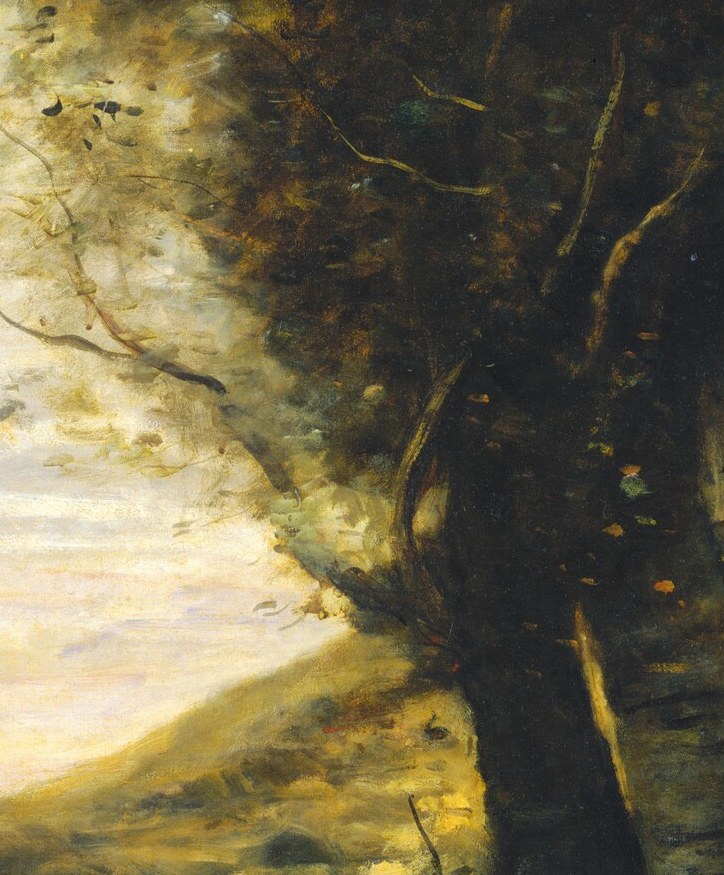
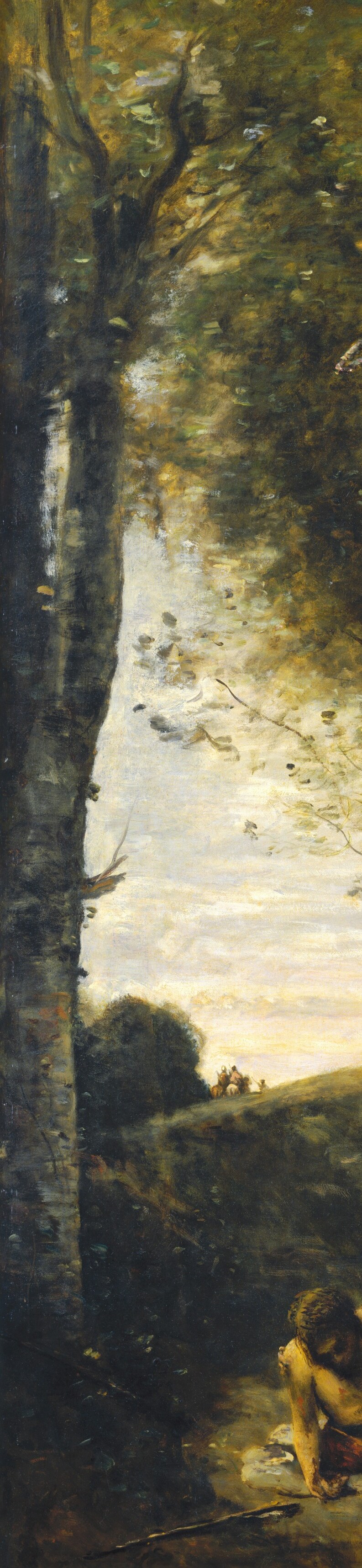
What stays with you is the light. The golden glow seeping through the upper right reads as both ordinary sunset and something more, a warmth that feels earned by the compassion happening below. The dark tree on the left stands like a guardian, and the whole scene holds its breath.
Details

Transcript
A man lies wounded on the forest floor. But this is not a hunt gone wrong. He is Saint Sebastian, normally shown pierced by arrows. The artist painted this near the very end of his life. Corot erases the violence. There are no arrows here. Instead, a woman kneels in quiet ministration. His face reads not as anguish, but as resignation shading into peace. Corot turns a story of suffering into one of solace.