By the Seashore by Pierre-Auguste Renoir
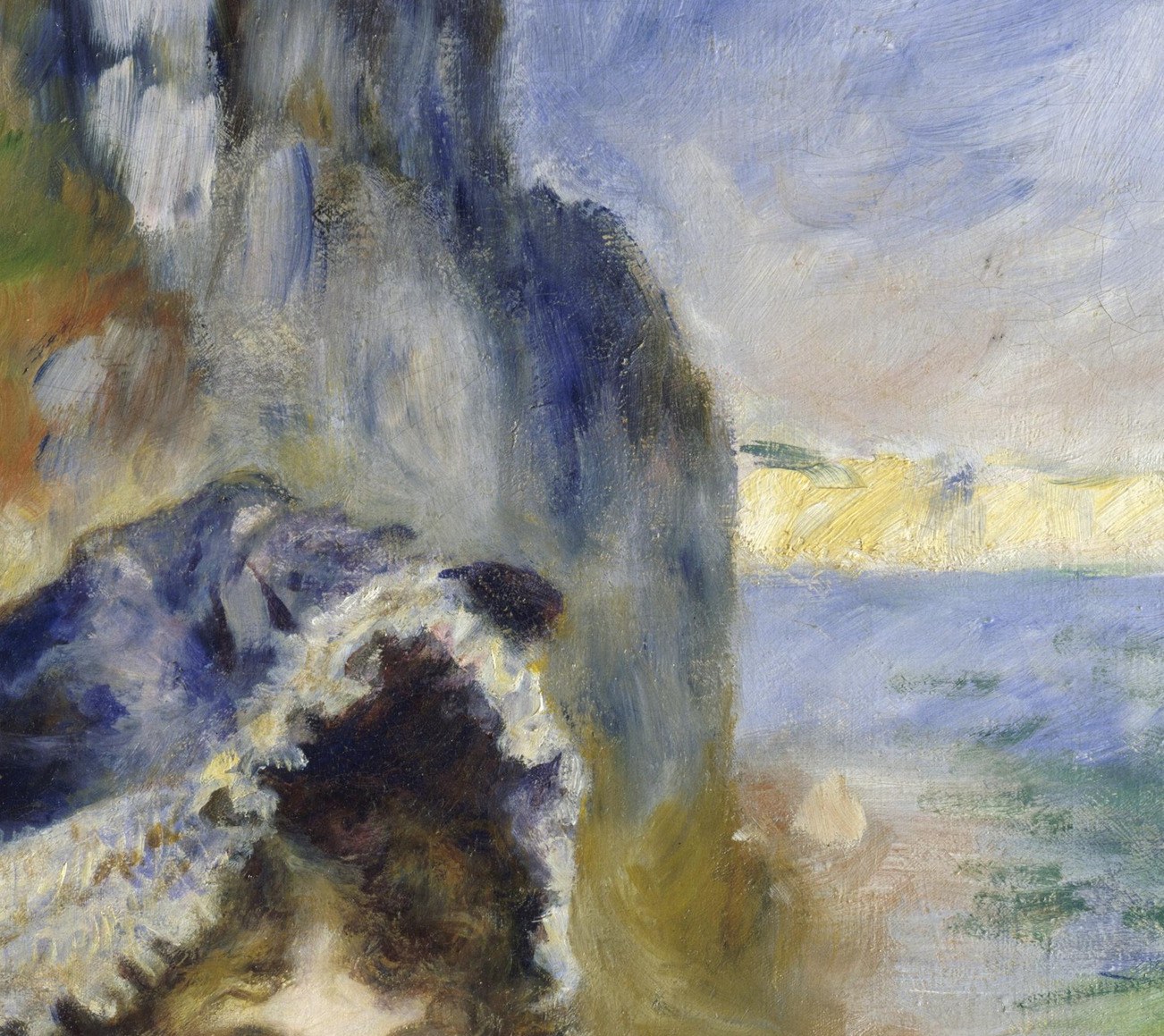
Pierre-Auguste Renoir's "By the Seashore" (1883) hangs in the Metropolitan Museum of Art and reads less as a spontaneous beach scene than as a careful construction of social class. The woman is not a specific named sitter from the historical record; she functions as a type, a model arranged to embody an ideal of late 19th-century French femininity.
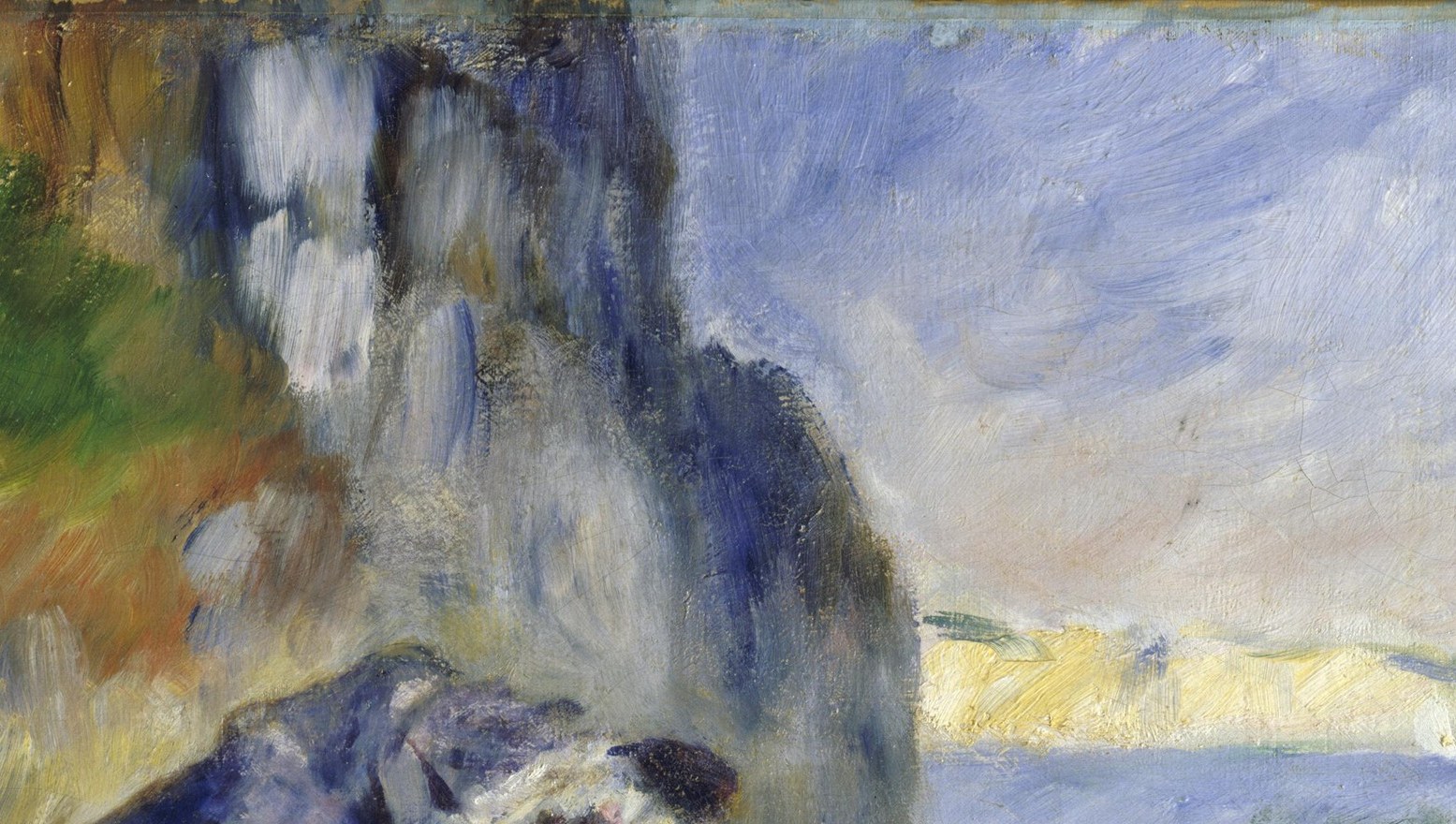
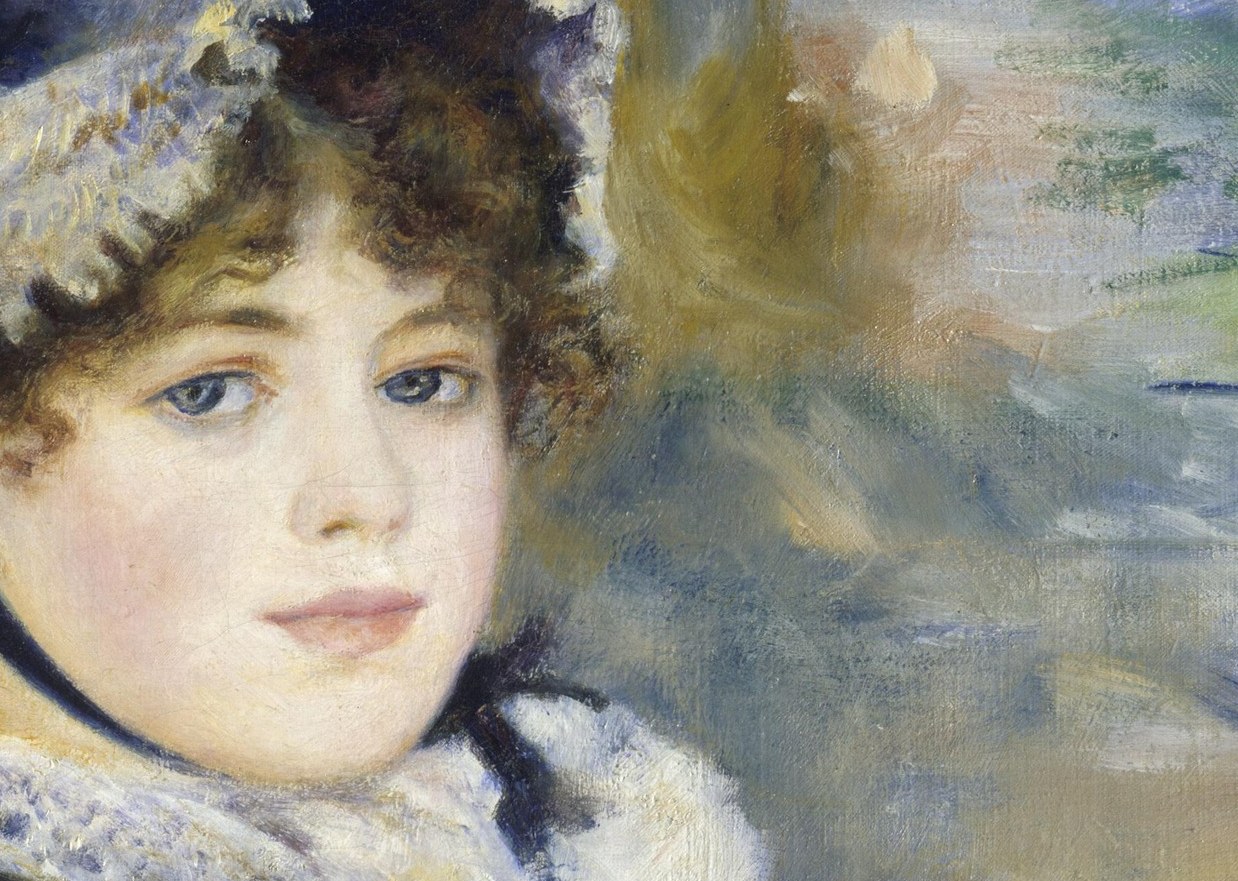
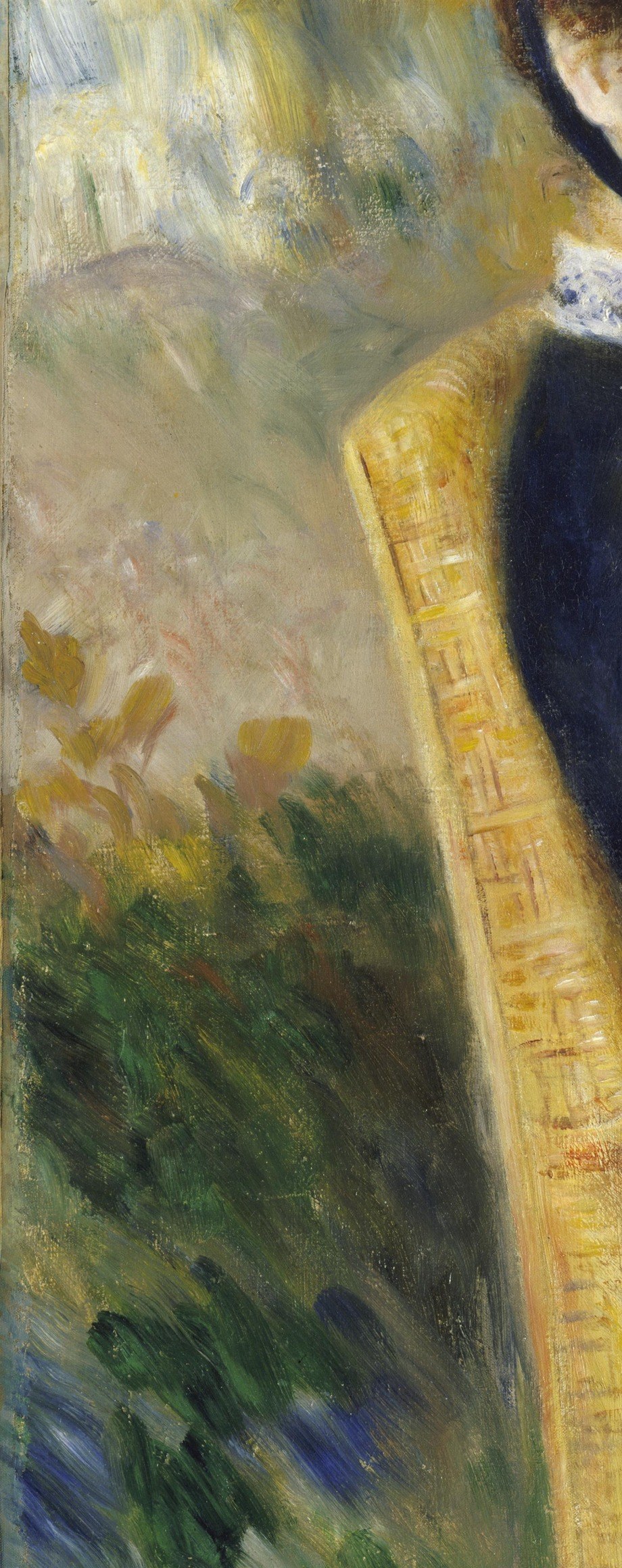
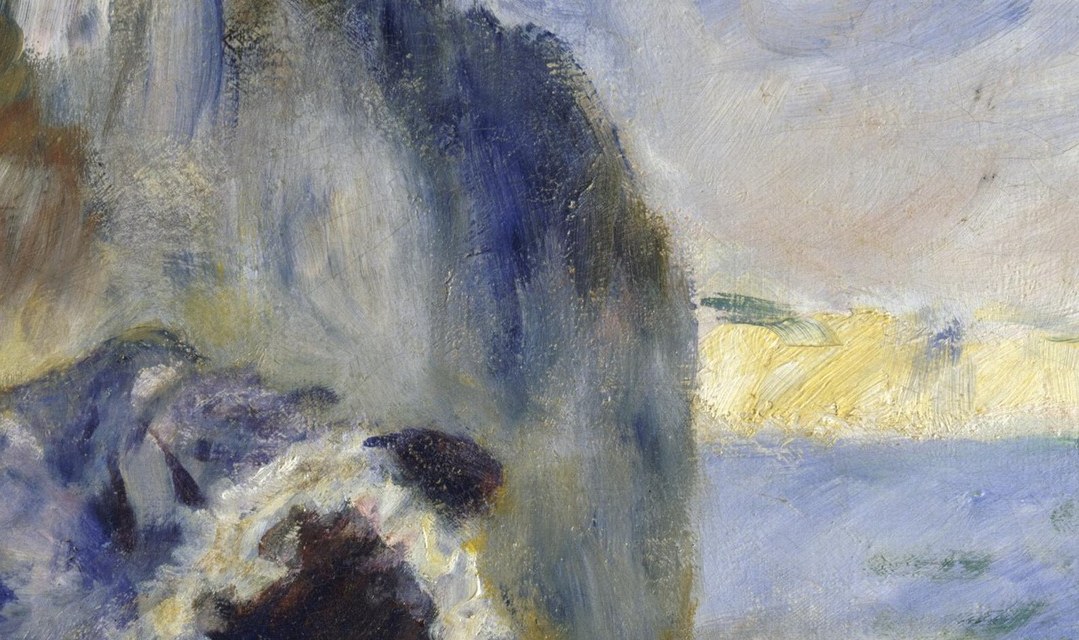
Look at the collision of worlds she occupies. The wicker chair and dark formal dress belong indoors, yet Renoir places her against the Normandy cliffs and the choppy sea. Her skin is pale, shielded by that elaborate hat. No sand clings to her hem. She is at the seaside but refuses to be of it, a deliberate statement about who could afford to remain immaculate while others labored.
Renoir painted this in 1883, a moment when he was beginning to pull back from the radical looseness of early Impressionism toward a more structured, classical handling of the figure. The brushwork on the dress changes direction to build volume; the face is smoother, more polished. He was seeking a balance between the fleeting optical effects of the plein-air movement and the solid, enduring presence of the old masters. The Met acquired the painting directly from the artist's dealer, Paul Durand-Ruel, anchoring it in the primary market for Impressionism.
The sitter's averted gaze is the final lock. By denying the viewer eye contact, Renoir withholds any narrative of flirtation or invitation. She is not there for us; she exists for herself, sealed inside the performance of virtue. It makes you wonder what the cliffs behind her saw that the painting refuses to show.
Details
Transcript
She sits alone by the sea, dressed for a drawing room. This hat is not for sun. A fashionable woman of the 1880s never tanned. Her lace collar is immaculate. Leisure, not labor, wears white. The wicker chair is a parlor object carried outdoors. Civility comes with her. She looks away. A respectable woman did not invite a stranger's gaze. Renoir dresses her in the deep blue of the Virgin Mary. Together these codes form a portrait of untouchable bourgeois virtue.