Palace Gardens with Poor Lazarus in the foreground by Hans Vredeman de Vries
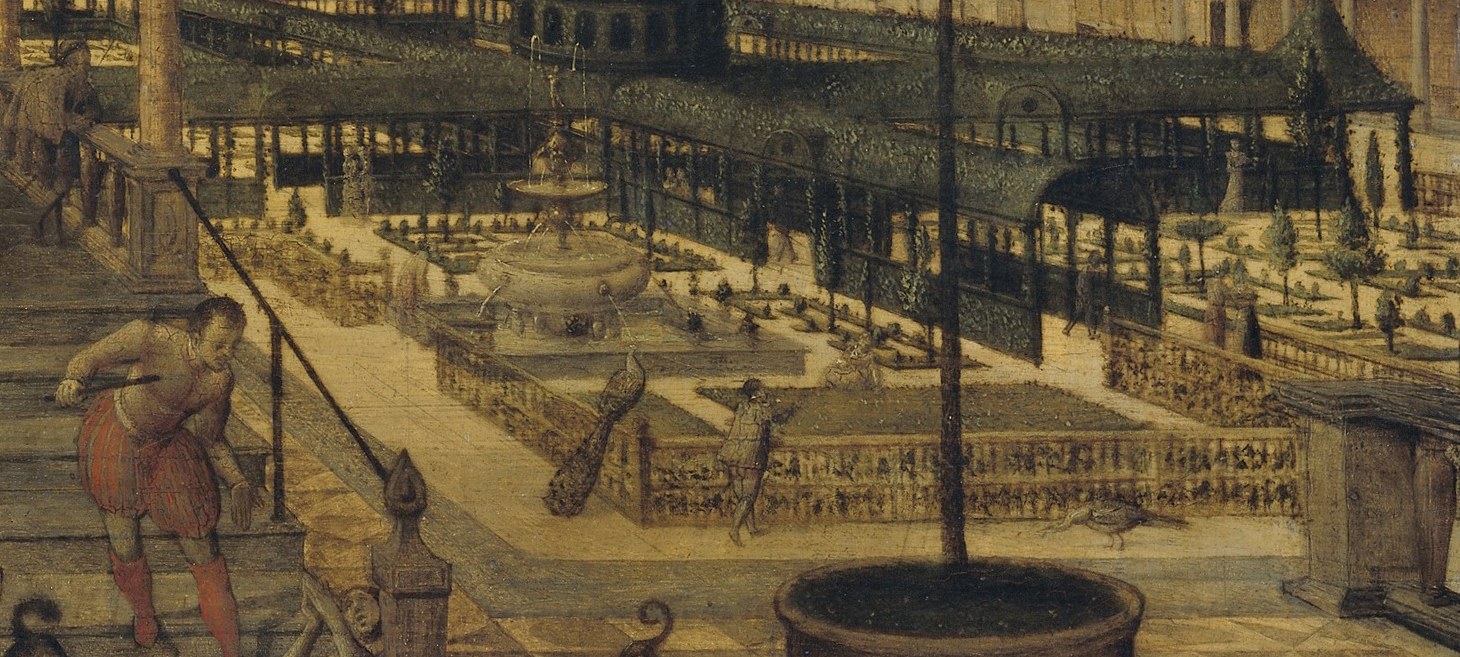
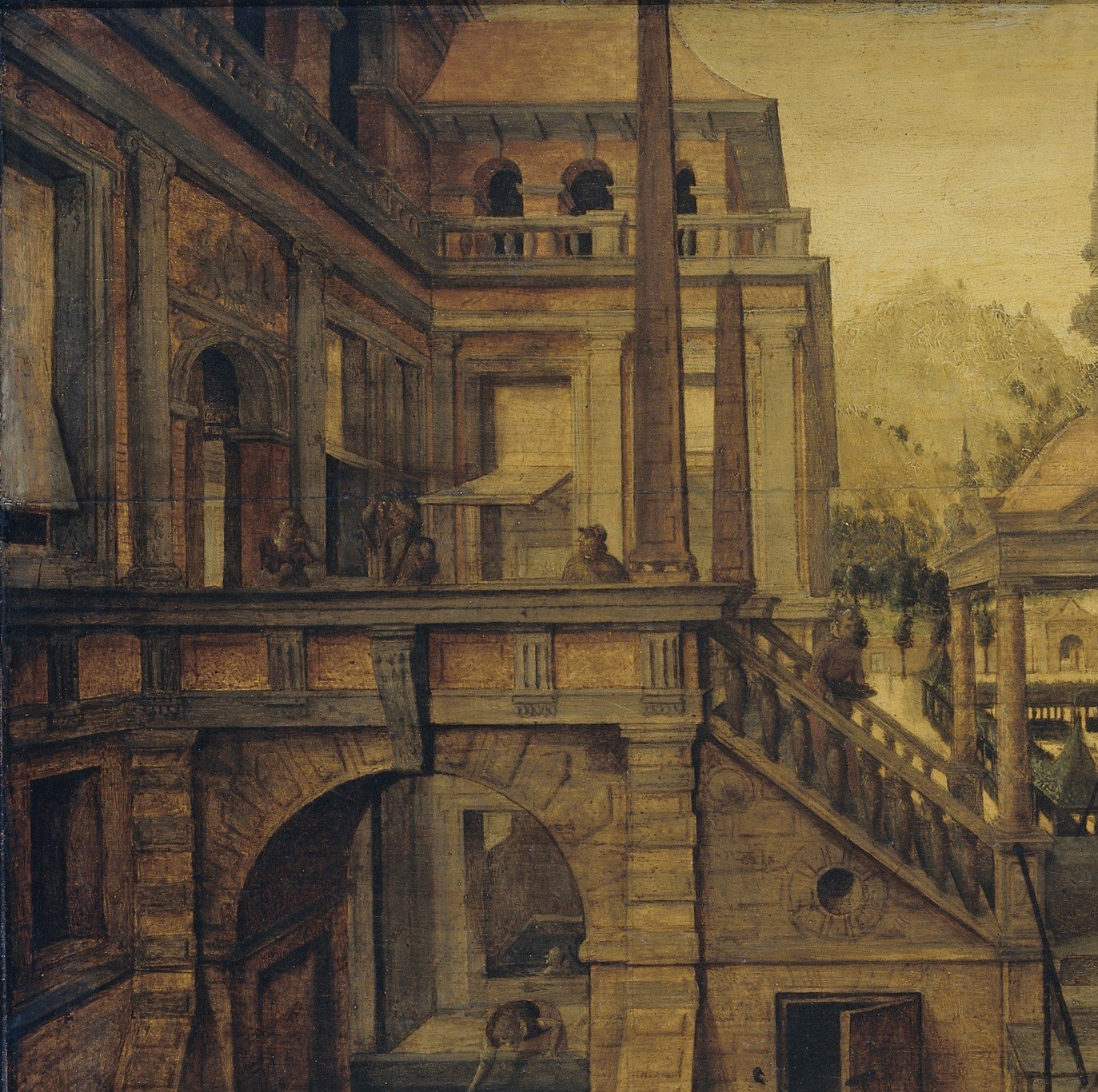
Step into the grand "Palace Gardens with Poor Lazarus in the foreground" by Hans Vredeman de Vries, painted in 1599. While Vredeman de Vries was renowned for his intricate architectural designs and mastery of perspective, this painting places a poignant human narrative right at its center.
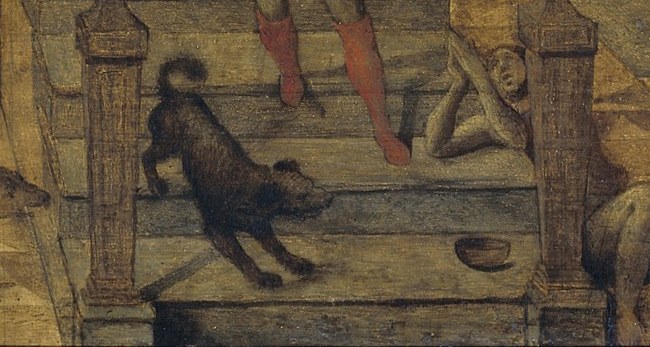
Observe the lavish Renaissance palace and its meticulously manicured gardens. Then, let your gaze fall upon the foreground, where the emaciated figure of Poor Lazarus, from the biblical parable, is depicted begging. Notice the dog near him, feasting on scraps, a stark visual commentary on the disparity between wealth and poverty.
Vredeman de Vries, a Dutch Renaissance architect and painter, was a master of spatial composition, often publishing manuals on garden design and perspective. Here, he uses his architectural prowess to heighten the contrast, making the palace's grandeur emphasize Lazarus's destitution. The painting is held in the collection of the Rijksmuseum.
What does this juxtaposition of opulence and suffering say about the values of the era?
Details
Transcript
This grand palace was painted in 1599. It shows a wealthy Renaissance garden, with many details. But look closely at the steps in front. The figure is Poor Lazarus, from a biblical parable. He begs for scraps, but even the dogs eat more. This painter was famous for architectural perspective, not people. Yet he puts Lazarus, hungry, right in front of the viewer.