Cottage by the River with Washerwomen by Camille Flers (French, 1802–1868)
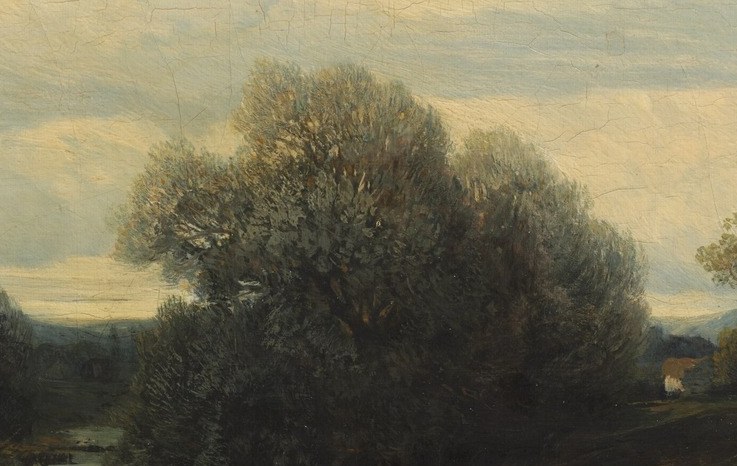
Camille Flers, a French landscape painter, created *Cottage by the River with Washerwomen* in 1835. This painting, held in the collection of The Cleveland Museum of Art, captures a tranquil moment of daily life in rural 19th-century France. Flers was part of the Realist movement, which aimed to depict ordinary subjects with accuracy and emotional resonance.
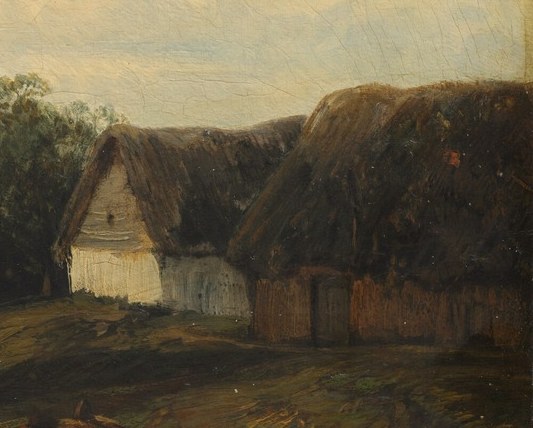
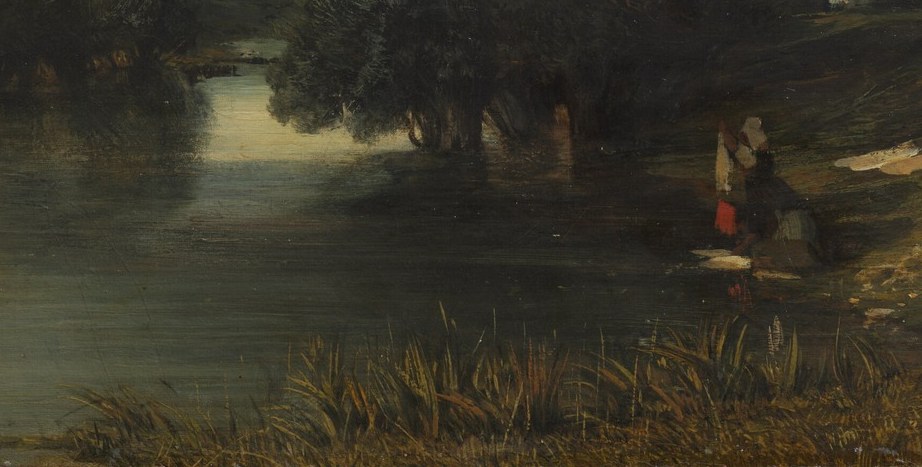
Look closely at the washerwomen by the river. Their presence grounds the scene in the reality of everyday labor, a common sight in agrarian communities of the time. The artist's attention to detail, from the thatched cottage to the donkey with a basket, provides a window into this bygone era.
Flers studied under Joseph François Pâris and taught the Cabat brothers, establishing his place in French academic landscape painting. His work, including his *Views of Normandy*, is known for its detailed and evocative rural scenes. This painting exemplifies his focus on ordinary life rather than idealized scenery.
Flers died in 1868, leaving behind a body of work that continues to illuminate the human stories within the landscape.
Details
Transcript
This peaceful scene shows daily life in rural 19th-century France. By the river, washerwomen perform their laborious daily chore. One woman pauses, perhaps taking a moment's rest from her work. The artist, Camille Flers, depicted the quiet dignity of ordinary labor. He was a leading landscape painter of the Realist movement. Flers focused on accurate, emotive depictions of the working countryside.