A Sioux Village by Catlin, George
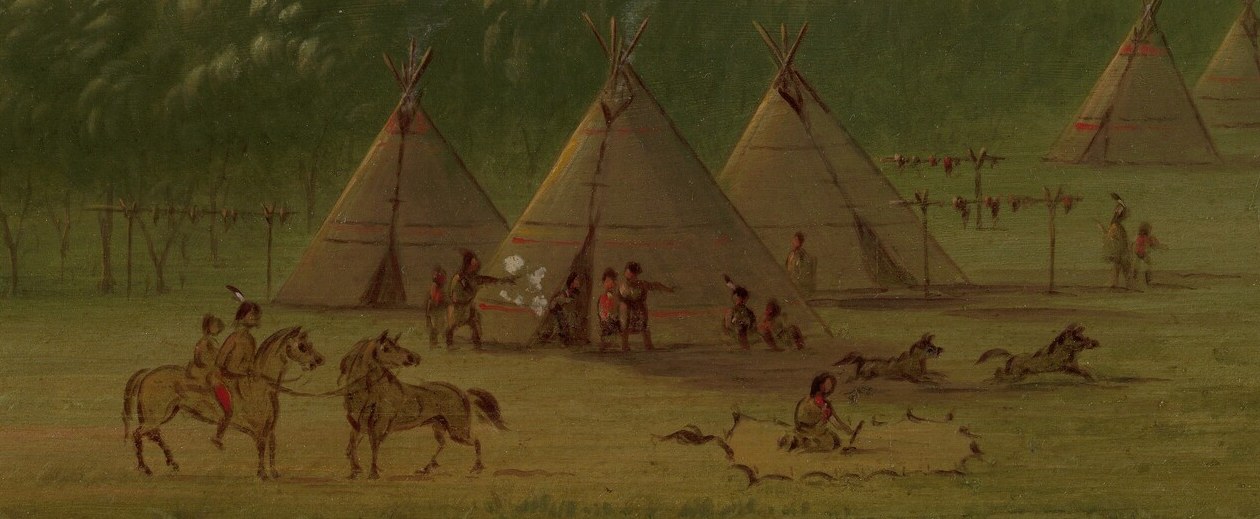
George Catlin, a former lawyer turned artist, dedicated his career to documenting Native American life in the American West. His painting, *A Sioux Village*, created around 1861, offers a detailed glimpse into a Plains Indian community, now housed in a prominent museum collection.
Catlin's work is renowned for its ethnographic detail, capturing the daily activities, dwellings, and customs of Indigenous peoples. From the iconic teepees and central figures to the horseback riders and domestic animals, every element tells a story of life on the frontier. The vast landscape with its rolling hills and dramatic sky emphasizes the expansive territories these communities inhabited.
During the 1830s, Catlin embarked on multiple journeys west, living among various Plains Indian nations to create an extensive visual archive. He often incorporated subtle personal touches into his work, such as the hidden signature and catalog number found in the lower left corner of this painting. These details serve as a quiet testament to his meticulous documentation and the authenticity he sought to convey.
His paintings provided a rare window into frontier communities for audiences in the eastern United States, shaping perceptions and preserving visual records of cultures undergoing rapid change. What other hidden details do you think an artist might include?
Details
Transcript
This painter recorded Native American life in the 1830s. He traveled extensively, documenting scenes like this Sioux village. Look closely at the figures in the center of the camp. Horses were vital for mobility on the Great Plains. And even a domestic dog can be seen resting here. But for a truly hidden detail, look in the lower left corner. The artist signed his initials and a catalog number here.