Christ and the Woman of Samaria by Benedetto Luti
Benedetto Luti's "Christ and the Woman of Samaria," painted in 1717 on copper, depicts a pivotal biblical encounter where everyday objects carry profound symbolic meaning. This beautiful work is part of The Metropolitan Museum of Art's collection.
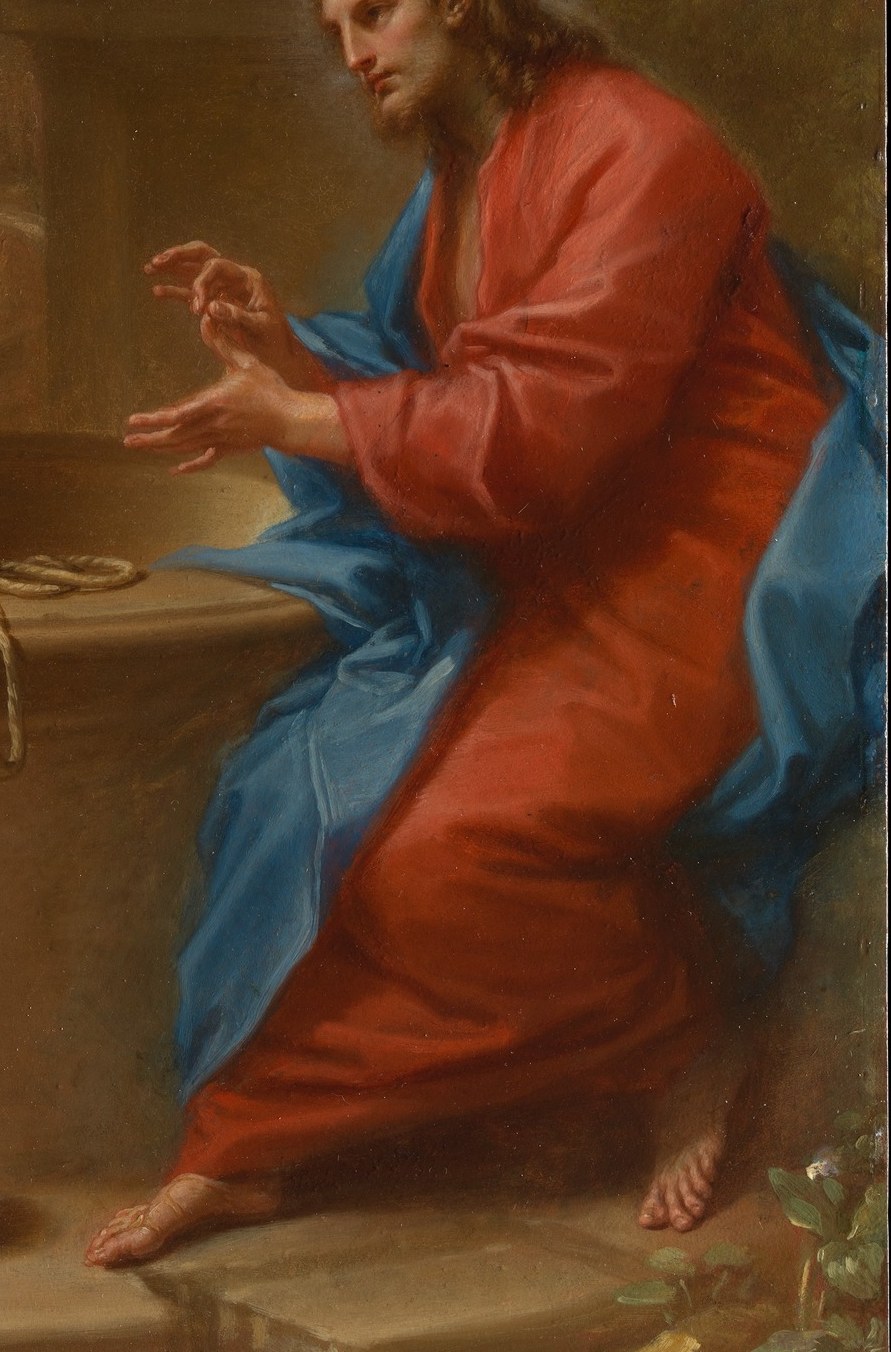
Look closely at the woman's water jug, a common vessel for physical needs. It grounds the scene in the mundane, setting the stage for a deeper interaction. The well rope, stretching down, represents the link between the earthly and the divine, hinting at spiritual connection.
Christ's distinctive red and blue robes are more than just clothing; they symbolize his divine authority and spiritual message. Through these visual cues, Luti tells a story of transformation, moving from physical thirst to spiritual fulfillment.
This painting is a masterful example of early 18th-century Italian art, inviting viewers to decode its layered meaning.
Details
Transcript
This painting from 1717 shows a biblical encounter at a well. She is the Woman of Samaria, holding her water jug. The jug represents her everyday need, a physical thirst. The rope reaching into the well symbolizes connection to something deeper. He offers her 'living water,' a spiritual nourishment. His vibrant red and blue robes signify his divine nature.