A Connibo Wigwam by Catlin, George
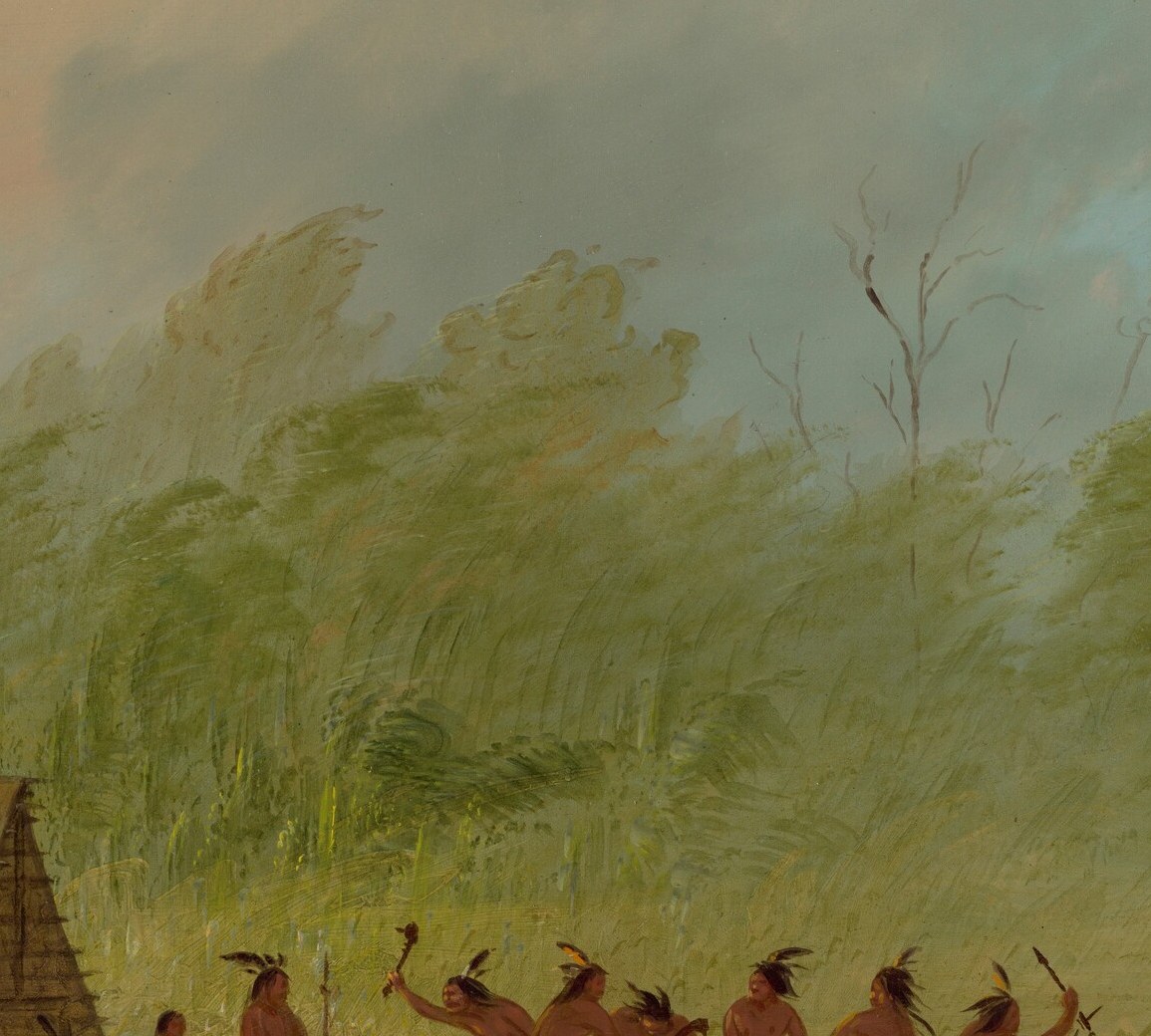
George Catlin, a prominent American lawyer and painter, dedicated his career to documenting Native American life on the frontier. 'A Connibo Wigwam,' painted between 1854 and 1869, captures a quiet moment of everyday life, showcasing a traditional dwelling nestled in a natural landscape.
Look closely at the details: the weathered leaning tree, the windblown grasses, and the muted tones that convey an overcast day. Inside and around the wigwam, figures suggest a peaceful community, underscoring the intimate relationship between the inhabitants and their environment.
But there’s a small, curious detail in the lower-left corner: 'A 451.' This is Catlin’s own catalog number for the piece. He created a vast 'Indian Gallery,' meticulously numbering nearly 500 works, each serving as a visual record from his extensive travels in the American West during the 1830s.
This system reflects his commitment to documenting the varied aspects of frontier life, creating a powerful visual archive that continues to inform our understanding today. What other stories do you think his numbered works might tell?
Details


Transcript
This painter was famous for documenting Native American life. He spent years traveling, sketching the American West. His detailed works capture daily life, like this wigwam. Notice the quiet figures inside and nearby. Now look closely in the lower left corner. That 'A 451' is his personal catalog number. He numbered nearly 500 such scenes, like a visual diary.