Madonna and Child by Pier Francesco Fiorentino
This is Pier Francesco Fiorentino's "Madonna and Child," painted in Florence around 1475. It is a small devotional panel, tempera on wood later transferred to canvas, and it has survived something most paintings never face: being stolen twice by the same crew.
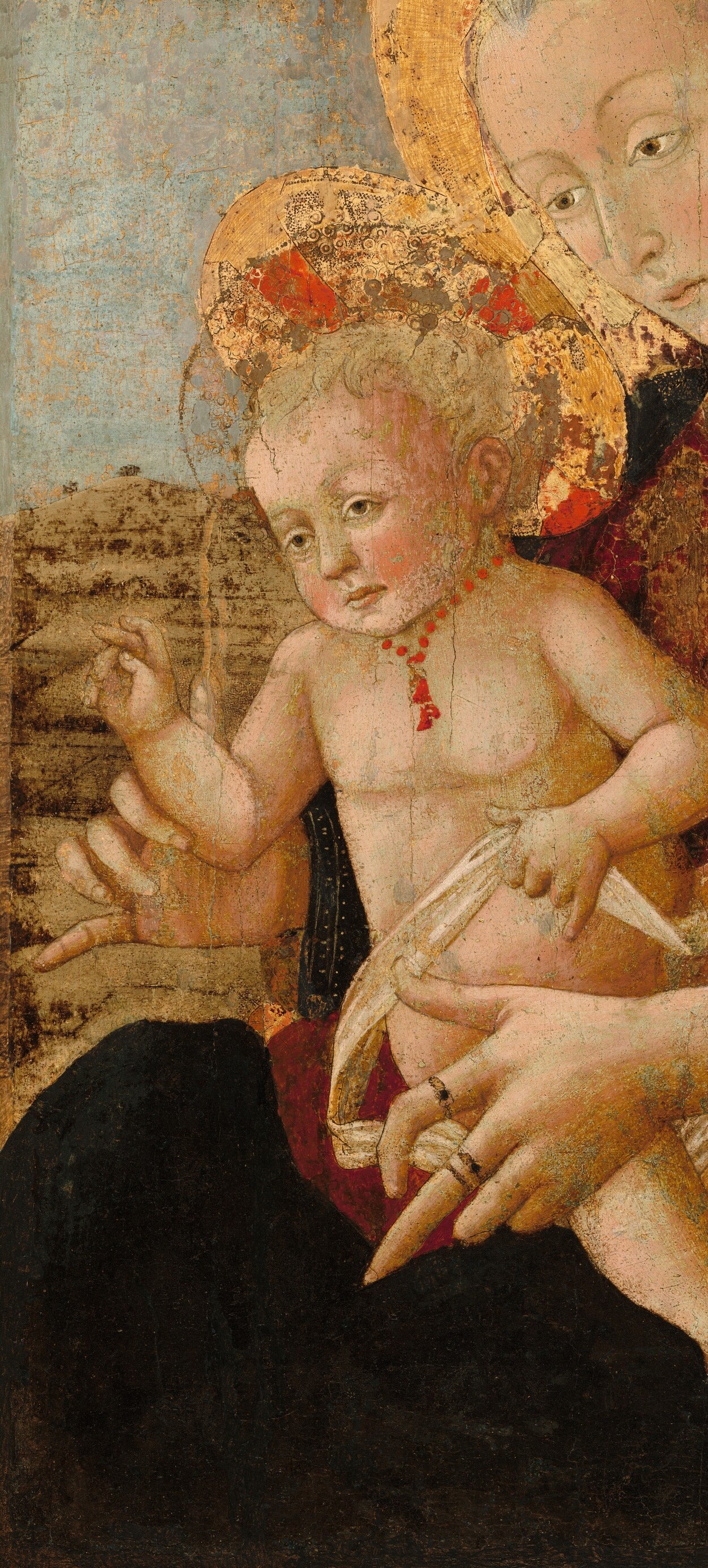
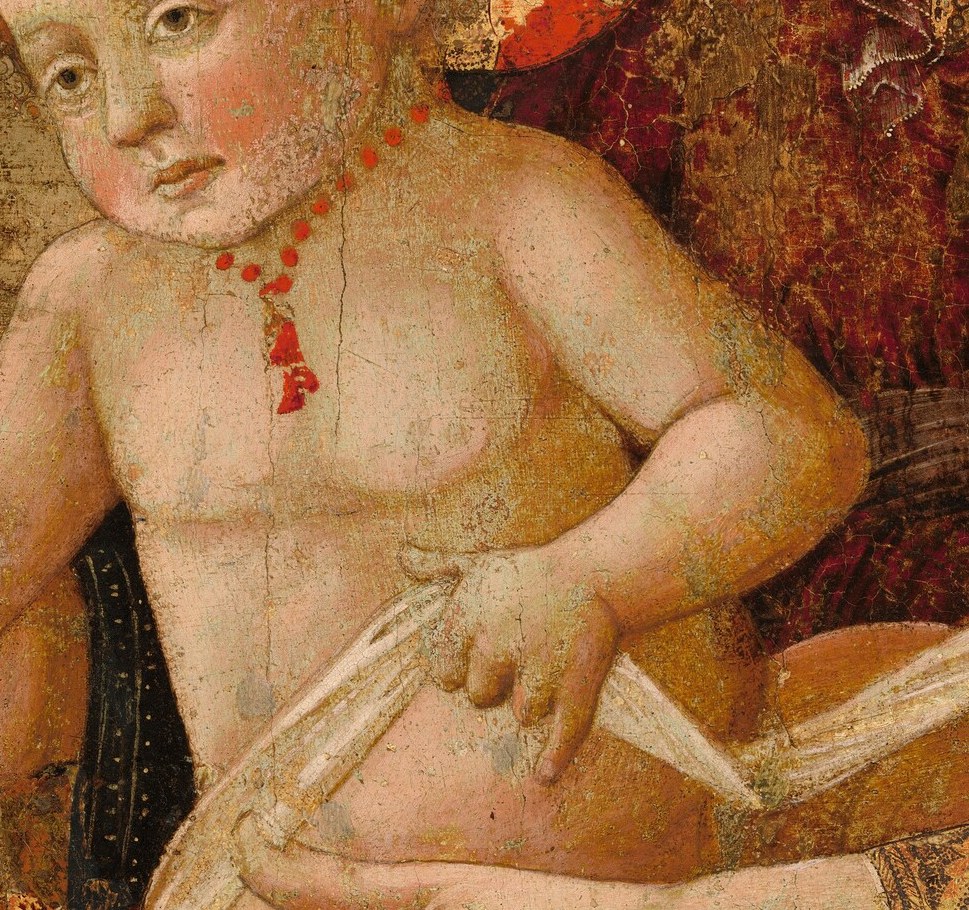
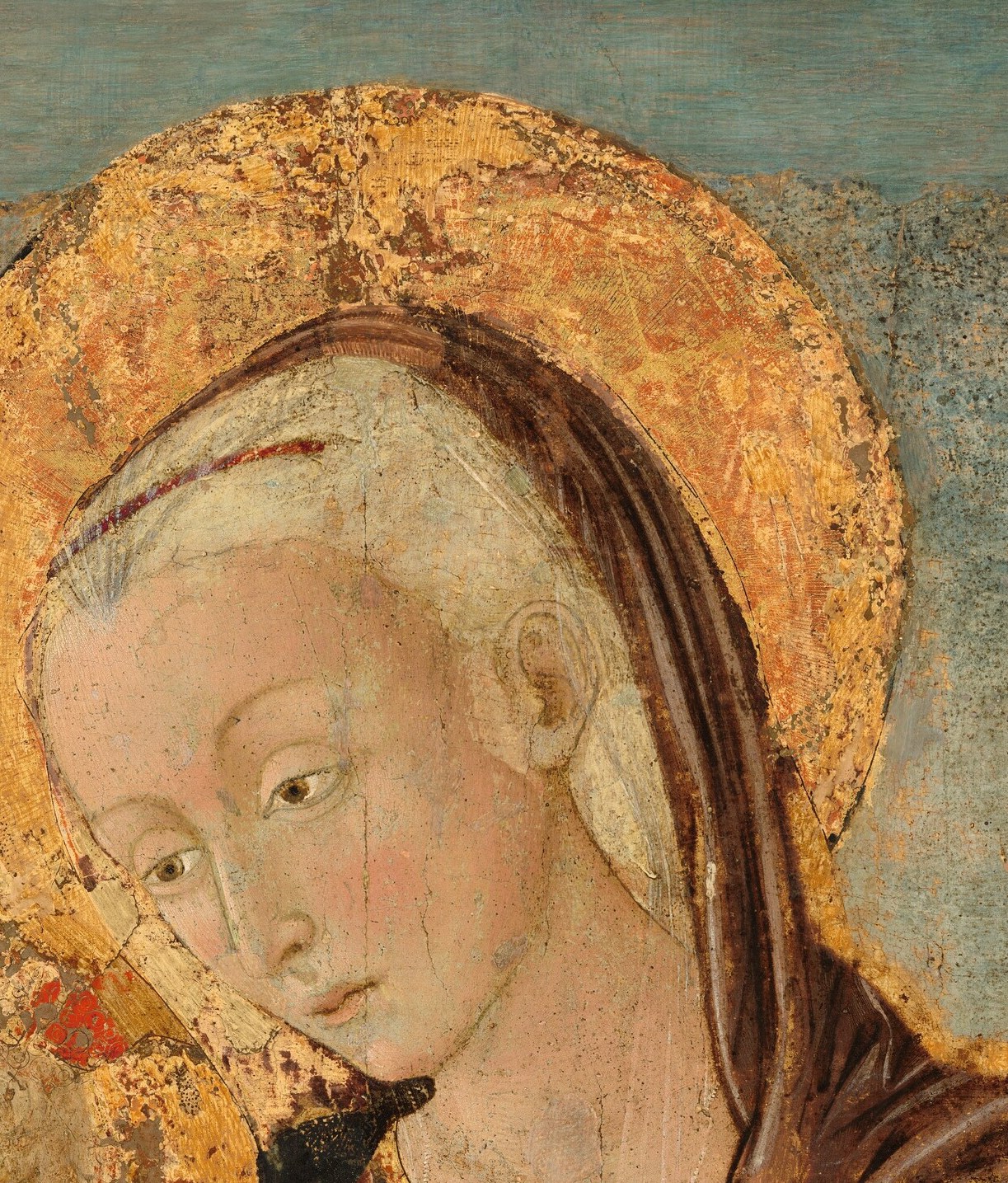
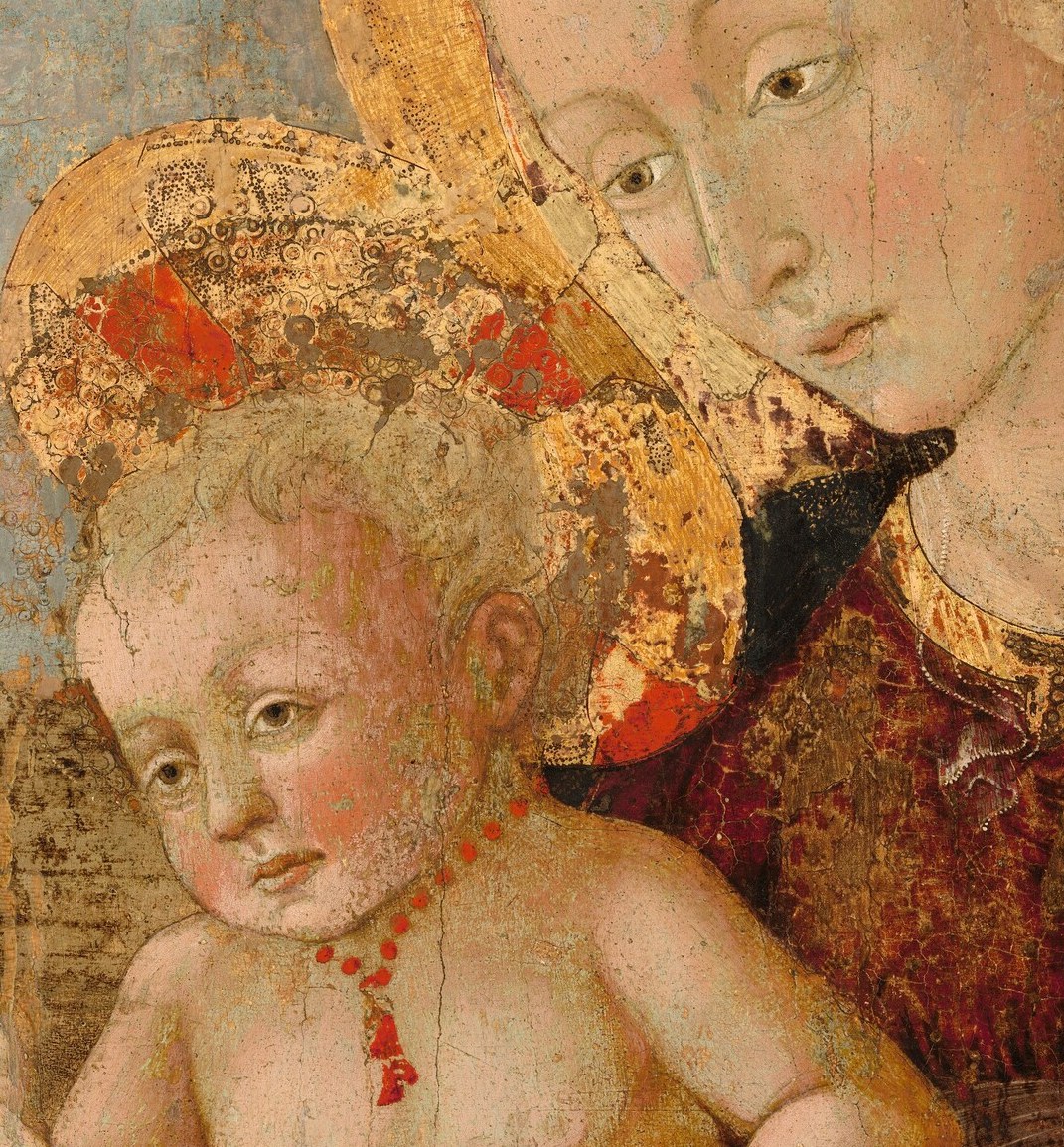
Look first at the deep blue of her mantle. That color is ultramarine, ground from lapis lazuli imported from Afghanistan, more expensive than gold in the 15th century. Reserving it for the Virgin's robe was a theological statement coded in material cost. Then look at the coral bead necklace on the Christ Child. Renaissance parents hung coral on their infants as protection against illness and evil spirits. Here, painted on a divine child, the red beads do double work: a protective amulet and a quiet prefiguration of his blood.
In 1971, thieves took this painting from a church in Florence. Police got it back. Then the same group struck again, taking it a second time and hiding it away for more than a year before it was finally recovered. The panel went back on view, its gold, its ultramarine, its infant's coral all intact.
A devotional object made for quiet prayer ended up with a police file. You are looking at something that was twice pulled into the dark and twice brought back.
Details
Transcript
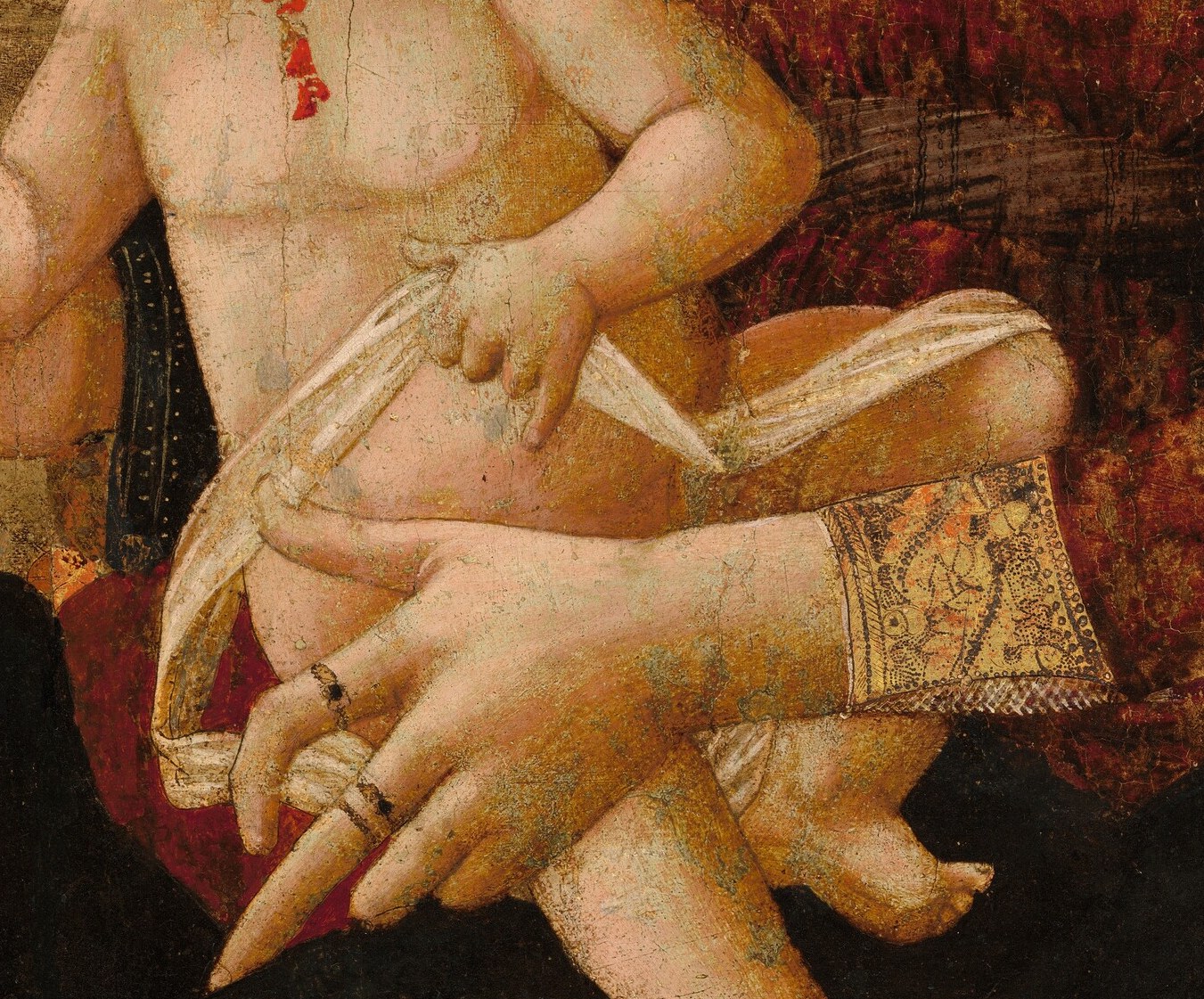
A Madonna and Child, painted in Florence around 1475. Her blue mantle was made from the most expensive pigment on Earth. The child's coral necklace was an amulet against illness and evil. In 1971, it was stolen from a church in Florence. Police recovered it. Months later, the same crew stole it again. This time, they hid it for over a year before it was found. The blessing hand, the coral, the gold: all survived.