The Slaughtered Hog by Victors, Jan
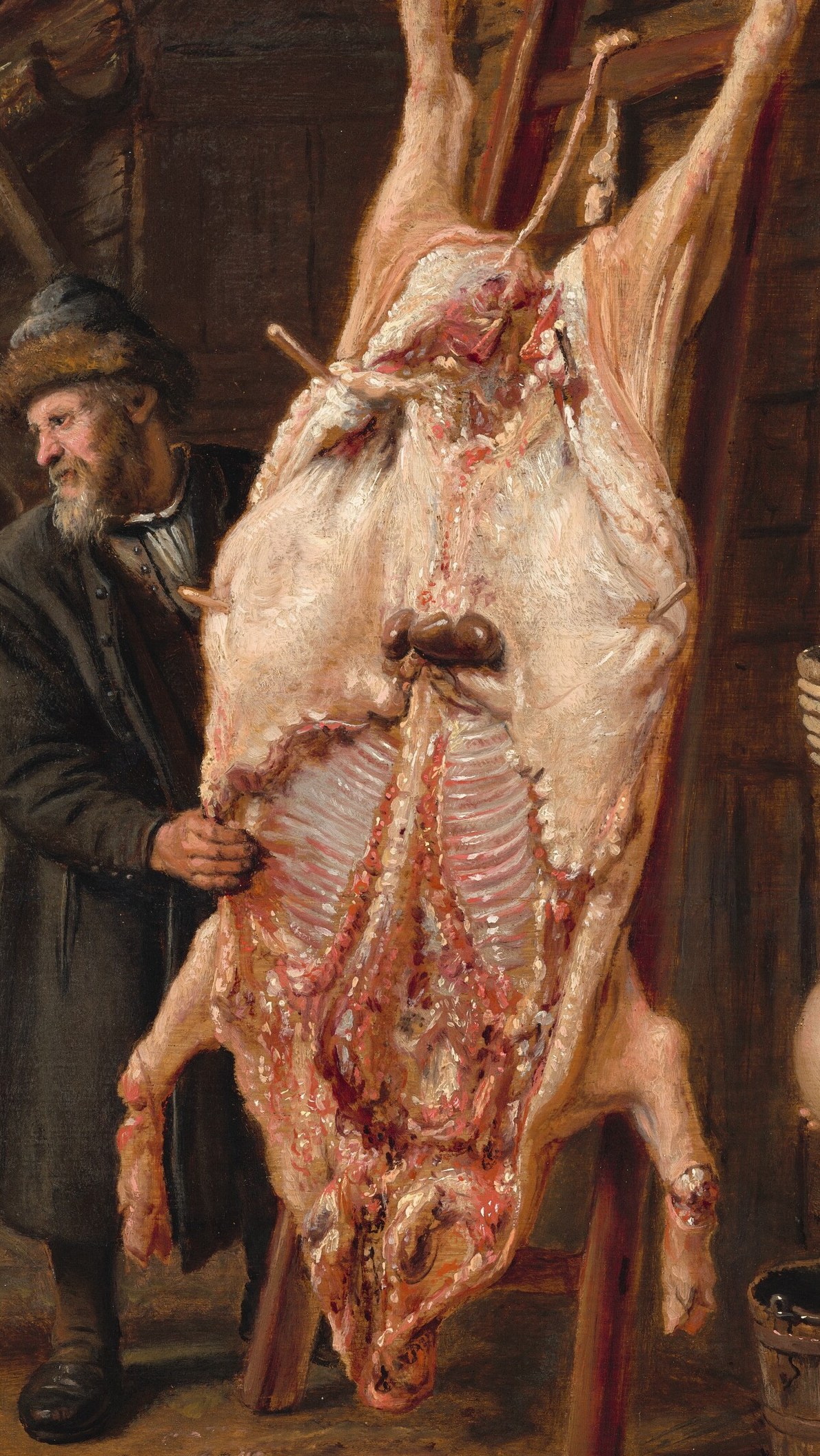
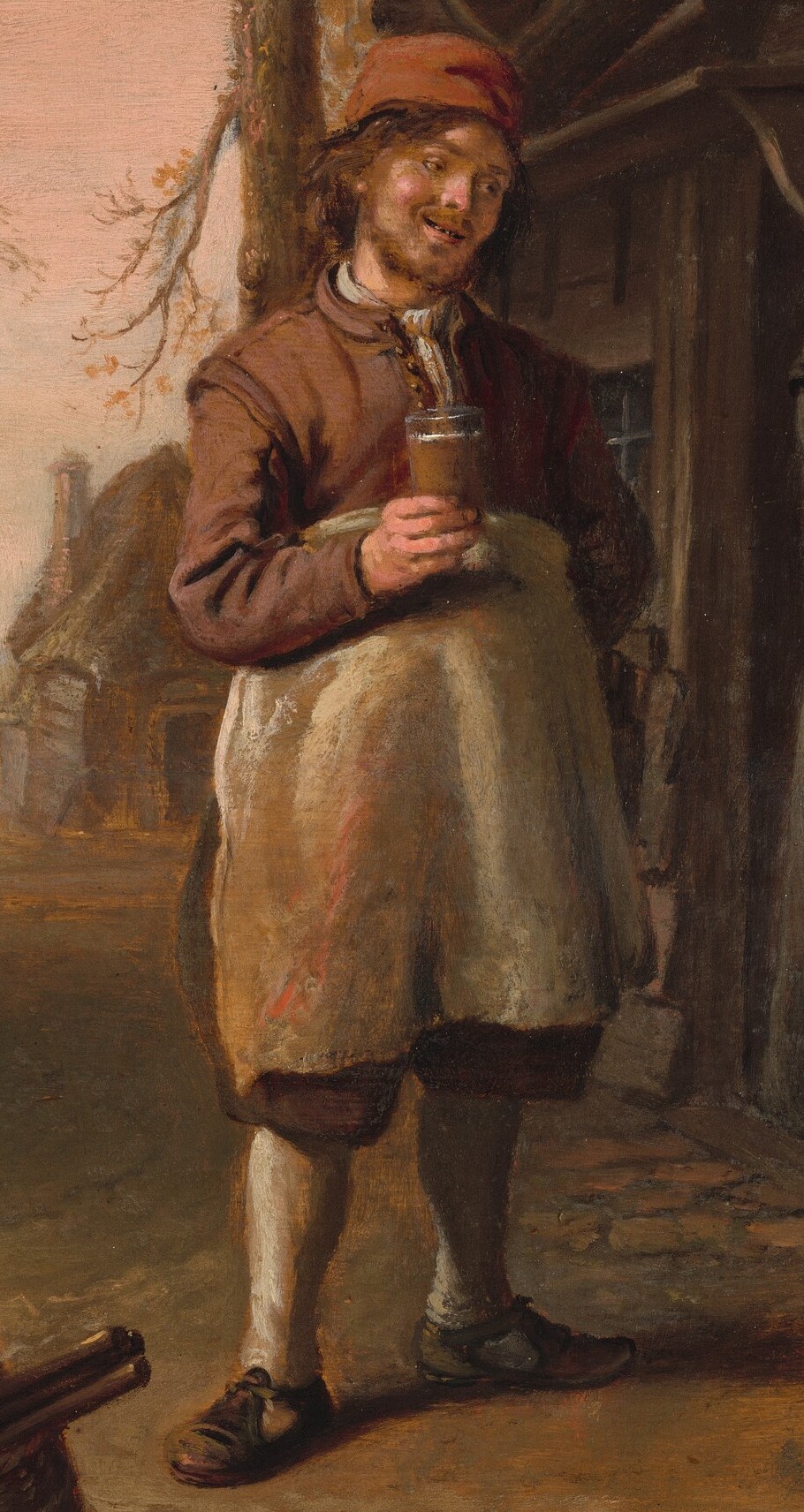
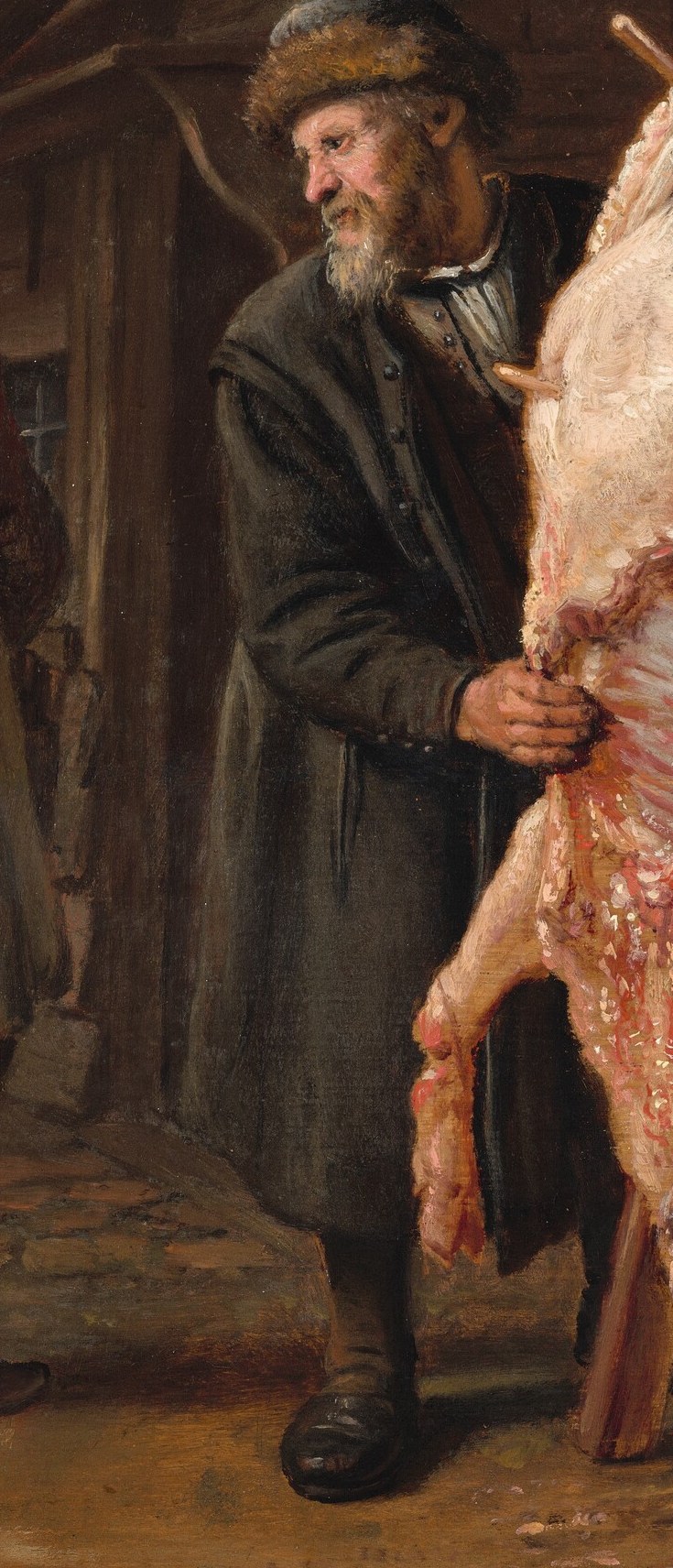
Jan Victors' 1653 painting, *The Slaughtered Hog*, from the Dutch Golden Age, captures a practical scene of daily life. While focusing on the butchery, it also offers a glimpse into the domestic and familial aspects of 17th-century Holland.
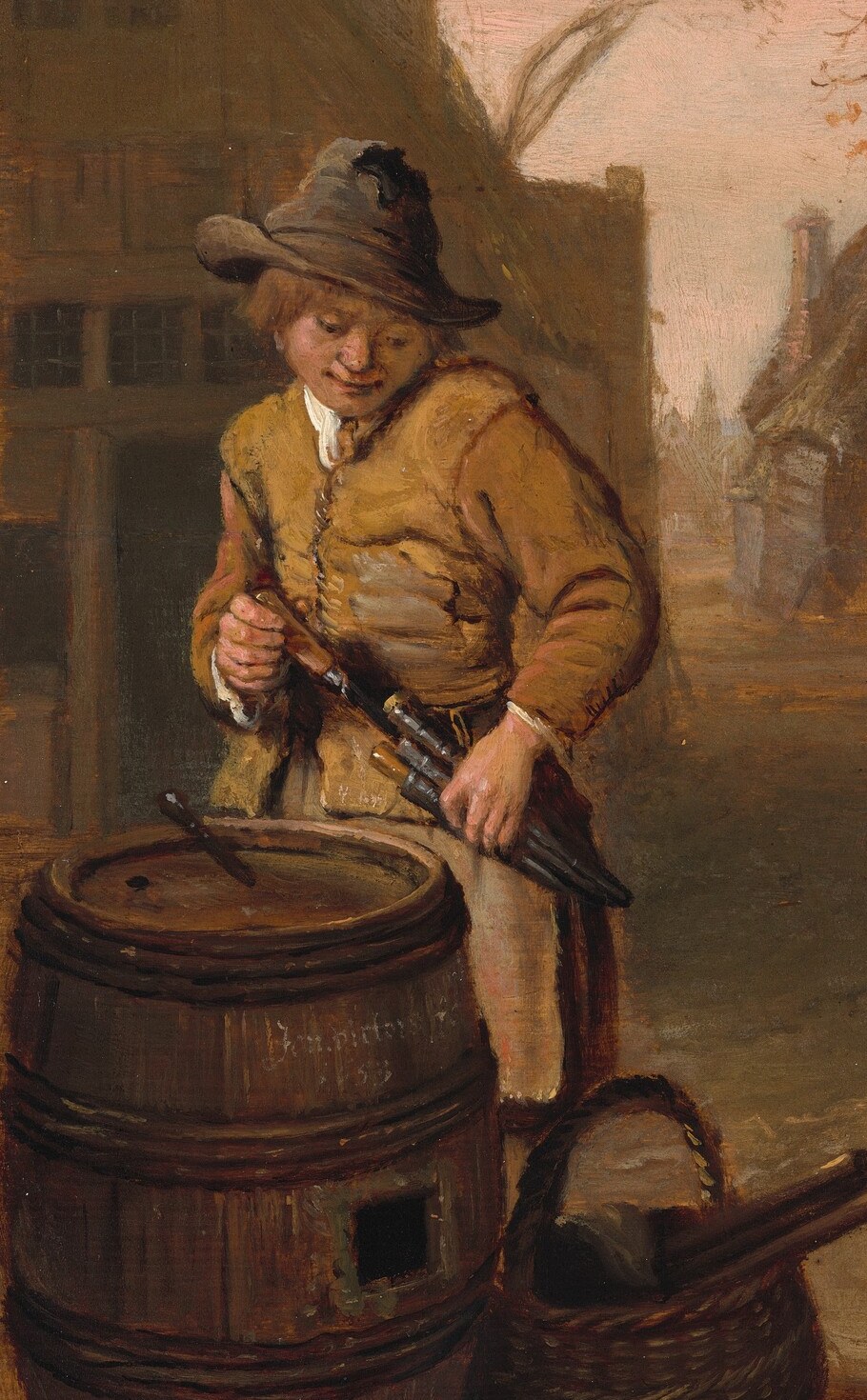
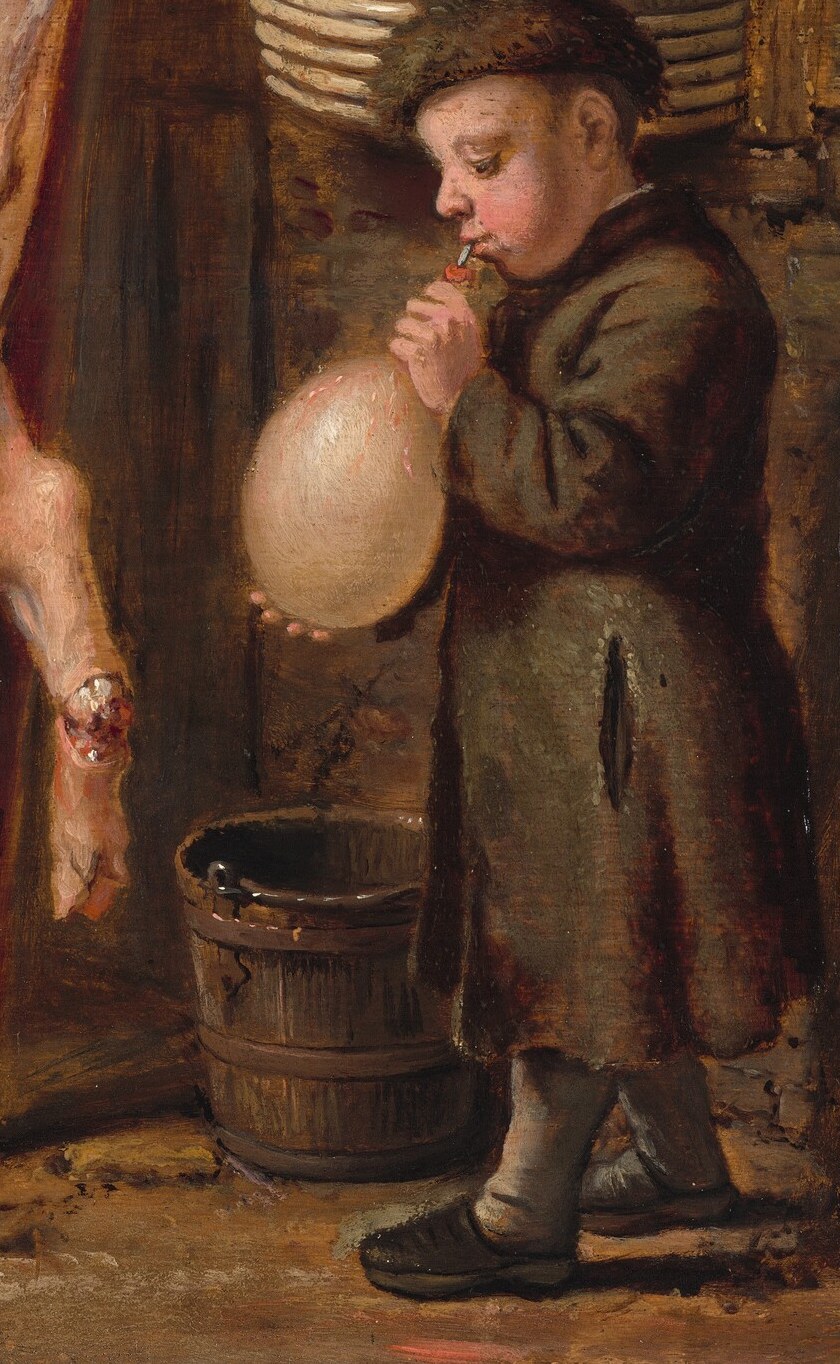
The painting shows men at work, but the subtle details of the children are particularly telling. A young boy in a hat holds a knife, suggesting an early introduction to the family trade. Nearby, another boy is engaged in a common pastime, blowing into an animal bladder.
This detail highlights how children found play even amidst the raw realities of rural life. Victors, a Calvinist painter known for biblical and genre scenes, avoided overt religious symbolism, instead choosing to depict the material world and everyday labor with careful realism. This work exemplifies his interest in detailed, secular subjects.
It reminds us that joy and innocence often find a way to coexist with the demands of daily life, regardless of the era.
Details
Transcript
This 1653 painting shows a common 17th-century event: hog butchery. The men prepare the hog, but look closely at the children. A younger boy holds a knife, learning the trade. Another boy blows into an animal bladder. This was a popular toy, filled with air for bouncing or noise. Even amid bloody work, children found simple, everyday play.