Facsimile of a Sioux Robe by Catlin, George
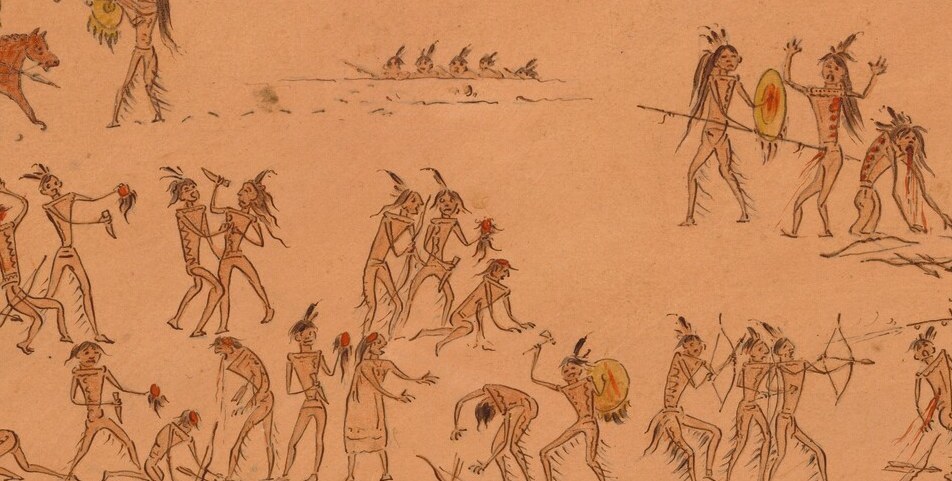
George Catlin's "Facsimile of a Sioux Robe" (1861/1869), housed in the Smithsonian American Art Museum, isn't a textile, but an oil painting on card, simulating a traditional robe. This work, from an artist known for documenting Native American life, reveals a fascinating tension between his ethnographic ambition and artistic method.
Look closely at the surface and you'll find a world in miniature, depicting scenes of hunting, combat, and daily life. The torn-paper edge isn't accidental; it's part of the artwork, highlighting the medium's role in its reception.
Catlin, a lawyer turned painter, made five expeditions to the American West in the 1830s. He aimed to create an exhaustive visual record of Indigenous cultures, but his methods, like using inexpensive card for this "facsimile," drew criticism for their perceived lack of authenticity compared to actual artifacts. Yet, these works offer a unique window into a pivotal moment in American history, preserving cultures amid rapid expansion.
Catlin's dedication to his monumental project, despite the controversies, shaped how many Americans understood the frontier.
Details

Transcript
This isn’t a real robe. It’s a painting on card. The artist, George Catlin, traveled the American West in the 1830s. He aimed to document Native American life, like these hunting scenes. Catlin claimed his paintings were exact records. But his use of card and paint was seen as cheap imitation. This torn edge, though, is part of the art itself. He preserved cultures amid rapid expansion, one brushstroke at a time.