Captain Joseph Anthony by Stuart, Gilbert
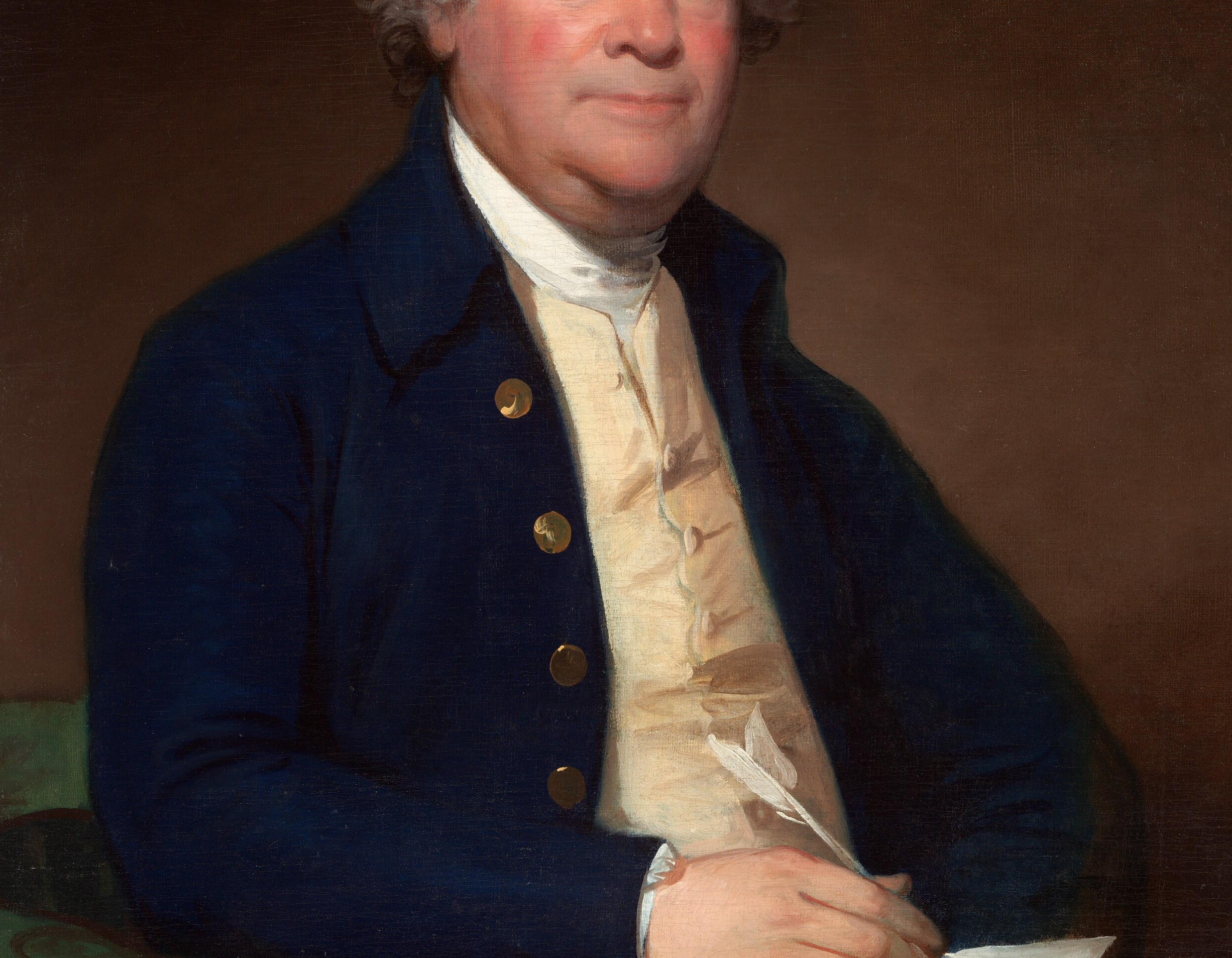
This is Gilbert Stuart's 1794 portrait of Captain Joseph Anthony, now in a private collection. Stuart was the preeminent portraitist of Federal-era America, most famous for his images of George Washington. But his real talent lay in capturing the rising merchant class with the same penetrating eye he turned on presidents.
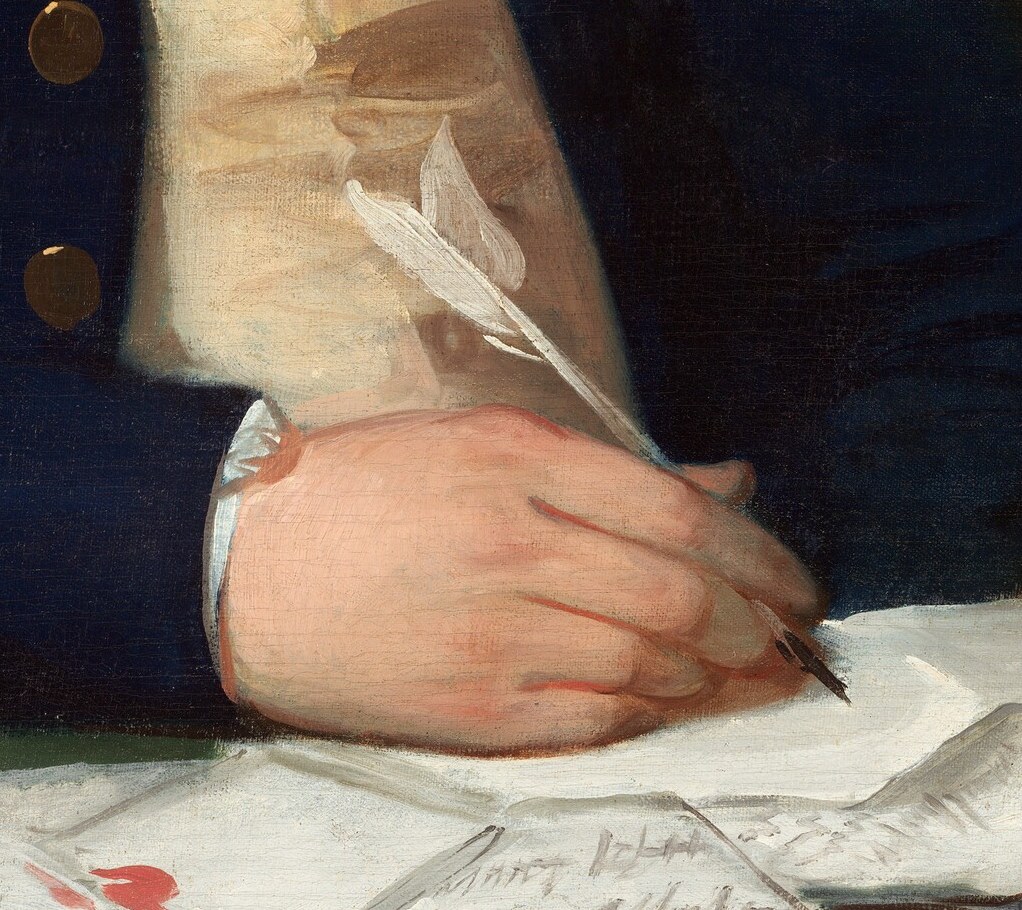
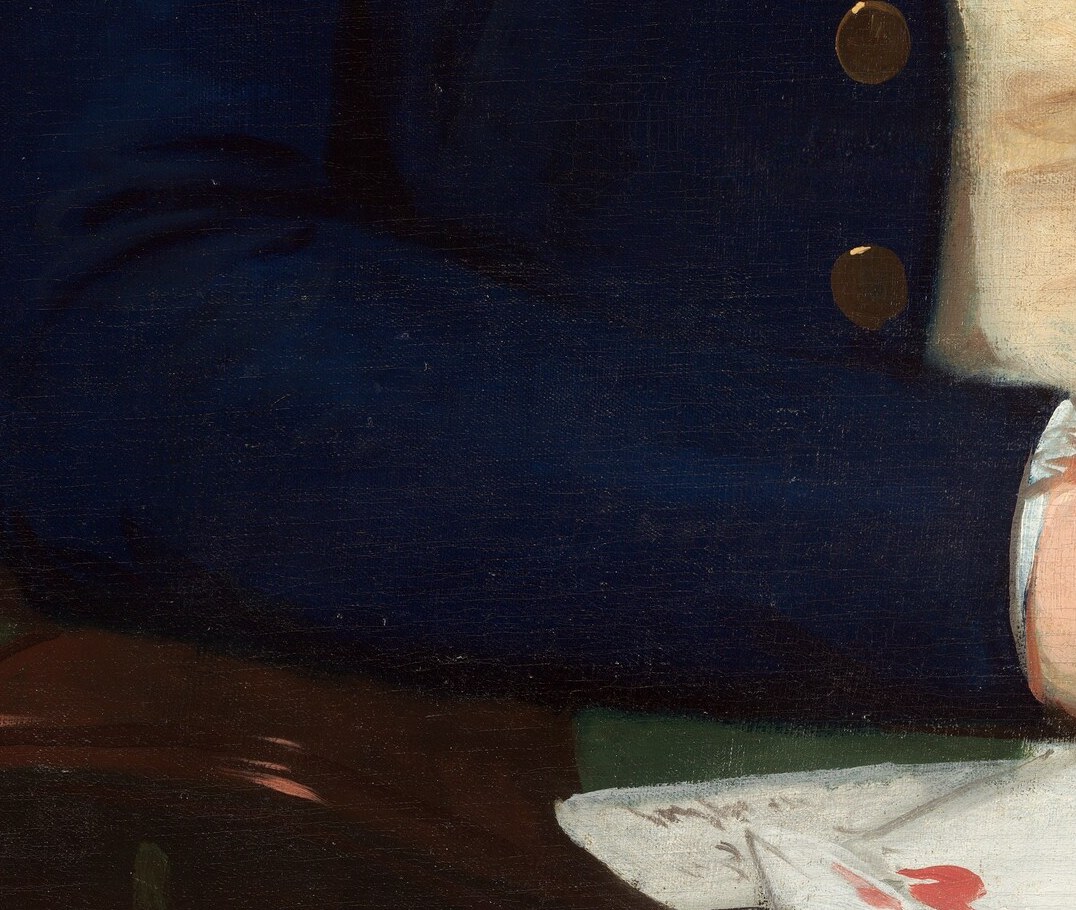
Look first at the clothing. The deep navy blue coat, the brass buttons, the white cravat, this is not just gentlemanly fashion. In the 1790s, a blue coat with gold or brass buttons was the unofficial uniform of American ship captains. The quill in his right hand and the folded papers beneath his left tell you he was a man who signed his own manifests and kept his own records. A working commander, not an aristocrat.
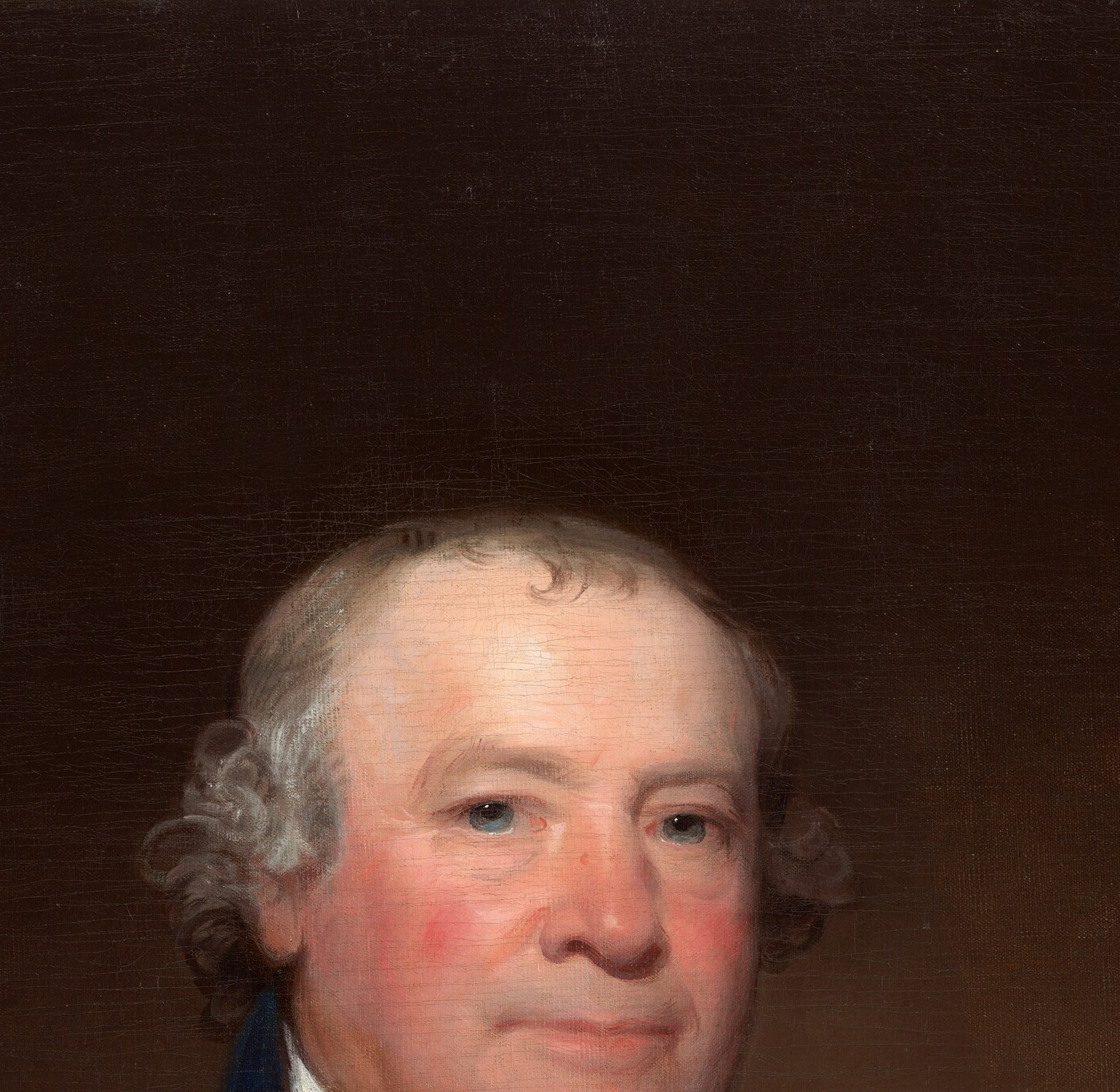
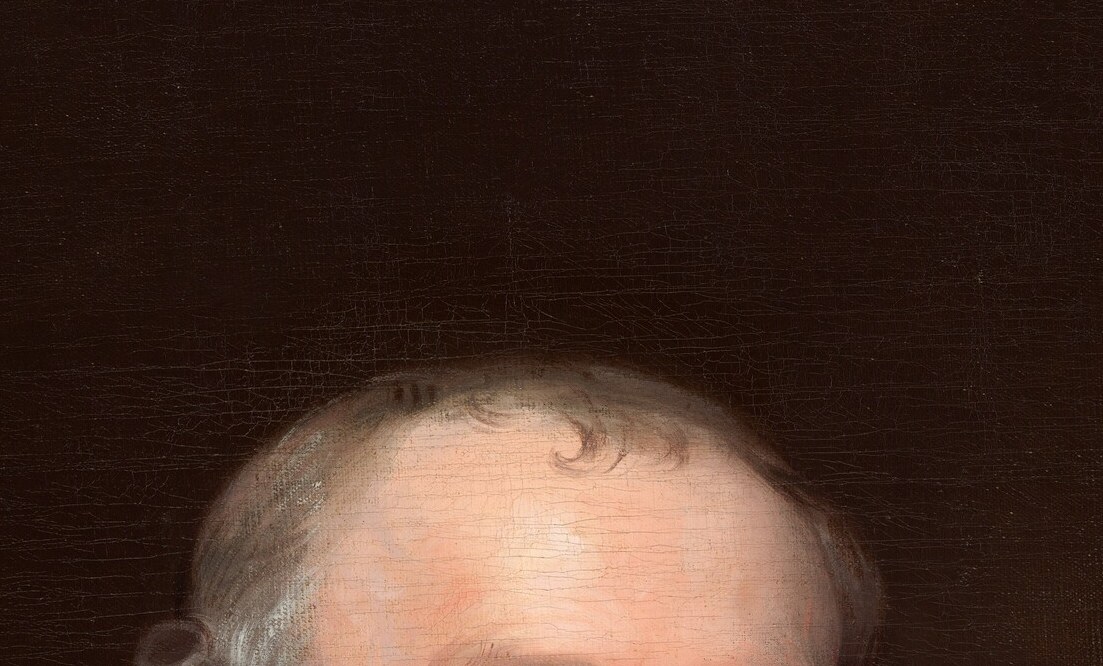
Stuart was famous for painting the face and hands himself while leaving the body and background to assistants. You can see the difference: the eyes and the slight texture around them are precise and lively, while the coat and chair dissolve into Stuart's characteristic loose brown atmosphere. He knew that in a portrait, the eyes hold the entire charge.
The painting places Joseph Anthony at the center of America's post-Revolution maritime boom. Men like him sailed from Boston and Newport to the Caribbean, China, and Europe, building the fortunes that funded the young republic. This portrait was his claim to that world.
What object in this portrait tells you the most about Joseph Anthony?
Details
Transcript
A dark blue coat with brass buttons. The uniform of the sea. 1794. American merchant ships controlled trade between Europe and the Indies. In his right hand, a quill. He signs manifests, not just sails them. Under his left hand: folded papers. Records of a cargo, or a ship's log. Gilbert Stuart painted the face first. The body and coat were finished later, by assistants. Stuart spent his time on the eyes. Everything else is loose and fast. The code adds up: a captain whose wealth came from command, not just title.