A Windy Day on the Pont des Arts by Jean Béraud
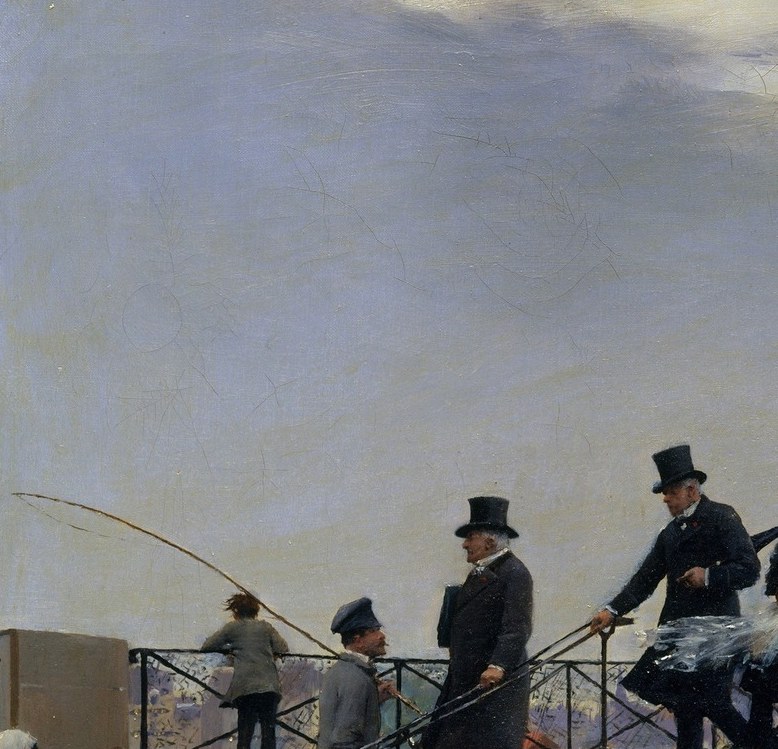
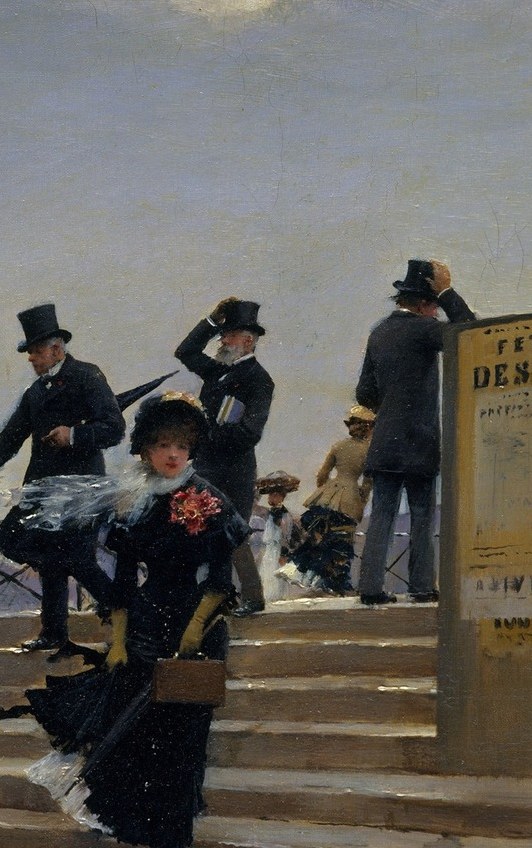
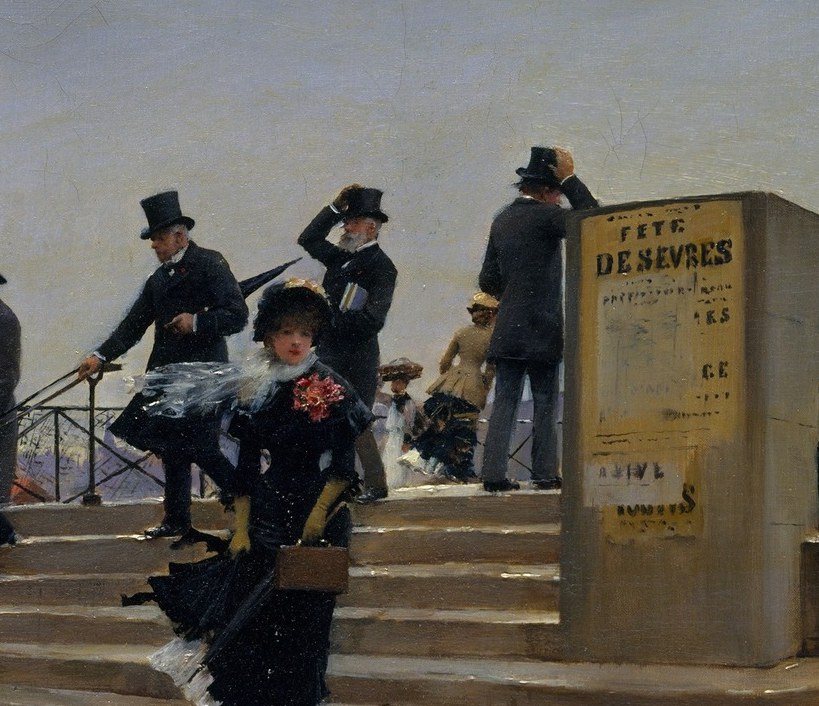
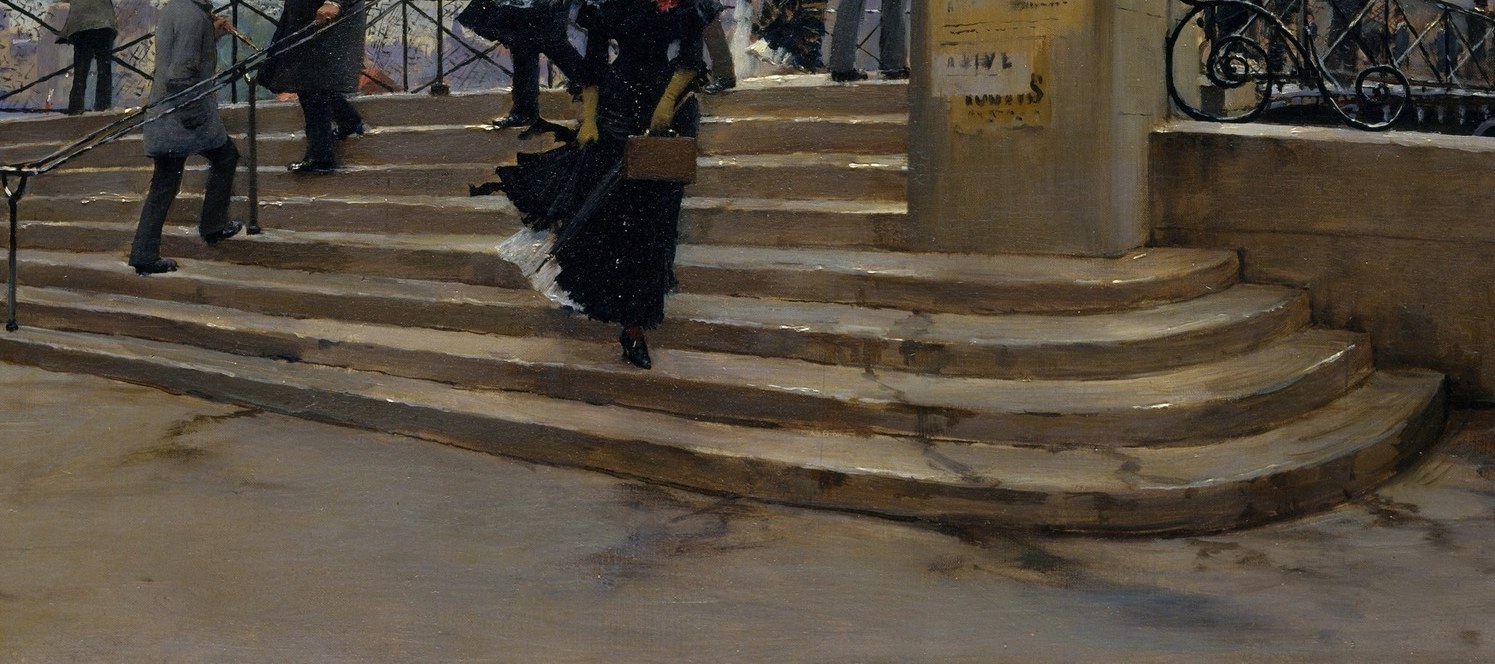
Jean Béraud painted A Windy Day on the Pont des Arts in 1890, and it holds a strange kind of loneliness at the Met today. It is not a sad painting; it is a private one. A crowd crosses the bridge together, but everyone is braced against the weather, isolated in their own small struggle. One figure walks the other way, into the wind, and becomes the painting's true subject.
The wind is the main character. You do not see it; you see what it does. Skirts flatten, coats balloon, postures lean. The whole composition is a study in resistance. Look at the yellow Morris column on the right, a saturated flash of modern advertising against the grey. Look at the dome of the Institut de France anchoring the far bank. Béraud names the exact place and then erases it with weather.
This bridge, the Pont des Arts, was the first all-iron footbridge in Paris. Haussmann's new city was still fresh, less than forty years old, and Béraud spent his career documenting its surfaces. But here he is not cataloguing a street scene. He is recording what it felt like to walk through a city that was remaking itself faster than anyone could keep up with. He was 41. He knew the sensation of leaning into a force you cannot stop.
The tall man in the long dark coat, facing the gust alone, is likely a stand-in for the painter himself. Béraud never painted a self-portrait into this work. But that solitary figure, pushing forward while the world pulls back, carries the weight of someone who knows the wind will not ease.
What do you think that man is walking toward?
Details

Transcript
Paris, 1890. A gust tears across the Pont des Arts. The crowd lowers their heads. Umbrellas strain. But one man walks alone, into the teeth of the wind. His coat billows. The weather has become a physical fight. Béraud was 41. He painted the city changing faster than a man could bear. This bridge was the first iron bridge in Paris. Everything modern was new. He never painted his own face here. But the walker is him.