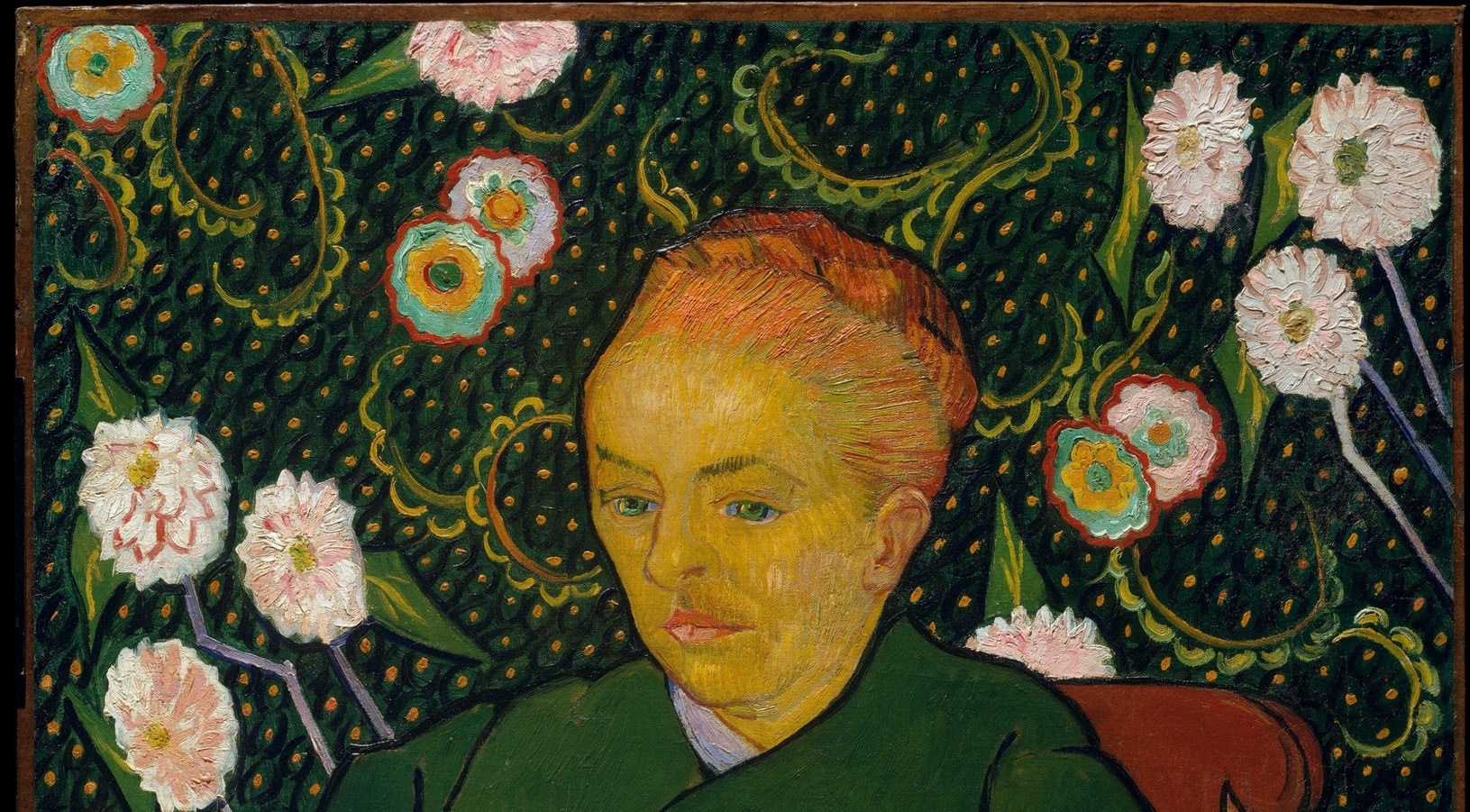
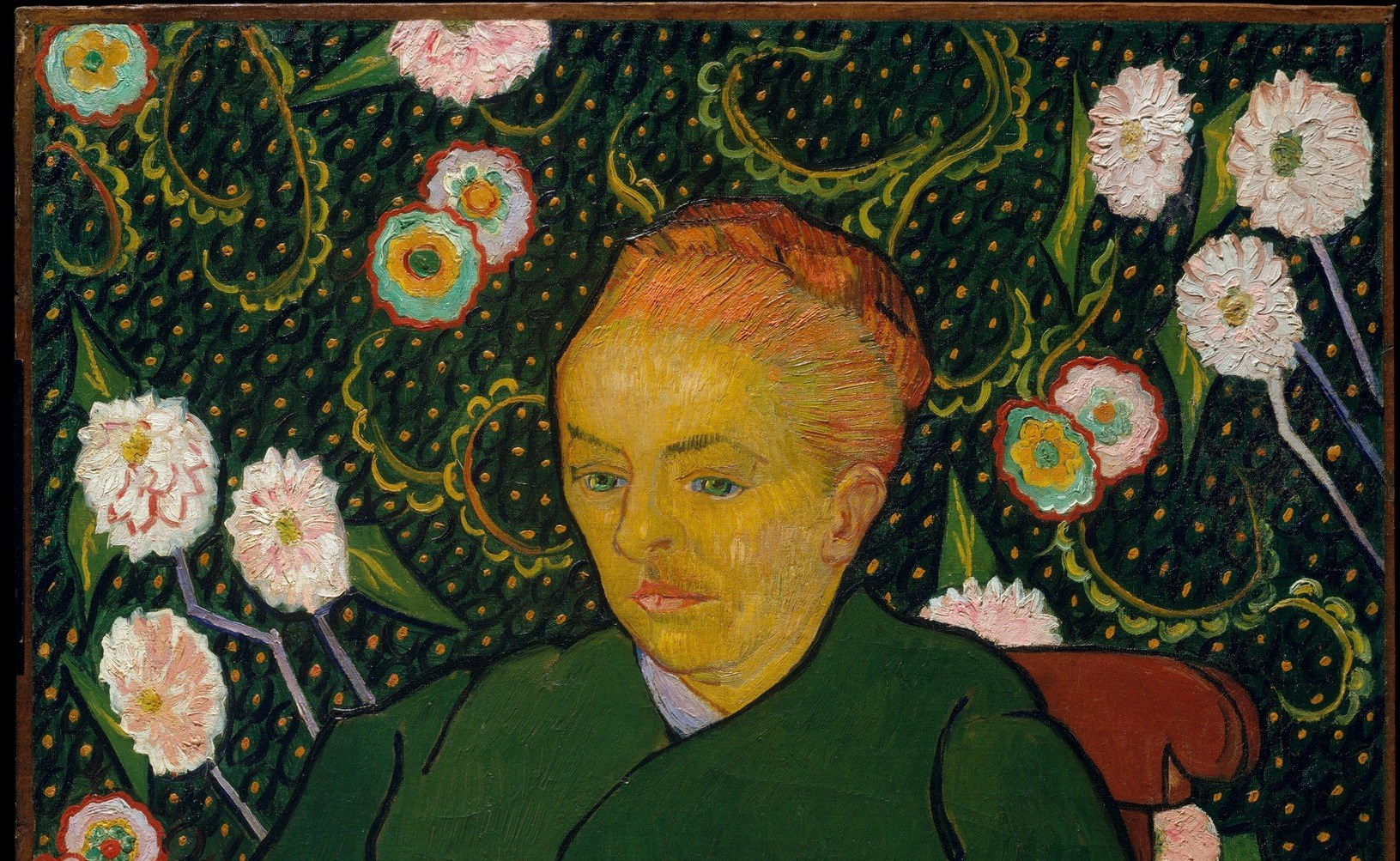
La Berceuse (Woman Rocking a Cradle; Augustine-Alix Pellicot Roulin, 1851–1930) by Vincent van Gogh
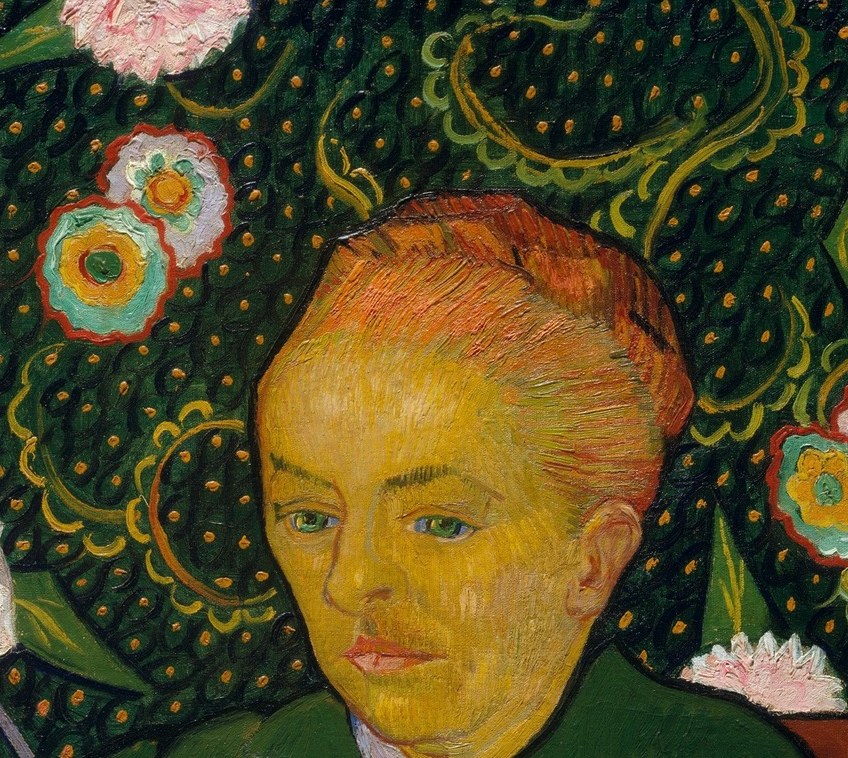
Vincent van Gogh's La Berceuse, painted in 1889, is a poignant portrayal of Augustine Roulin, the wife of his friend and postman, Joseph Roulin. Van Gogh envisioned this work as a 'lullaby' painting, aiming to evoke feelings of comfort and solace, much like a protective lullaby.
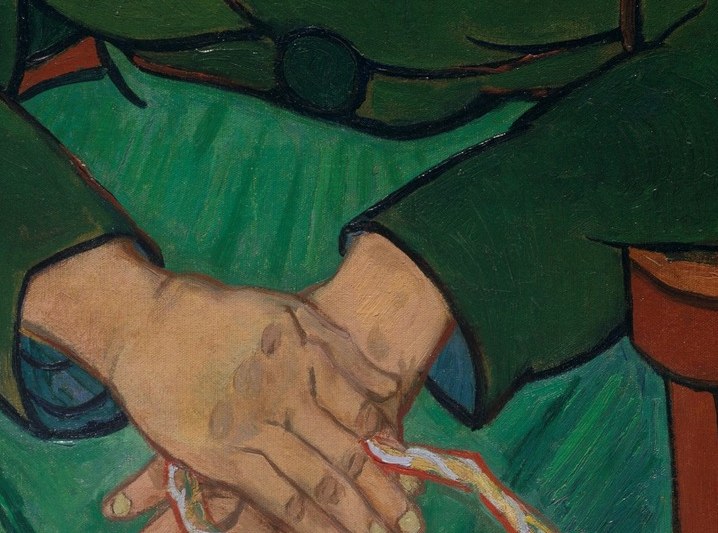
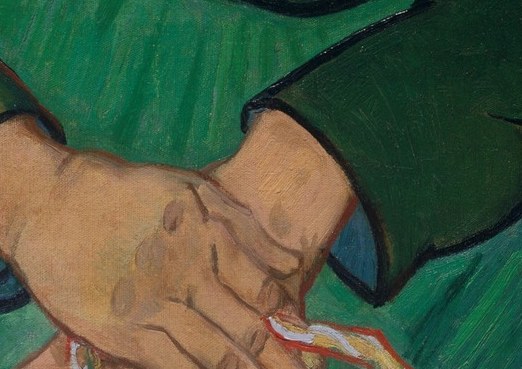
Look at Augustine's clasped hands, holding a rope. This subtle detail suggests the presence of an unseen cradle she is rocking, adding a dynamic, implied motion to an otherwise static portrait. The vibrant, almost decorative background, with its dark, floral patterns, creates a rich backdrop for the figure.
Van Gogh was deeply affected by mental illness during this period, and his letters reveal his desire to create an image of profound comfort, perhaps as a balm for his own turbulent state. This painting is one of several works he created featuring the Roulin family, who provided him with a sense of stability and warmth in Arles.
The painting's striking colors and unique composition demonstrate Van Gogh's expressive style. How does this portrait make you feel?
Details
Transcript
Van Gogh painted this as a 'lullaby' portrait. He wanted to capture the feeling of comfort and solace. The figure, Augustine Roulin, was a friend's wife. Look closely at her hands, clasped around a rope. This rope implies she is rocking an unseen cradle. The dark, floral wallpaper recalls his 'Starry Night' sky. He sought to make a static portrait feel kinetic.