Oostzijdse Mill along the River Gein by Moonlight by Piet Mondrian
View the artwork: Oostzijdse Mill along the River Gein by Moonlight →
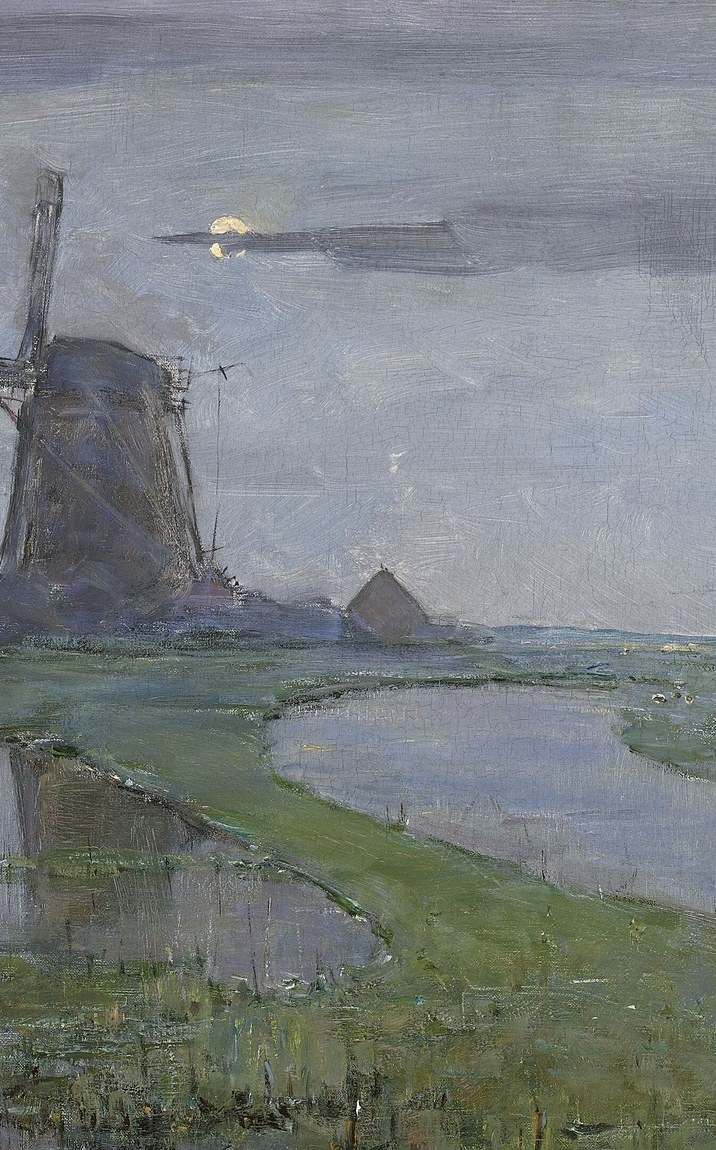
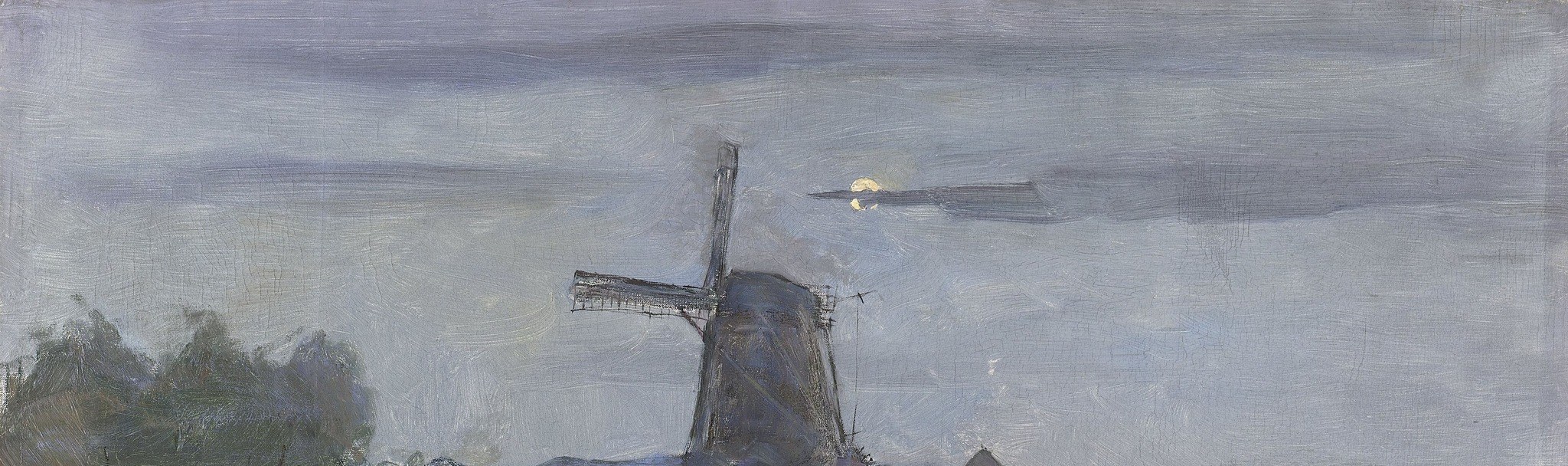
Piet Mondrian’s Oostzijdse Mill along the River Gein by Moonlight, painted in 1903, is a nocturnal landscape from decades before he changed art with his abstract grids. It hangs in the Rijksmuseum and captures a world he knew intimately: the flat Dutch polderland south of Amsterdam, where the Gein River runs still and wide.
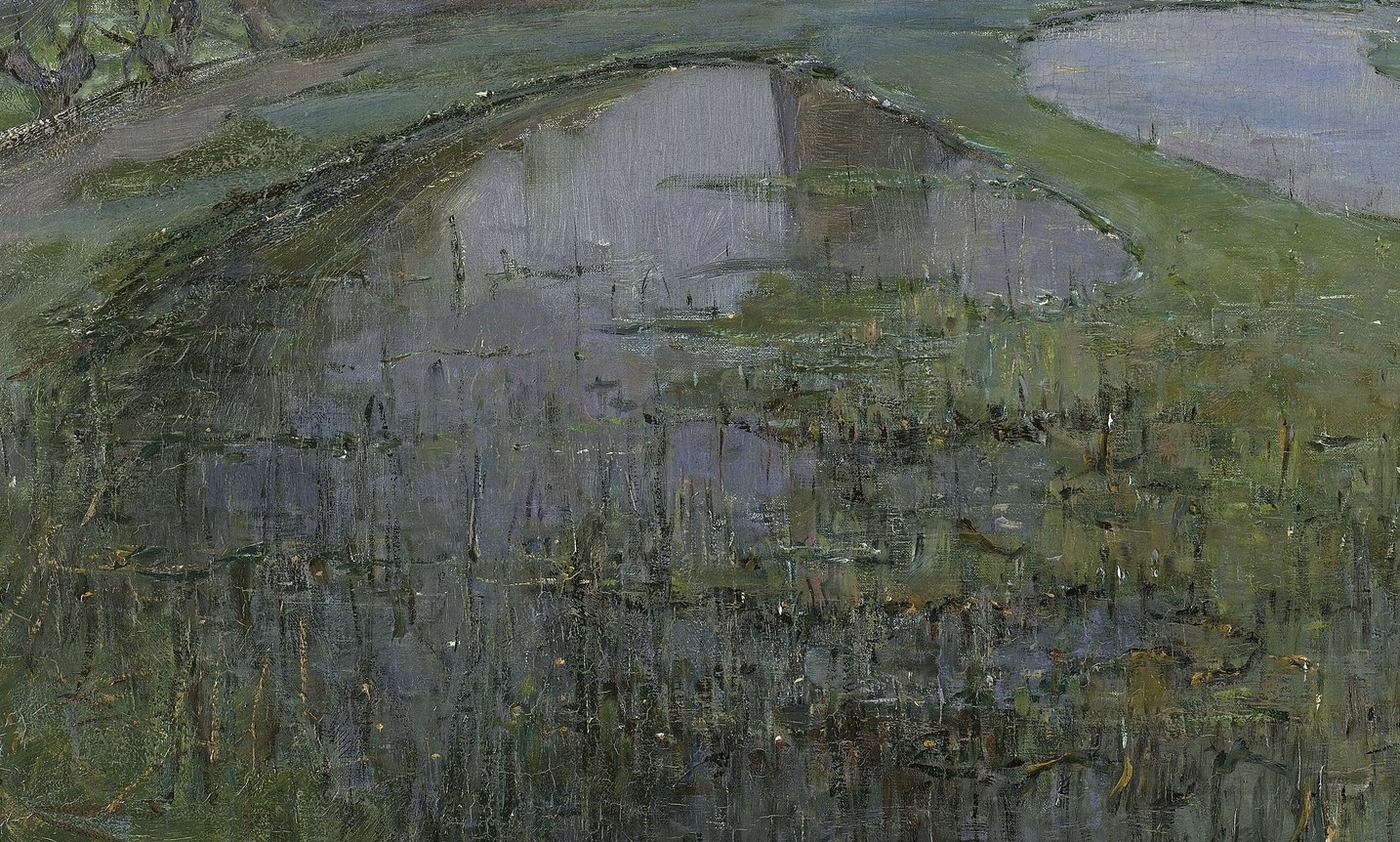
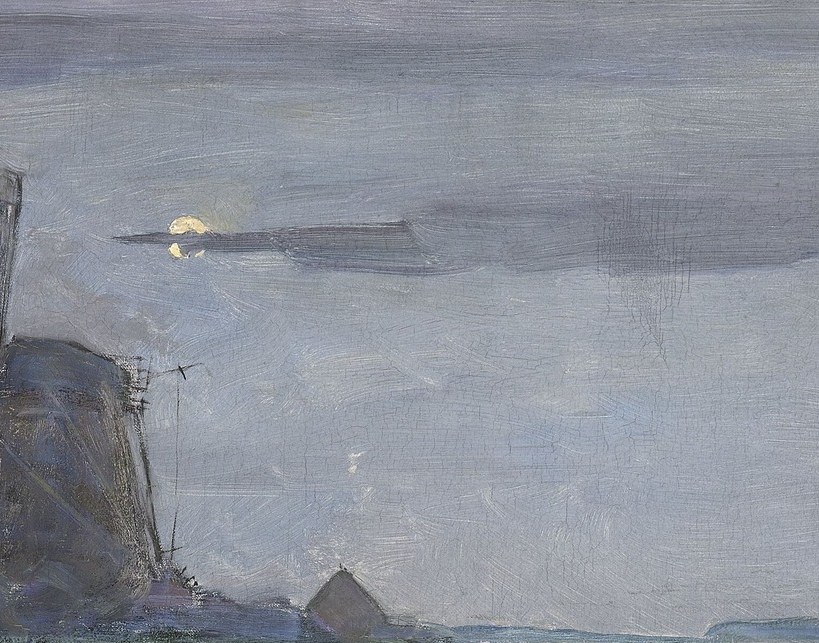
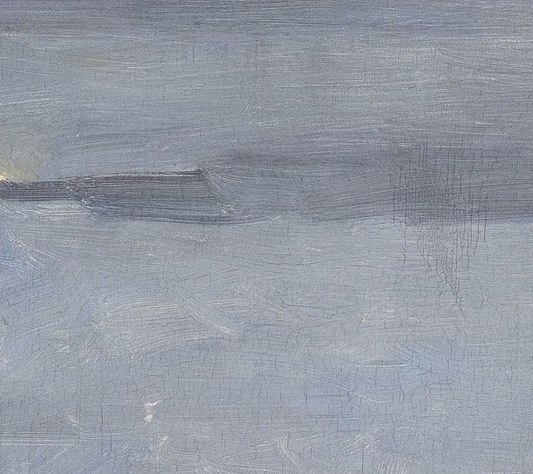
The painting rewards slow looking. A pale moon glow hides behind the windmill’s cap and sail arms, barely visible as a soft amber aureole. That doubled light is the key. The river mirrors the mill in long, dark strokes of reflection, creating a second, ghostly structure that wavers below. Look for the thick, rough paint along the water’s edge, Mondrian was already experimenting with texture and surface in ways that hinted at his future radicalism.
By 1903, Mondrian was still rooted in the Dutch Hague School and Symbolist traditions, painting twilight scenes soaked in stillness and solitude. This mill belonged to the Oostzijdse family, and he painted it repeatedly from different angles and seasons. The world would not see his first fully abstract canvases for another fourteen years.
It begins here, in the quiet. A man looking at water, seeing a reflection, and sensing something deeper beyond the visible world.
#arthistory #mondrian #dutchpainting
Details
Transcript
You know Piet Mondrian for the grids. But in 1903, he was painting a solitary mill at dusk. The moon is almost hidden behind the cap and sails. Now look down at the river. A second, ghostly windmill trembles in the dark water. He was already chasing a world behind the visible one.