Farm by Jacob van Ruisdael
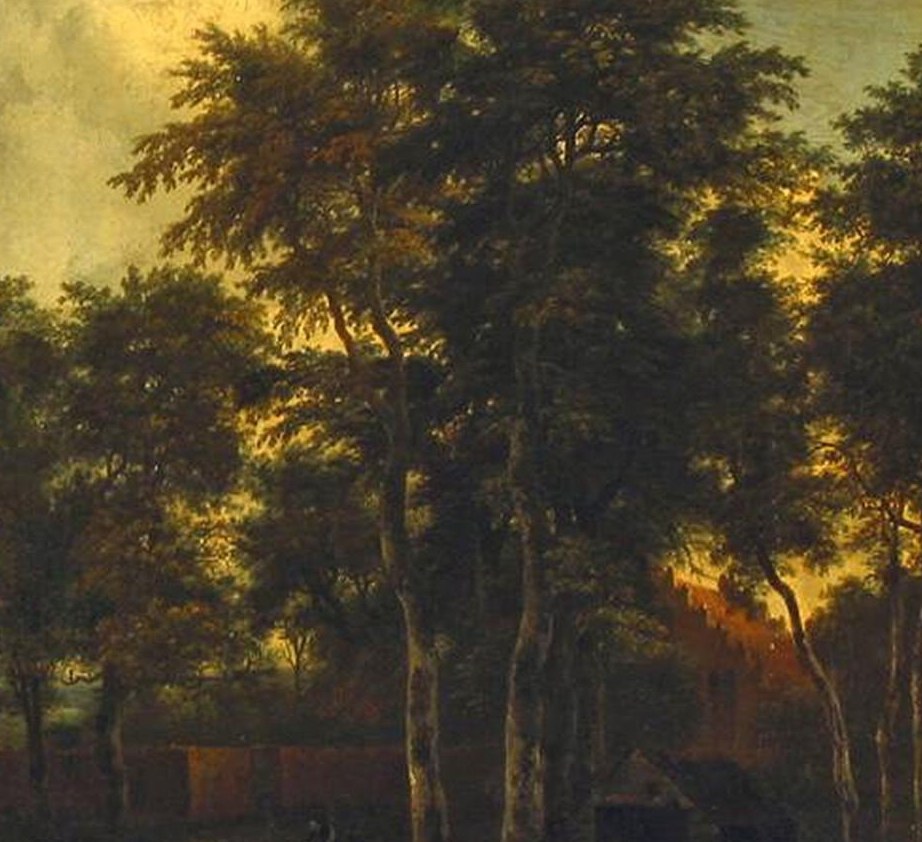
Jacob van Ruisdael's 'Farm,' painted around 1665, is more than just a tranquil rural scene; it's a window into the values of the Dutch Golden Age. This oil on canvas, held at the State Hermitage Museum, subtly embeds themes of harmony and devotion within its detailed landscape.
Observe the woman gently scattering food for the ducks. This isn't merely a genre scene; it embodies the harmonious relationship between humans and nature, suggesting responsible stewardship. The placid water and modest farm structures further reinforce themes of pastoral stability.
Then, look towards the distant hill, where a church spire rises. This element introduces a spiritual dimension, grounding the everyday life in faith. Ruisdael, considered the pre-eminent landscape painter of his time, often infused his works with such understated symbolism.
Through these deliberate choices, the painting invites viewers to contemplate a balanced existence, where human life, nature, and spirituality are intertwined. What hidden messages do you think artists convey most effectively?
Details
Transcript
A quiet farm scene, painted in Holland in 1665. But Dutch painters often included hidden meanings. This woman feeding ducks shows harmonious living. It reflects humanity's stewardship of nature. The distant church spire symbolizes faith and spirituality. Together, these elements speak to a tranquil, devout life.