The Vanderkemp Children by Sully, Thomas
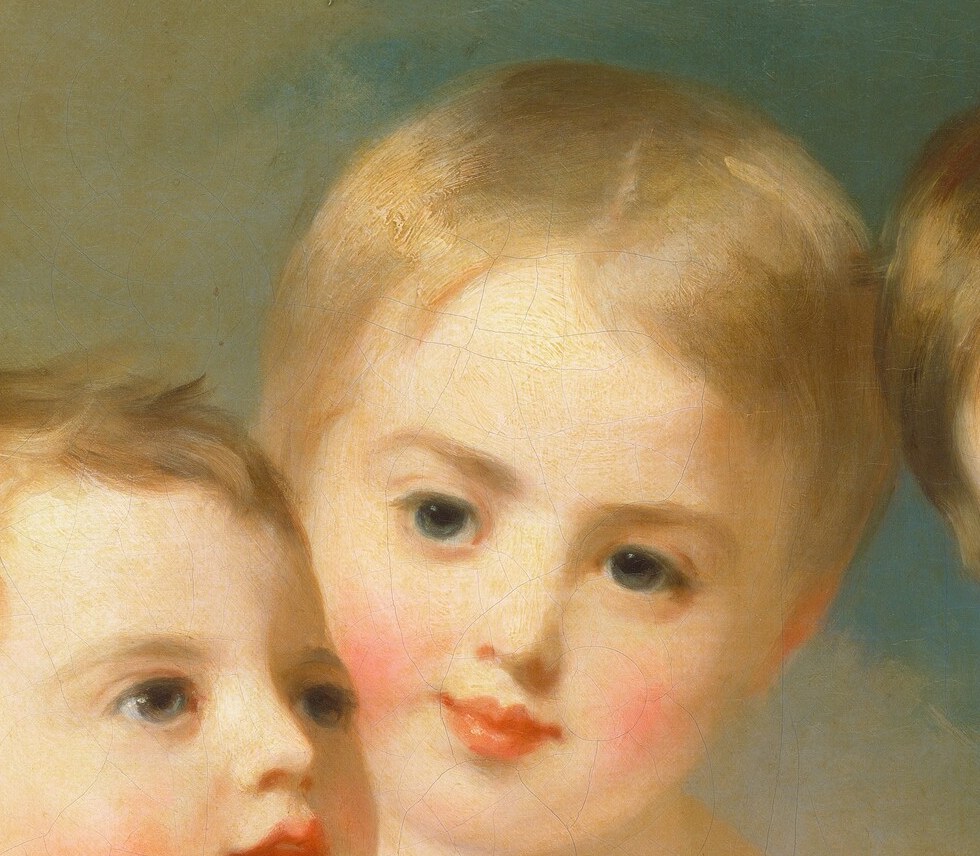
Thomas Sully's "The Vanderkemp Children," painted in 1832 and now at the National Gallery of Art, Washington, D.C., is a remarkable example of his skill in portraiture, particularly in rendering the delicate textures of skin and fabric.
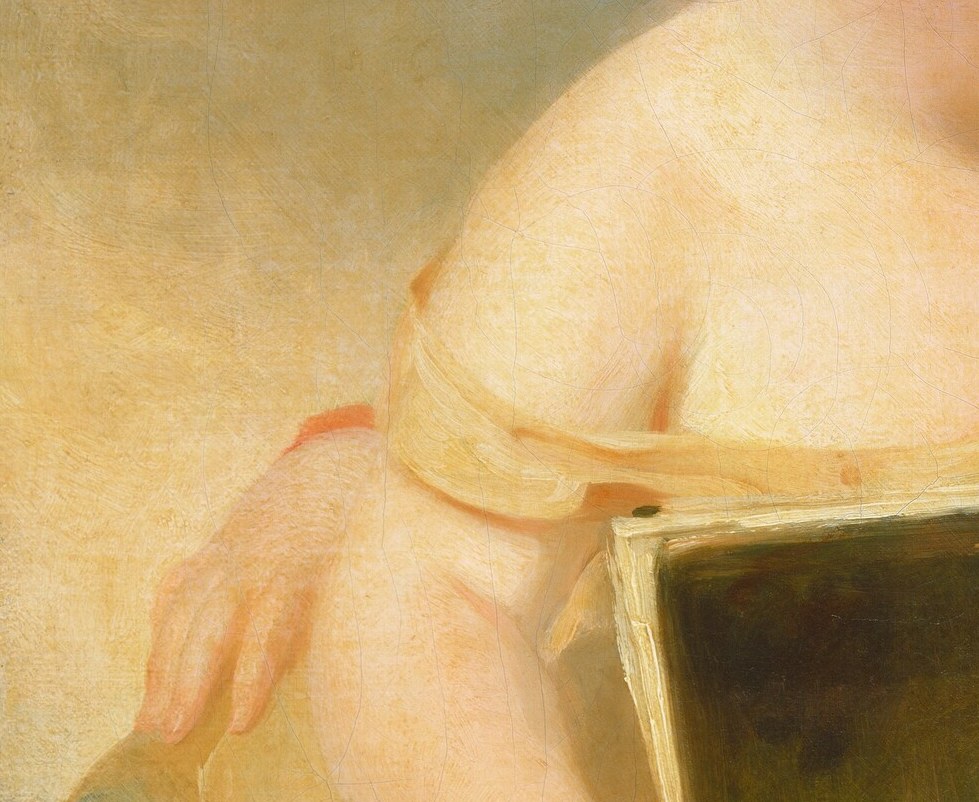
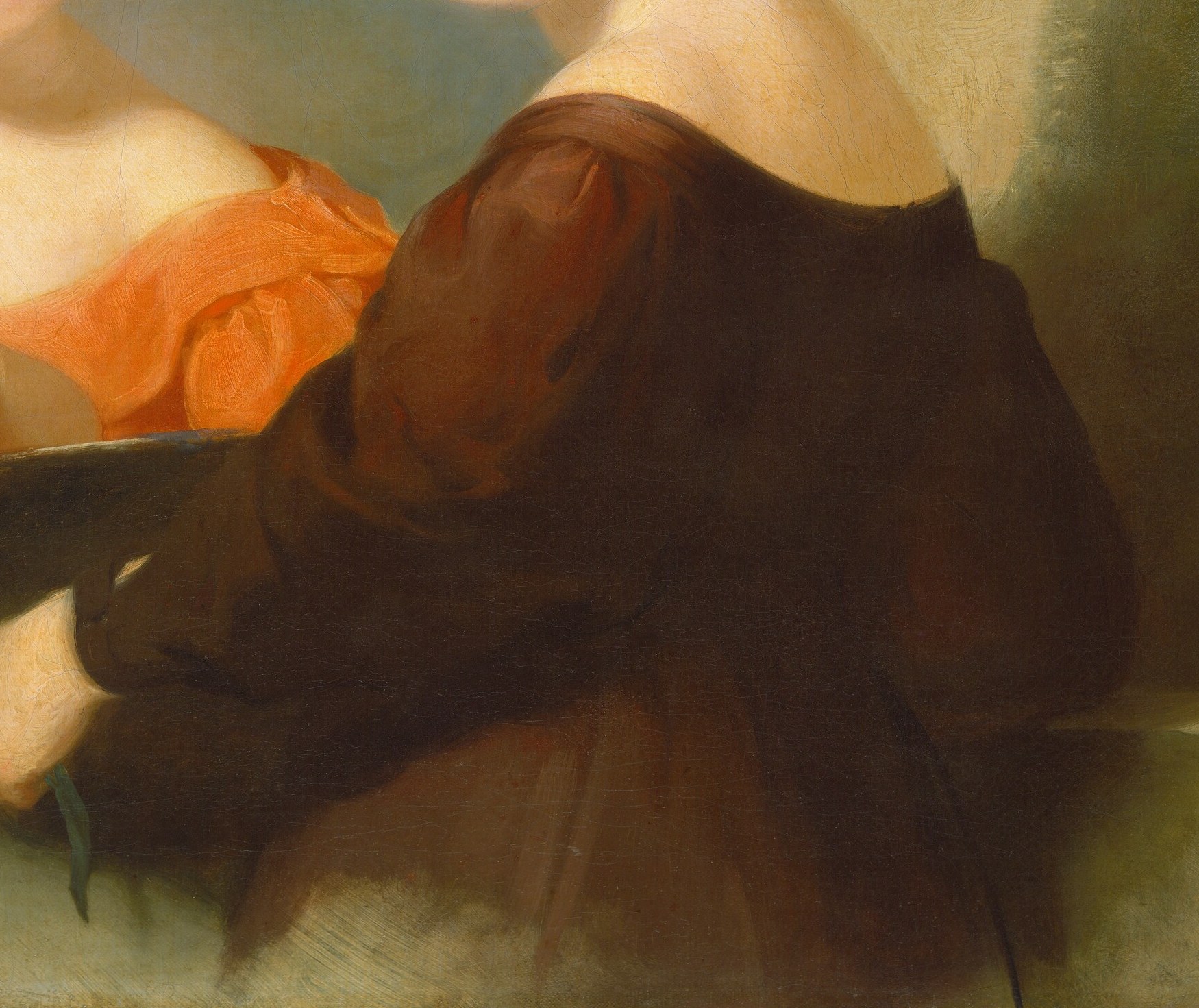
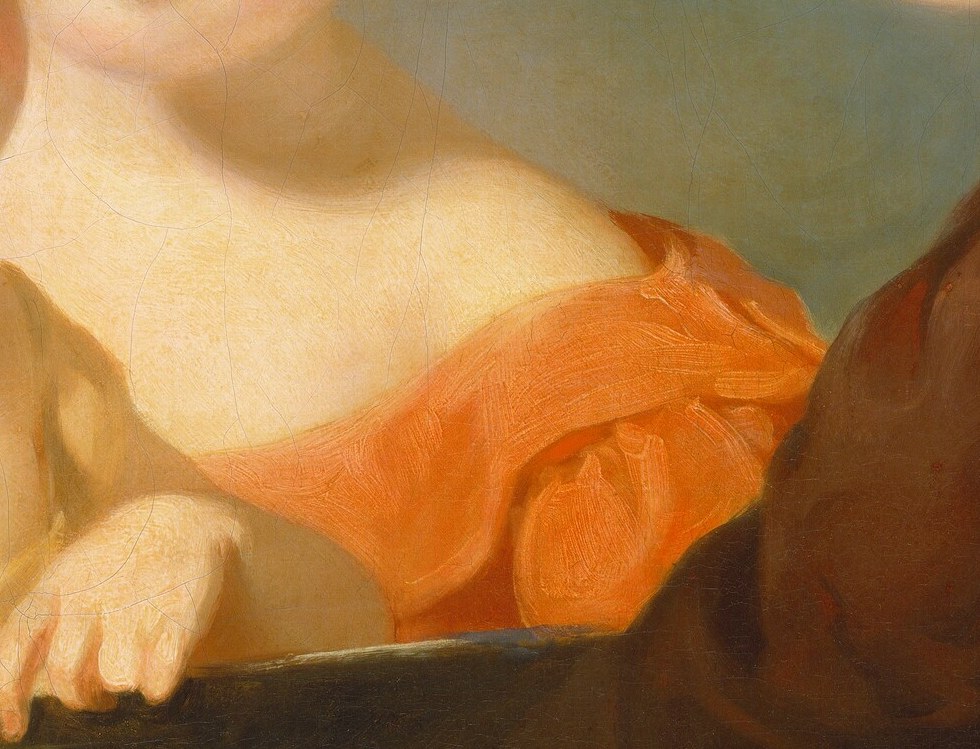
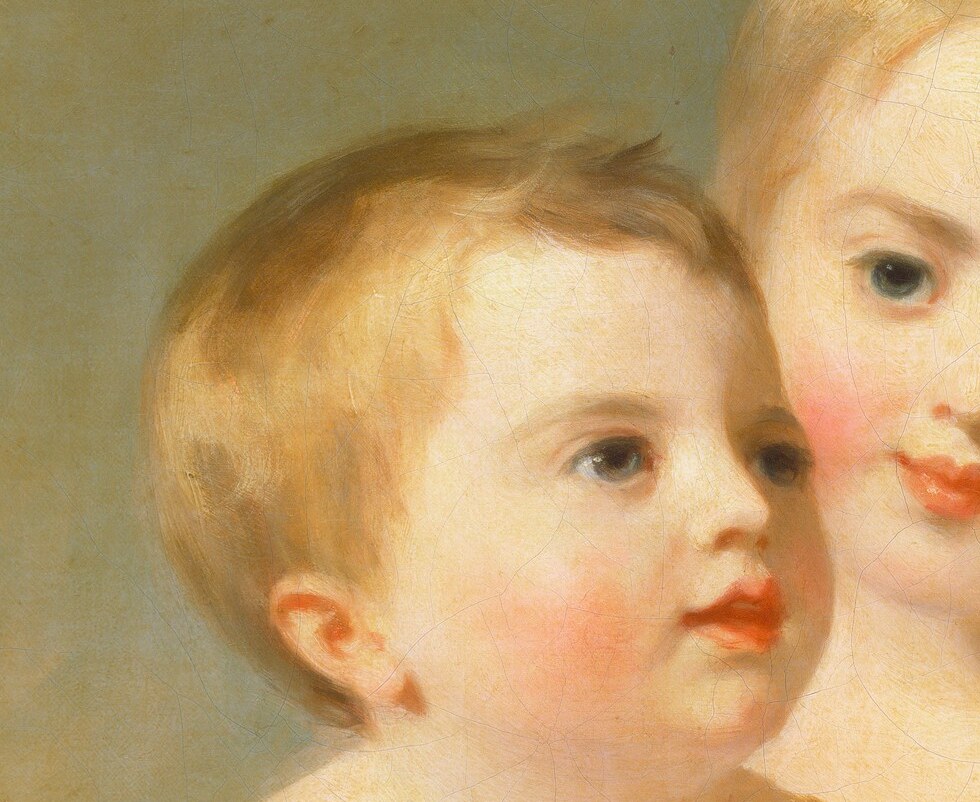
Observe the luminous quality of the youngest child's bare shoulder. Sully achieved this effect through thin, translucent layers of oil paint, allowing light to seemingly emanate from within the canvas. This contrasts beautifully with the richer, more tactile application of paint seen in the elder child's dark dress, showcasing his mastery of diverse textures.
Sully, an American artist born in 1783, was renowned for his ability to capture the individual characteristics of his sitters. This painting, depicting a moment of shared activity, highlights his approach to portraiture in the early 19th century. His works are celebrated for their naturalism and subtle psychological depth.
How do you think he managed to make the painted light feel so real on the children's skin?
Details
Transcript
This painter was famous for how he rendered skin. See the bare shoulder of the child on the left. He layered paint so thinly, light seems to glow through it. Compare it to the thick texture of this dark dress. He was a master of varying paint application to create illusions. The way he catches light on fabric is extraordinary.