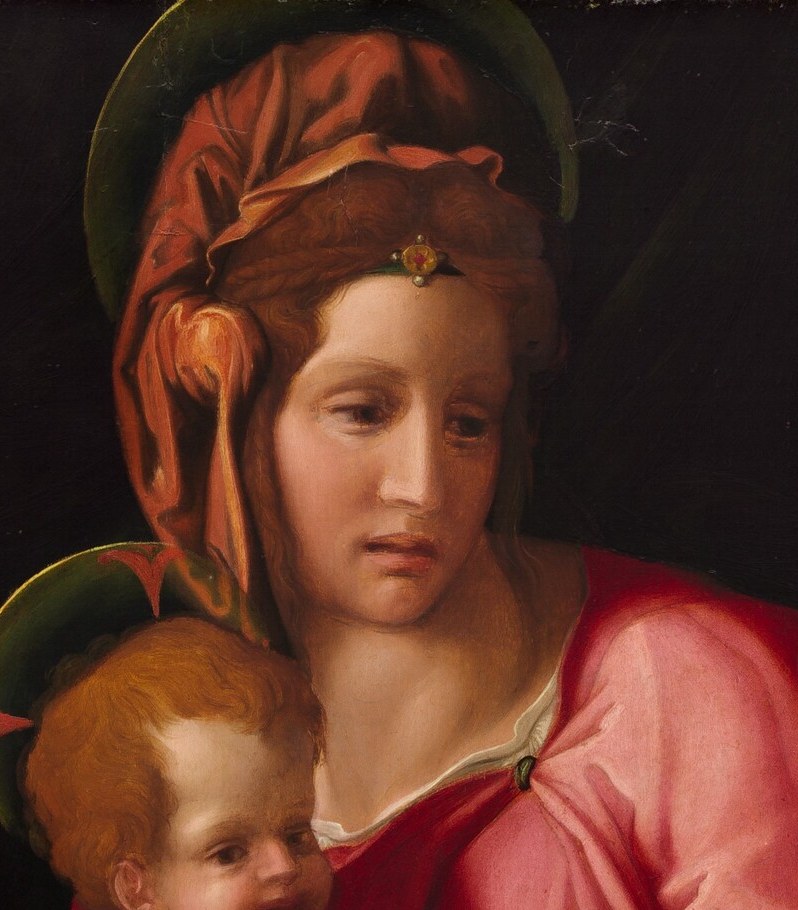
Madonna and Child with Saint Elizabeth and Saint John the Baptist by Jacopino del Conte
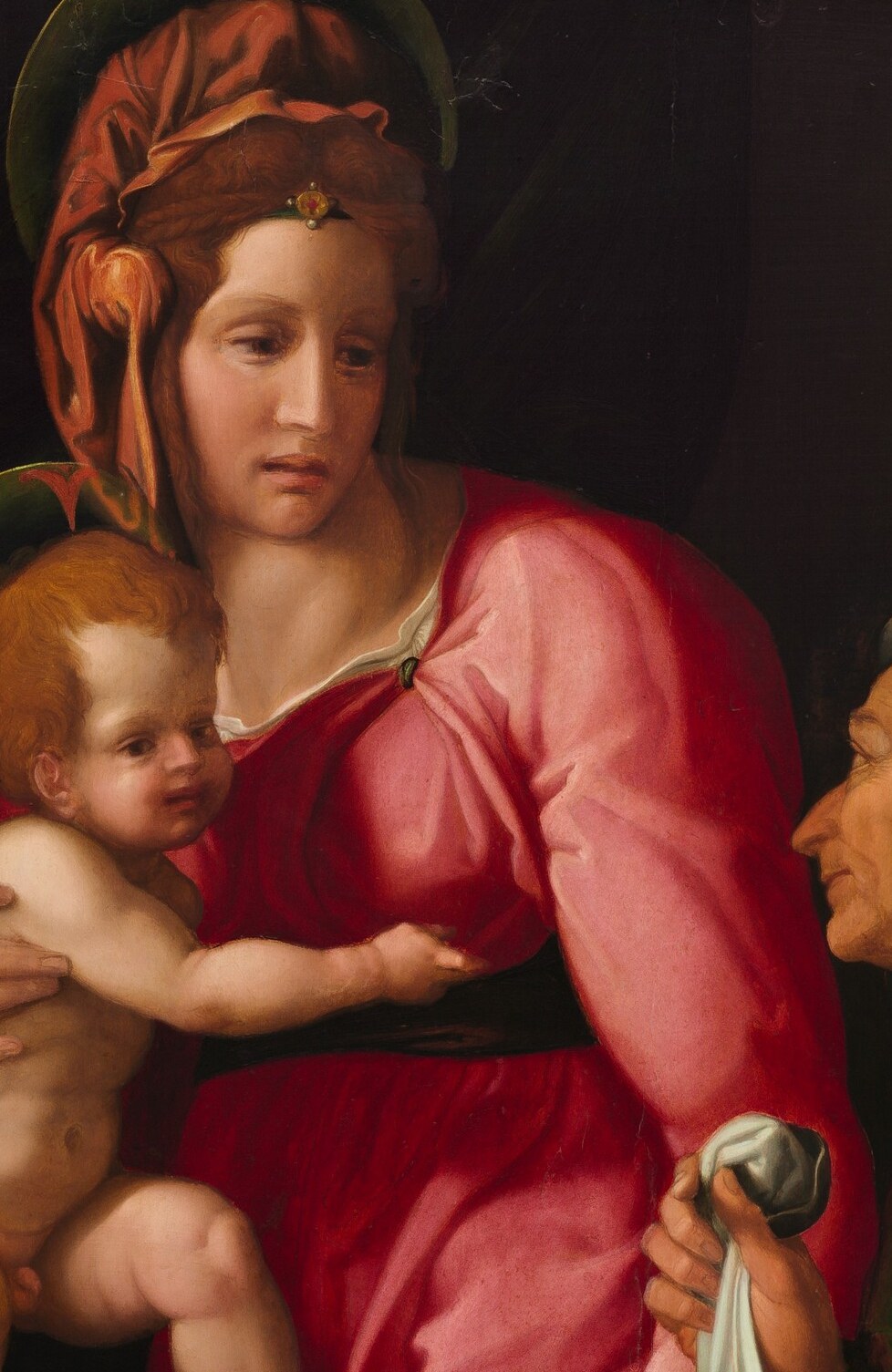
Jacopino del Conte’s “Madonna and Child with Saint Elizabeth and Saint John the Baptist” (c. 1535) is a quiet masterpiece of Mannerist intimacy. At first glance it is a tender family portrait, but a closer look reveals a painting freighted with hidden symbols of death and devotion.
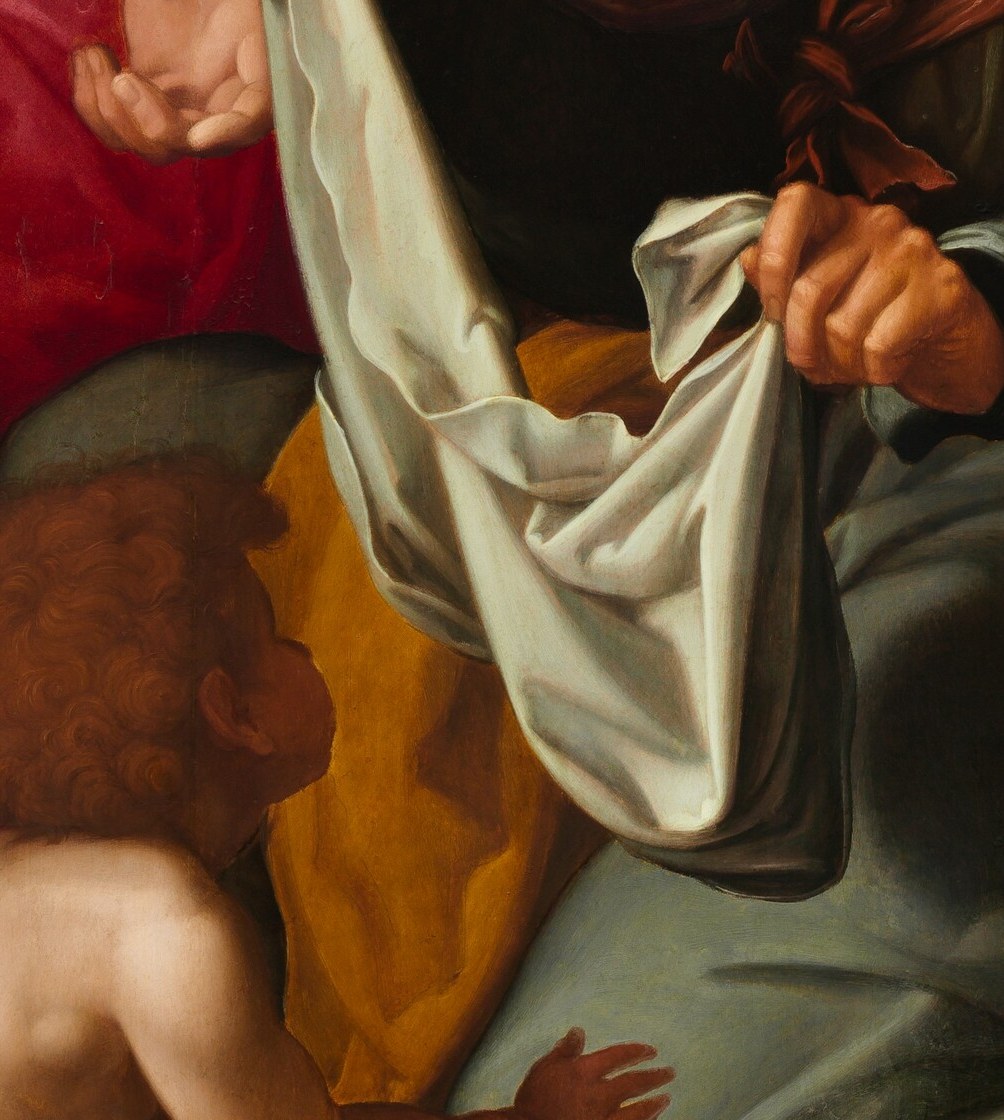
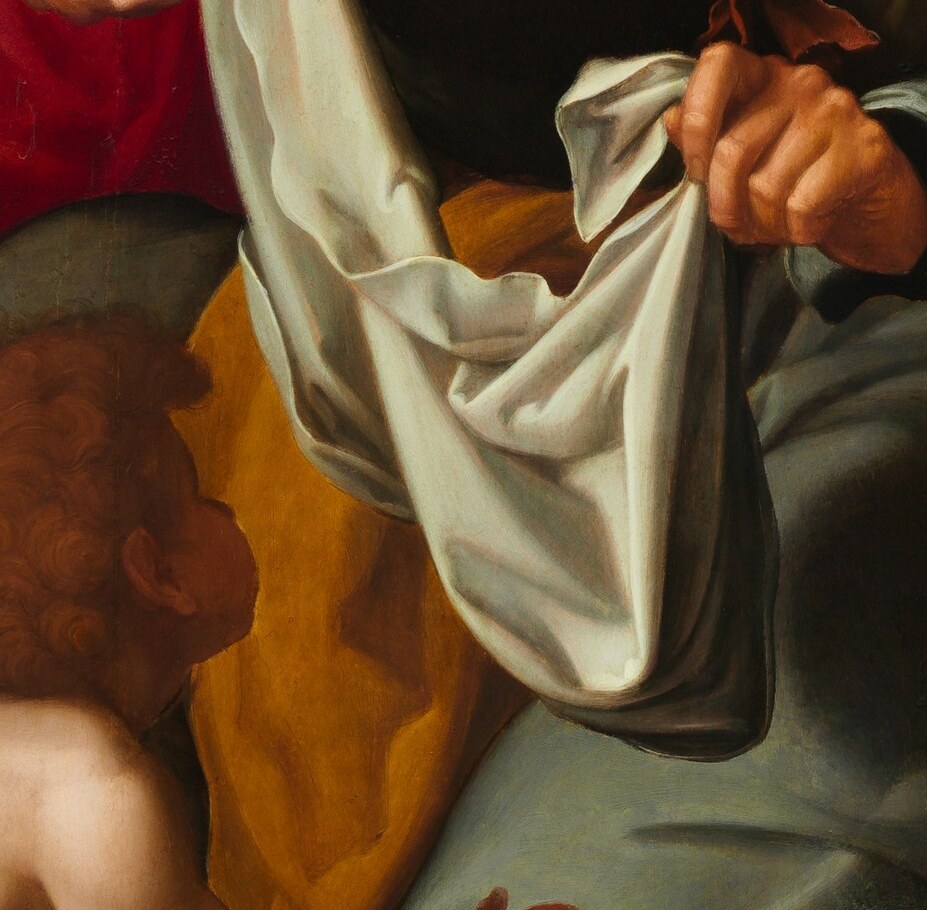
Start with the white cloth at the center of the composition. Saint Elizabeth holds it out toward the infant Christ, and for a Renaissance audience this stark white linen was an unmistakable prefiguration of a burial shroud. The artist has woven a prediction of the Passion into a domestic scene.
Now slide your eye to the very bottom right corner. A tiny spray of flowers sits quietly at the margin, barely noticeable against the dark ground. In Marian iconography these botanical details were never accidental: a lily signals purity, a rose signals charity, and together they form a quiet devotional signature, a small promise of grace tucked beside a prophecy of grief.
The painting holds these two truths in balance, and it is that tension between sorrow and hope that rewards a slow, patient look.
Details
Transcript
A mother, a child, and a quiet family gathering. The painter gives us a clue in the center: a white cloth. For Renaissance viewers, white linen meant only one thing. A burial shroud. This meeting foreshadows a loss. But a quiet hope blooms in the margin. Tiny flowers at the very edge. Easily missed. A lily for purity, a rose for charity, a silent promise.