Ginevra Bentivoglio by Roberti, Ercole de'
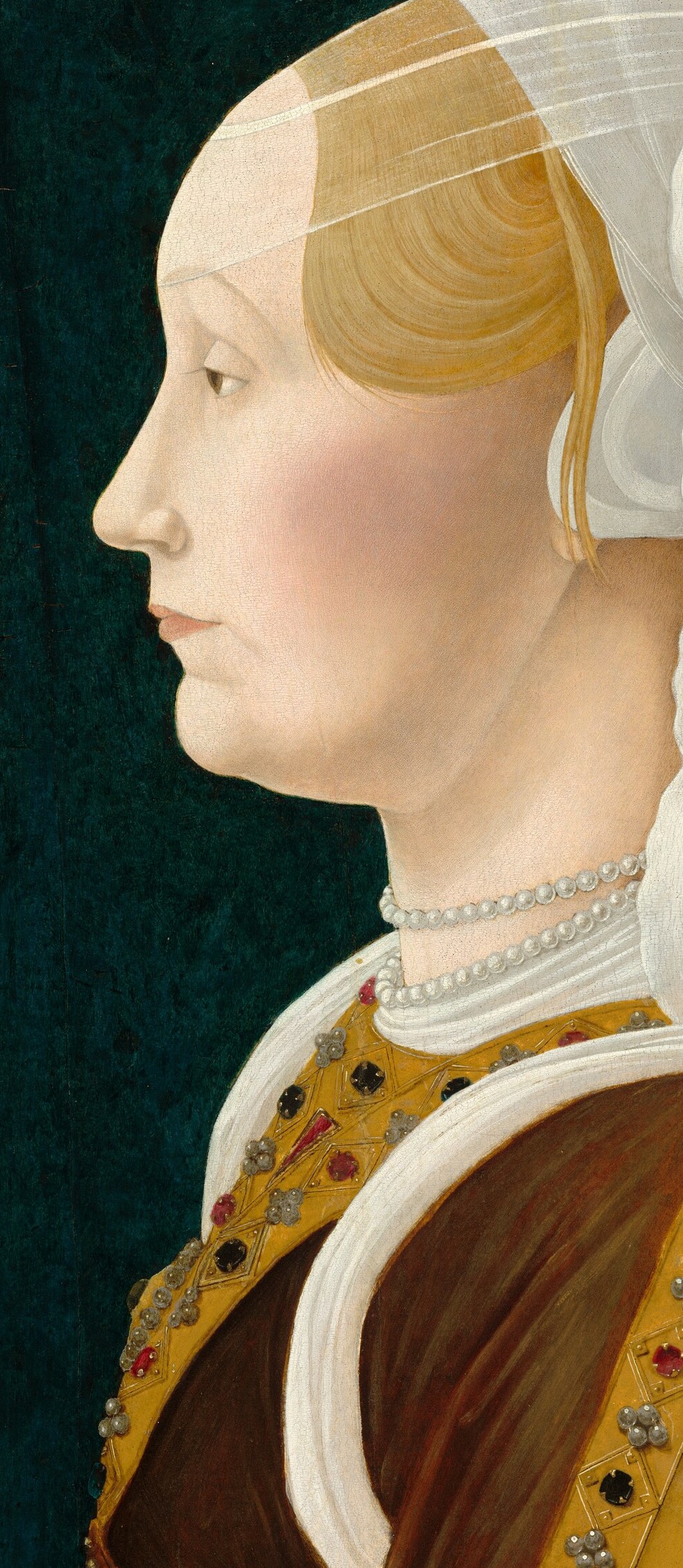
This striking portrait, "Ginevra Bentivoglio" by Ercole de' Roberti, captures the quiet dignity of a prominent Renaissance woman around 1476. Painted in tempera on a poplar panel, it is now housed at the National Gallery of Art in Washington, D.C.
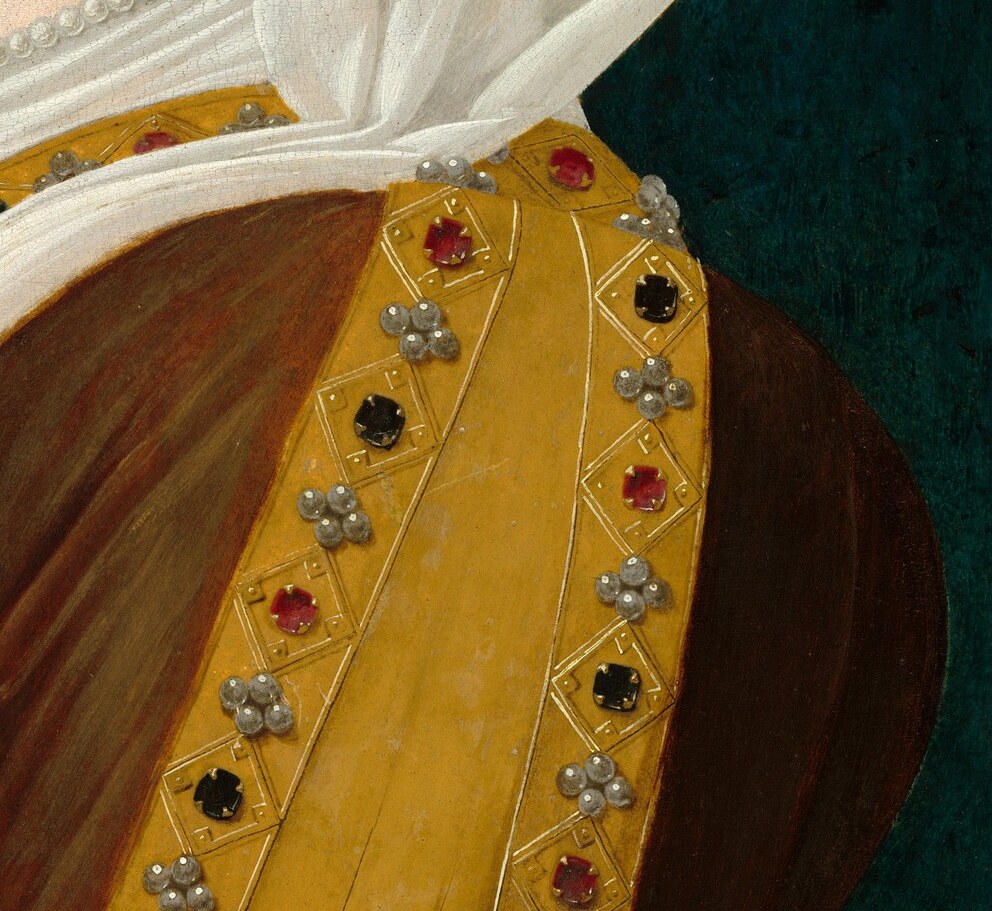
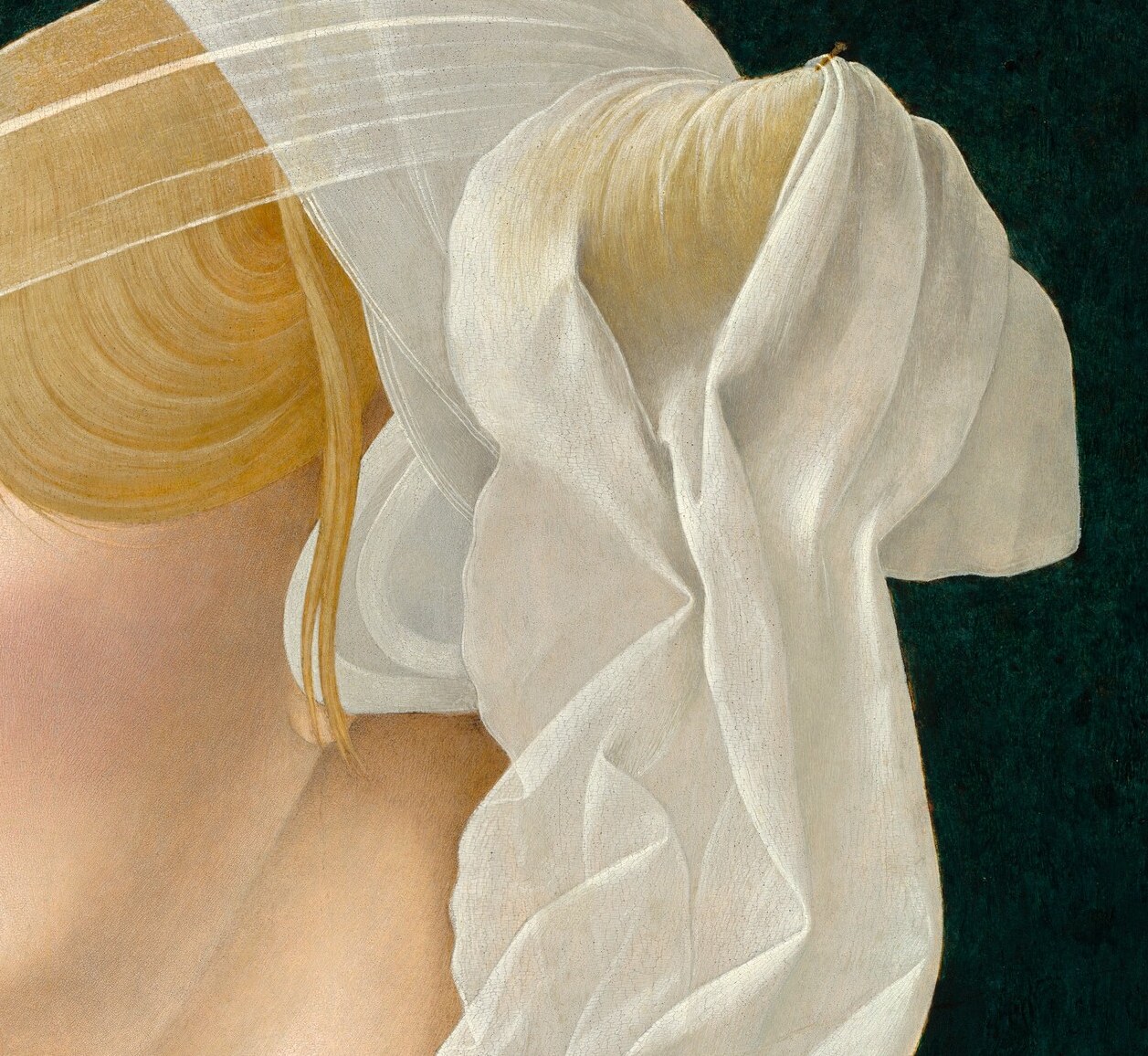
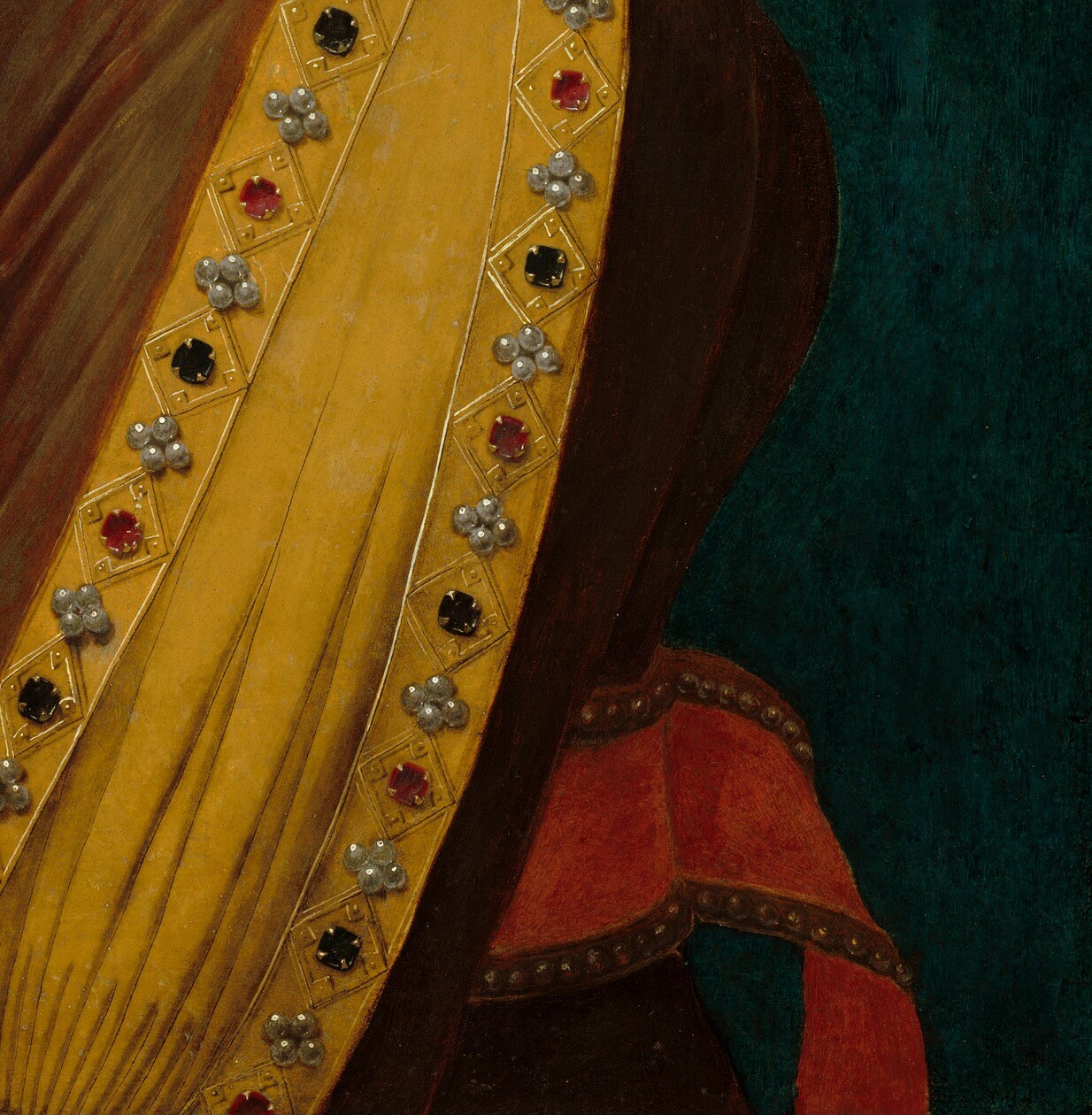
Observe her serene, unsmiling profile and the meticulous detail of her attire. Her double strand pearl necklace, a jeweled yellow vest, and a rich dark gown are all indicators of her high social standing and the luxurious fashions of 15th-century Italy.
De' Roberti, a Ferrarese painter, created this portrait as a pendant to one of her husband, Giovanni II Bentivoglio. This type of profile portrait was highly popular during the Italian Renaissance, emphasizing status and individual identity. His style combined brittle elegance with vibrant colors, a hallmark of the Ferrarese school.
The painting offers a window into the visual culture and social aspirations of powerful families during a pivotal period in art history. What details do you notice first?
Details
Transcript
This quiet portrait shows Ginevra Bentivoglio, a powerful Renaissance woman. Her strict profile was a style popular in 15th-century Italian art. Notice her double strand of lustrous pearls, a sign of wealth and status. Her jeweled yellow vest and rich gown were cutting-edge fashion. The artist, Ercole de' Roberti, painted it around 1476 in tempera on wood. He also painted her husband, Giovanni II Bentivoglio, as a companion piece.