A Girl with a Watering Can by Renoir, Auguste
Pierre-Auguste Renoir's 1876 "A Girl with a Watering Can" is a characteristic example of Impressionism, capturing a fleeting moment in a lush garden. Housed at the National Gallery of Art in Washington, D.C., it invites viewers to appreciate the artist's innovative techniques.
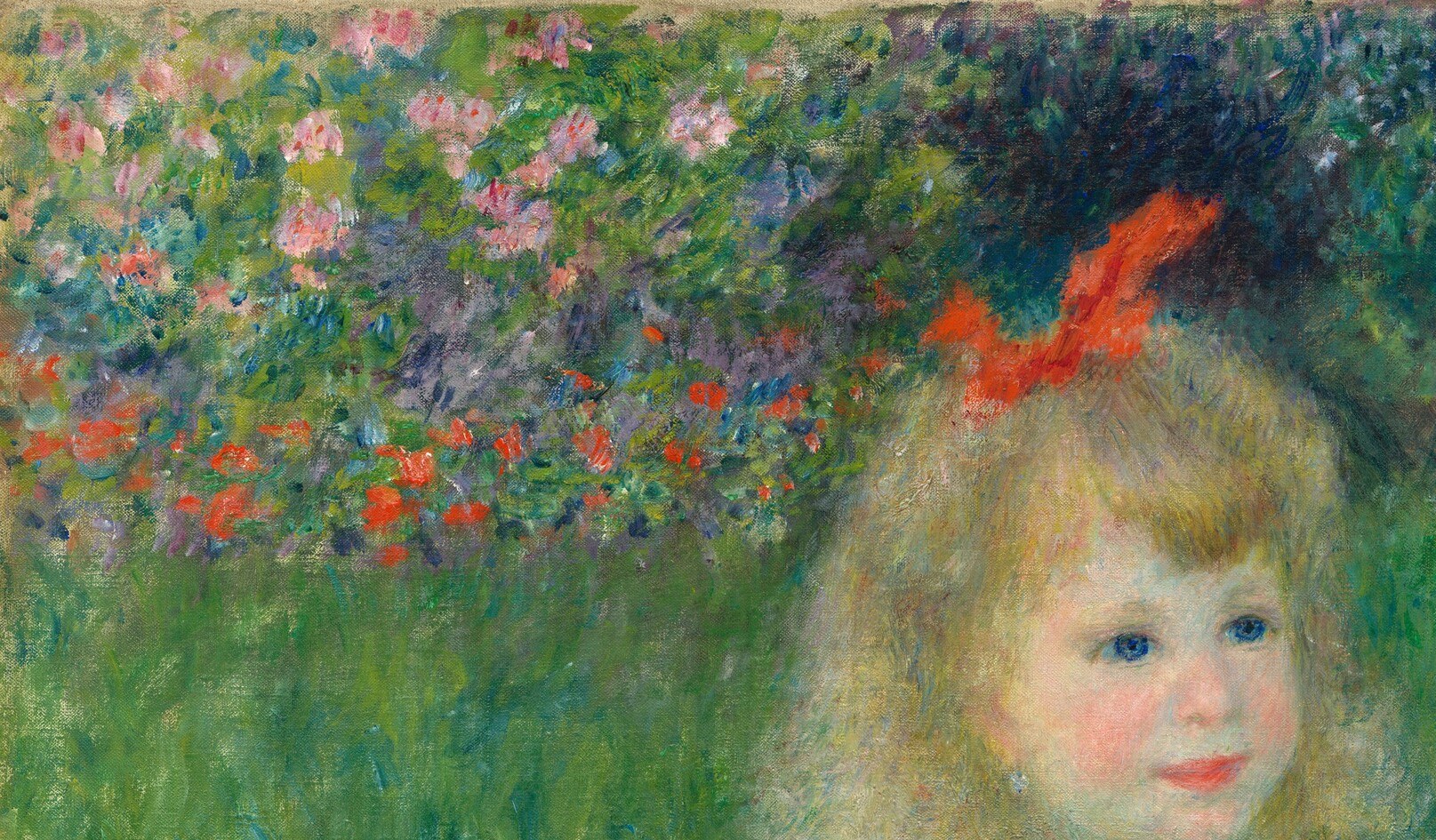
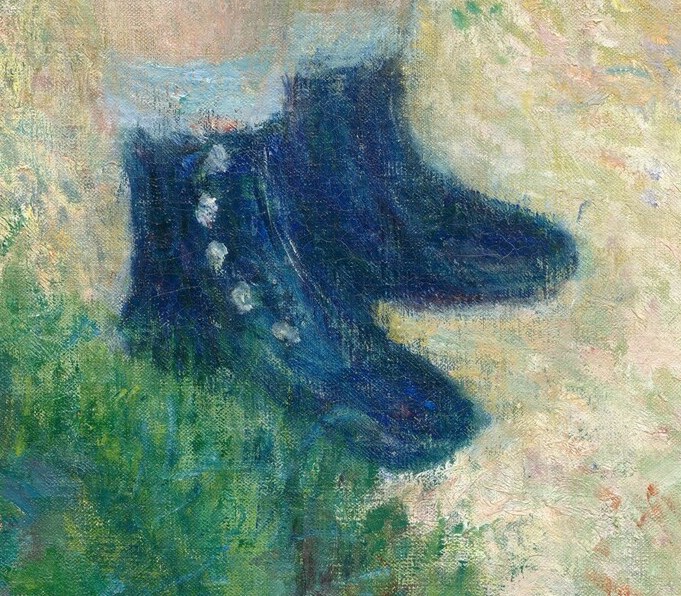
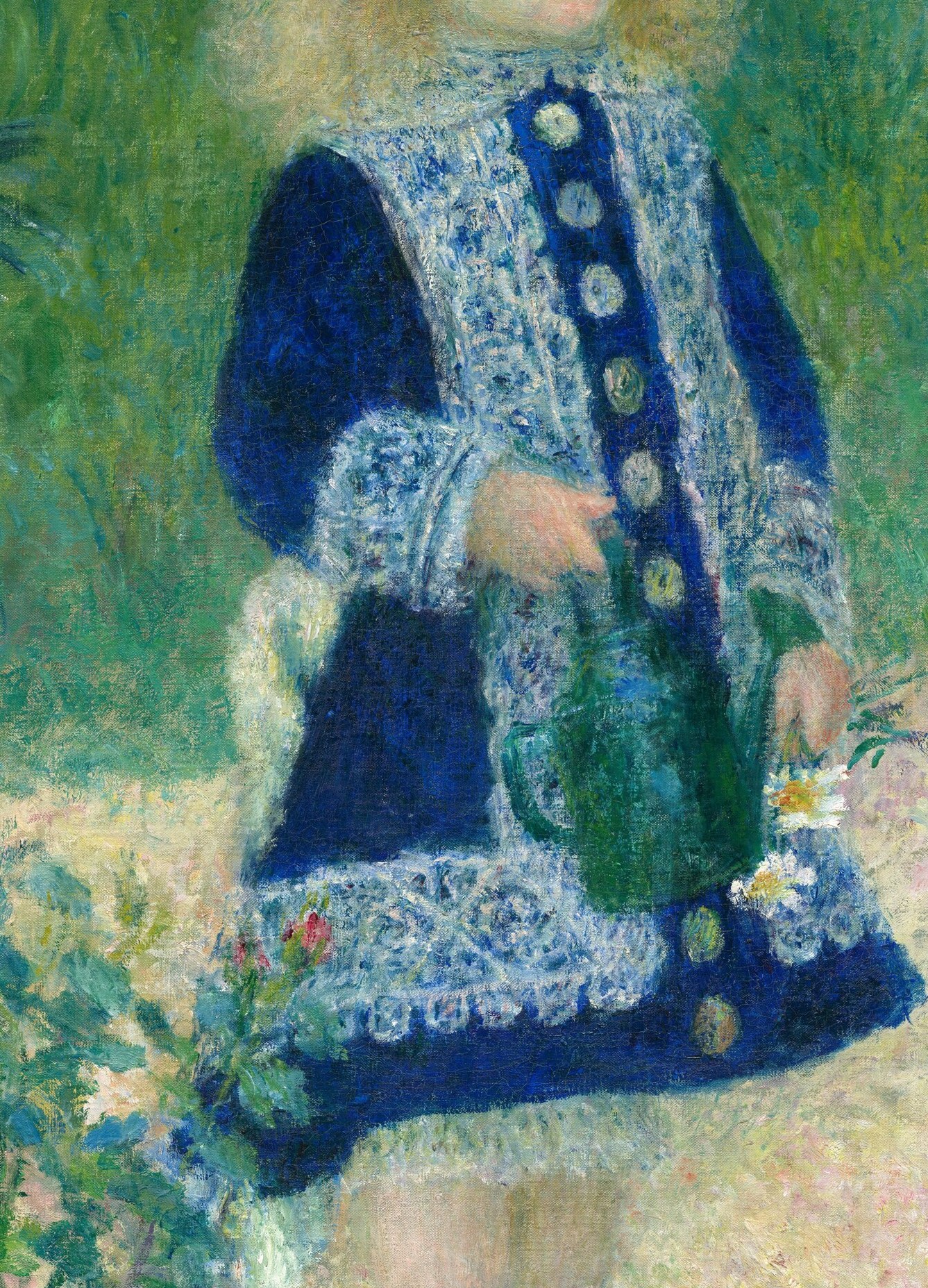
Observe the vibrant background foliage and the soft, almost blended appearance of the girl's dark boots, creating a harmonious sense of the scene. The delicate lace trim on her blue dress and the bright red bow in her hair add charm to her youthful presence.
Renoir, who studied alongside Monet, Sisley, and Bazille, employed loose, visible brushstrokes, particularly in the background. This technique, known as impasto, adds a tactile quality to the painting, emphasizing the texture of the canvas itself. The girl's face, rendered with soft colors, conveys a gentle and lively expression, embodying the spirit of the Impressionist movement.
This painting beautifully illustrates Renoir's ability to blend portraiture with landscape, creating a scene that feels both immediate and timeless. What details in the brushwork catch your eye first?
Details


Transcript
This painting captures a fleeting moment, as Impressionists loved to do. The soft background creates a sense of light and movement. The girl may have been a child from Renoir's neighborhood. But look at her dark boots, almost blended into the grass. Renoir used thick, visible brushstrokes, a technique called impasto. It adds a tactile quality, making the paint itself part of the art.