Night Scene on the Volga by Alexei Savrasov
Alexei Savrasov's "Night Scene on the Volga" (1871) lives in a single shaft of pale moonlight. It is held at the Metropolitan Museum of Art and shows the vast Russian river at its most still and brooding.
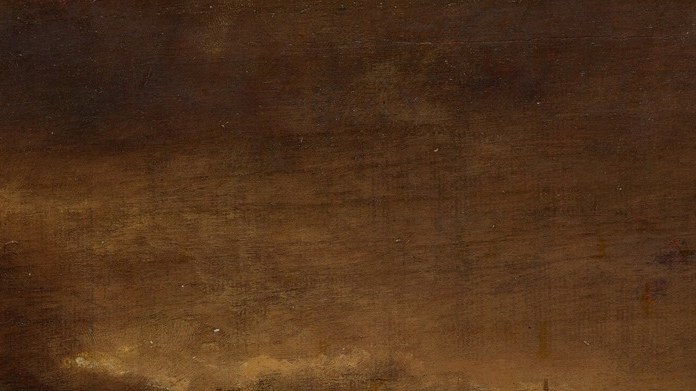
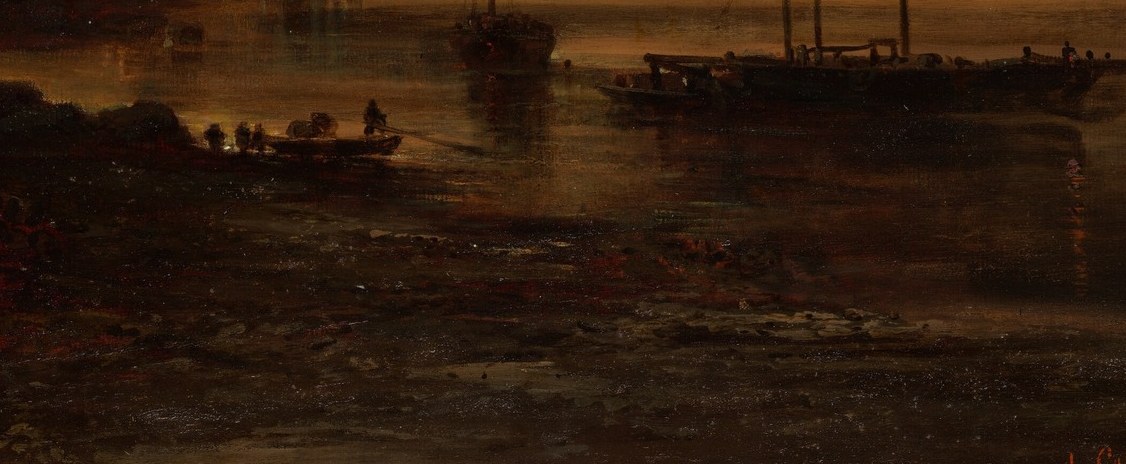
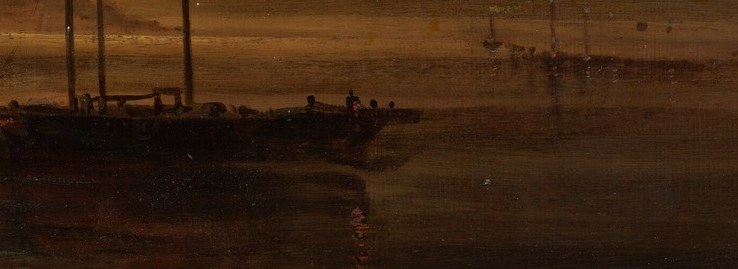
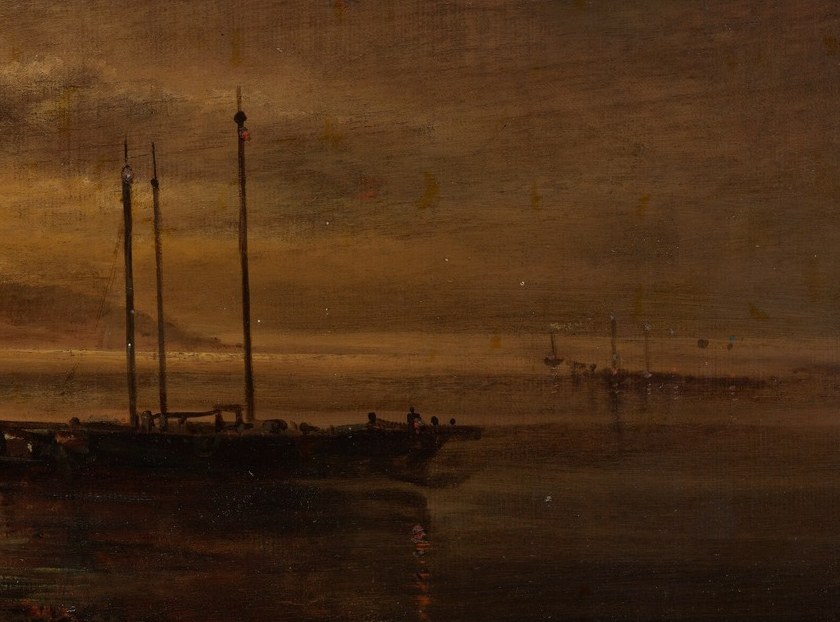
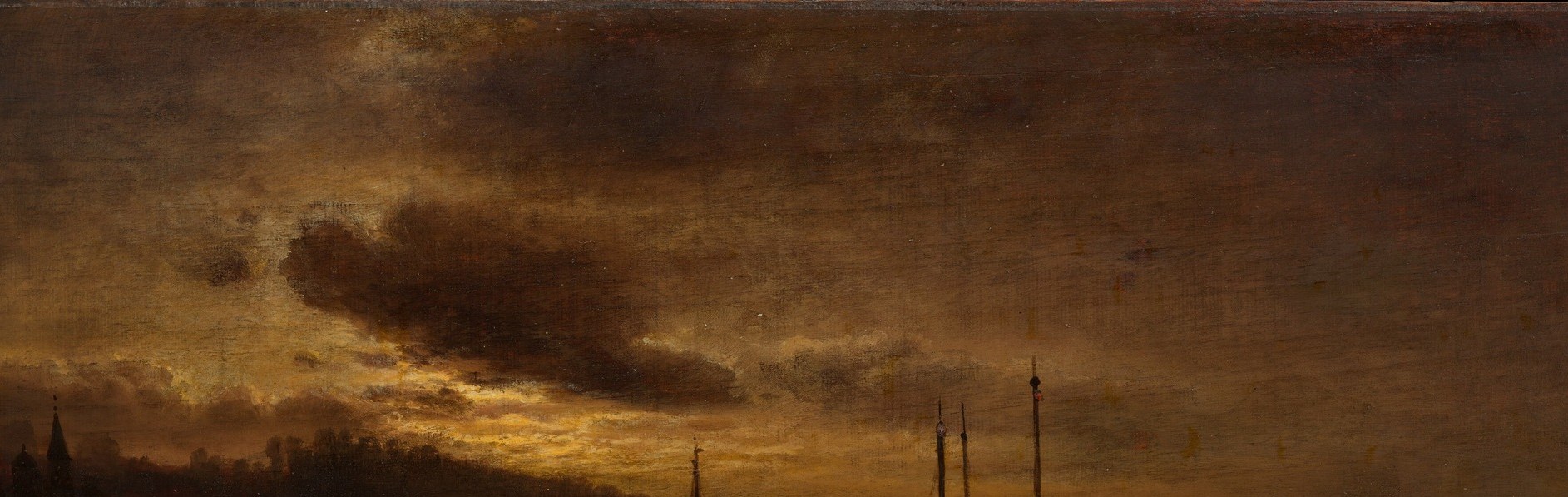
The painting is built around a cold silver tear in the clouds. Find that break in the upper center sky. Savrasov pushes the entire tonal structure through it: a faint gloss on the dark water, the crisp black hull of a two-masted boat, and the deep nothingness of the foreground shadows. The tightest brushwork in the whole canvas is at the waterline of the large vessel, where hull meets reflection.
Savrasov was the leading Russian landscape painter of his generation and the teacher of Isaac Levitan. He created the "lyrical landscape" style, an approach that insisted a place carries a mood. While "The Rooks Have Returned" is his most famous painting, this nocturnal Volga scene shows a quieter mastery: an artist who understood that you do not need sunlight to build a world, only a small break in the clouds and the nerve to leave most of the canvas in shadow.
What does the dark water make you feel?
Details
Transcript
Alexei Savrasov painted this in 1871, but he hid something. First, find the only true light source. A silver tear in the clouds. He built the whole picture from this. He let that faint light bleed onto the water. Then he buried his brushwork economy in the hull. Only here, at the waterline, do you see how fast and sure his hand is. He was the teacher who discovered Isaac Levitan. A man who taught others to see light inside darkness.