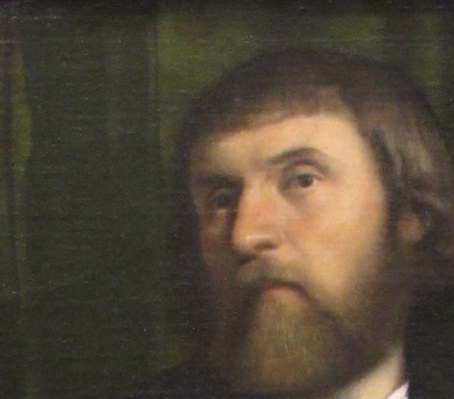
Portrait of a Man by Moretto da Brescia
This intriguing Portrait of a Man, painted by Moretto da Brescia in 1520, is part of The Metropolitan Museum of Art's collection. While the sitter presents himself with serious dignity, a hidden detail in his right hand offers a surprising twist.
Moretto da Brescia, a prominent Renaissance painter, often depicted his subjects with a restrained elegance. Here, the man's formal attire, the important-looking paper, and the distant landscape all contribute to an image of status and contemplation. However, a closer look at his hands reveals something unexpected.
Hidden beneath the paper, the man grasps a pair of dice. This small, expertly rendered detail introduces a layer of complexity to his character, hinting at a life beyond the formal portrait. Was he a gambler, a man of leisure, or does the dice hold a deeper, perhaps allegorical, meaning? It remains a subtle mystery woven into the fabric of this 16th-century work.
What do you think this unexpected symbol reveals about the man in the portrait?
Details

Transcript
This portrait from 1520 seems to show a wealthy, serious man. The painter, Moretto da Brescia, was known for his restrained style. He holds a piece of paper, perhaps a letter or a document. But look closely at his right hand, beneath the paper. He holds a small, perfectly rendered pair of dice. An unexpected symbol for a man of such apparent gravitas.