The Adoration of the Magi by Hieronymus Bosch
View the artwork: The Adoration of the Magi →
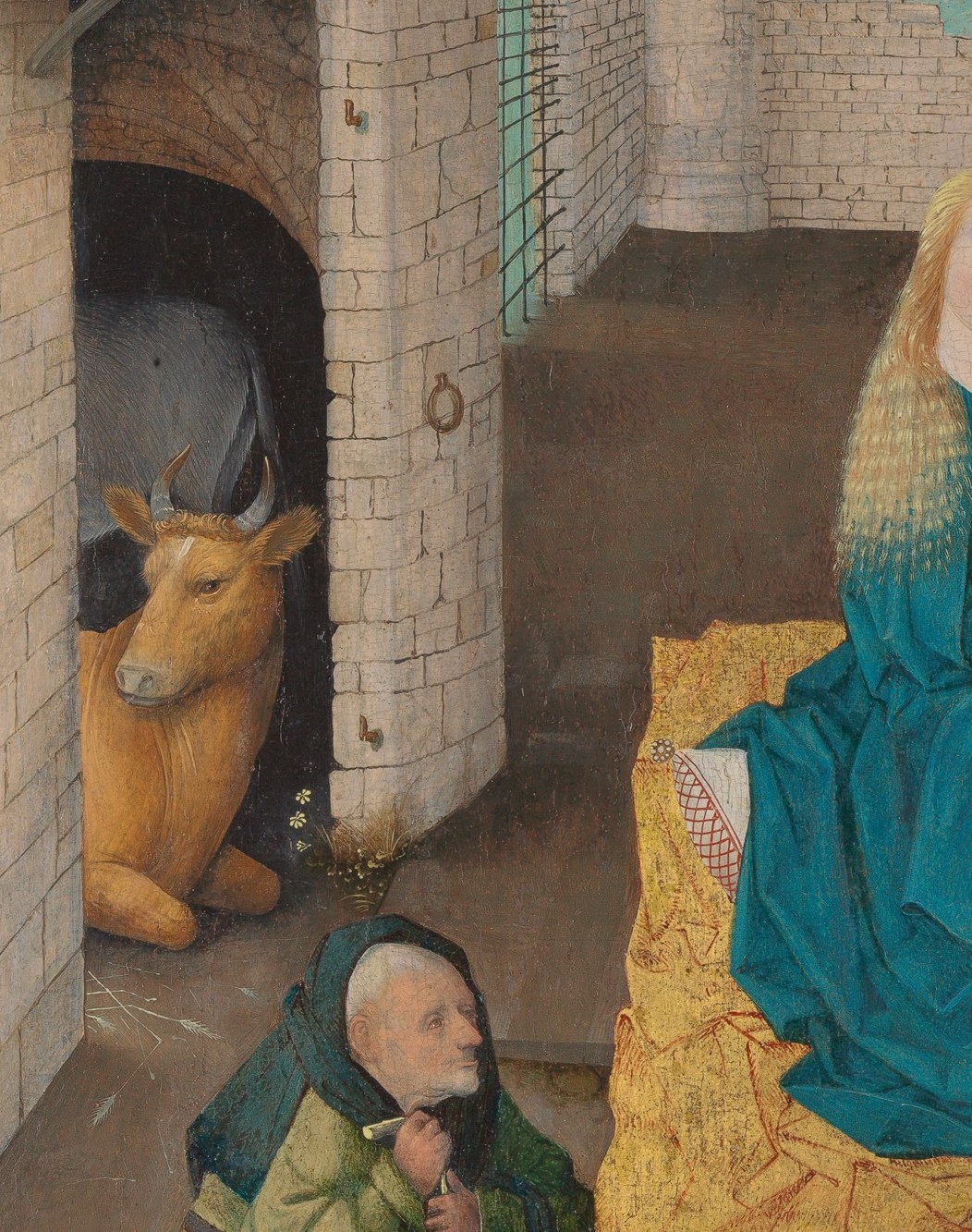
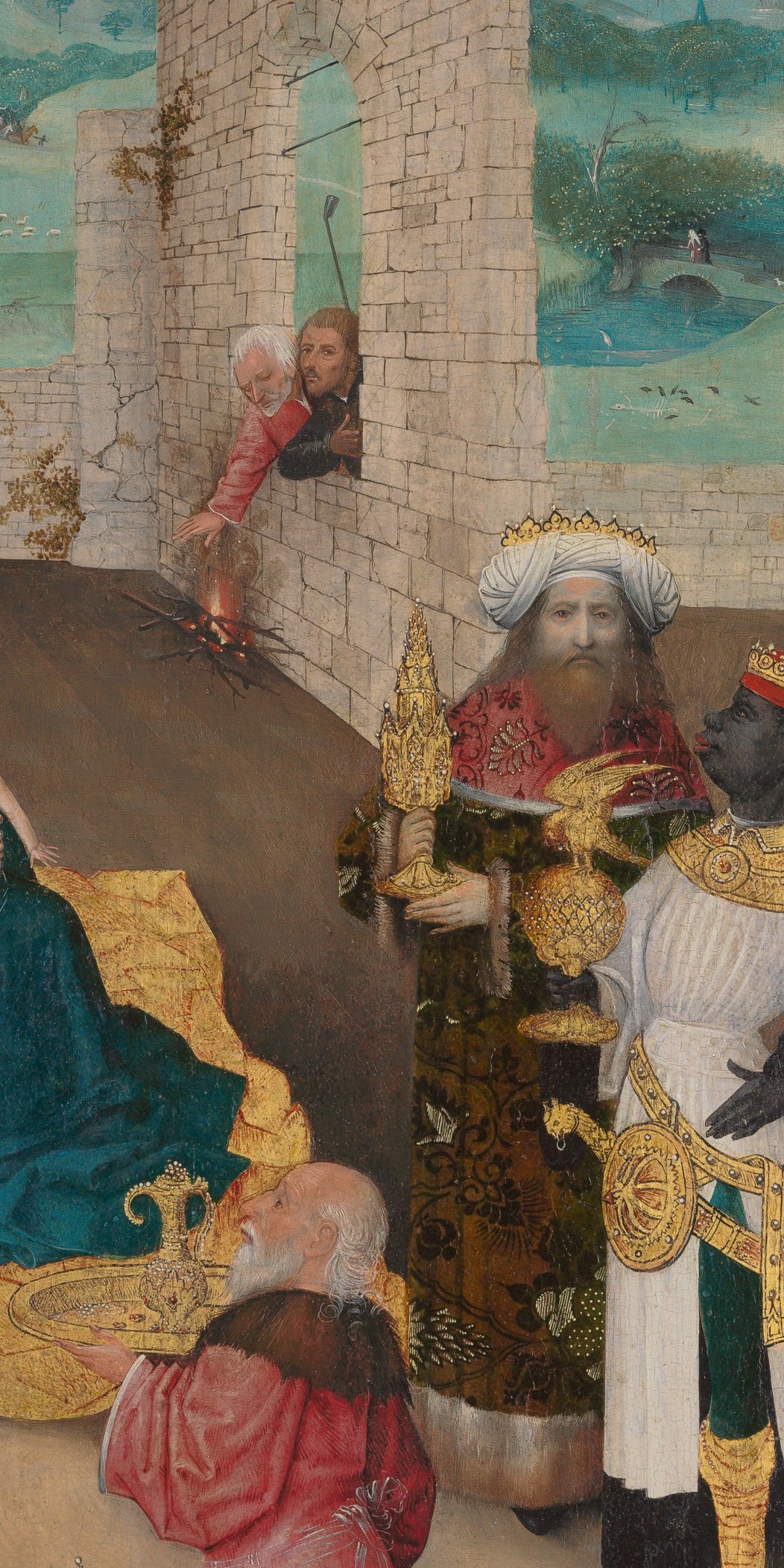
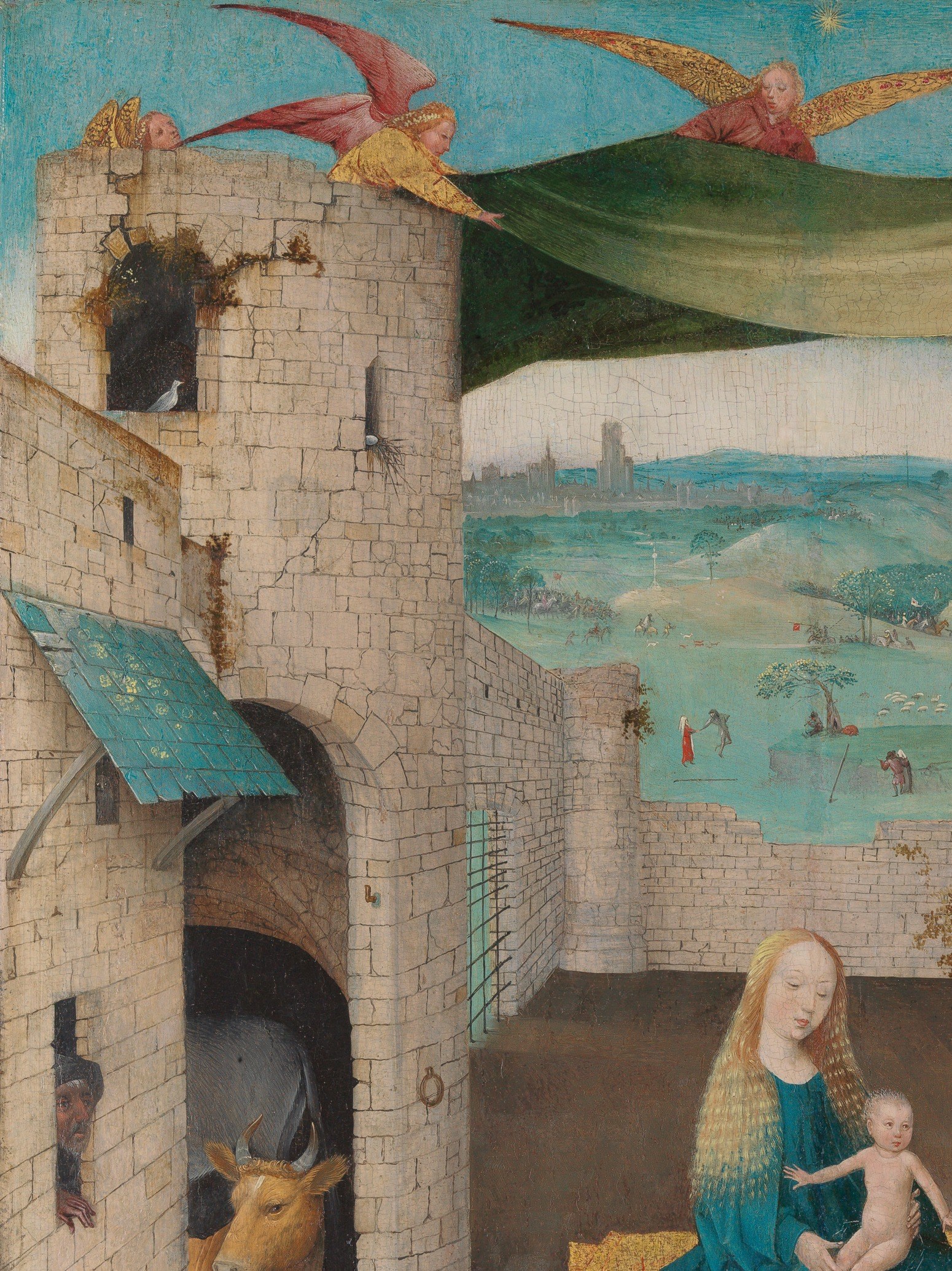
Hieronymus Bosch is known for his nightmarish visions of hell, but this early work, The Adoration of the Magi (c. 1475), at the Metropolitan Museum of Art in New York, does something totally different. It uses gold leaf, a material he almost never touched, to generate a physical, metallic light that paint alone could not achieve.
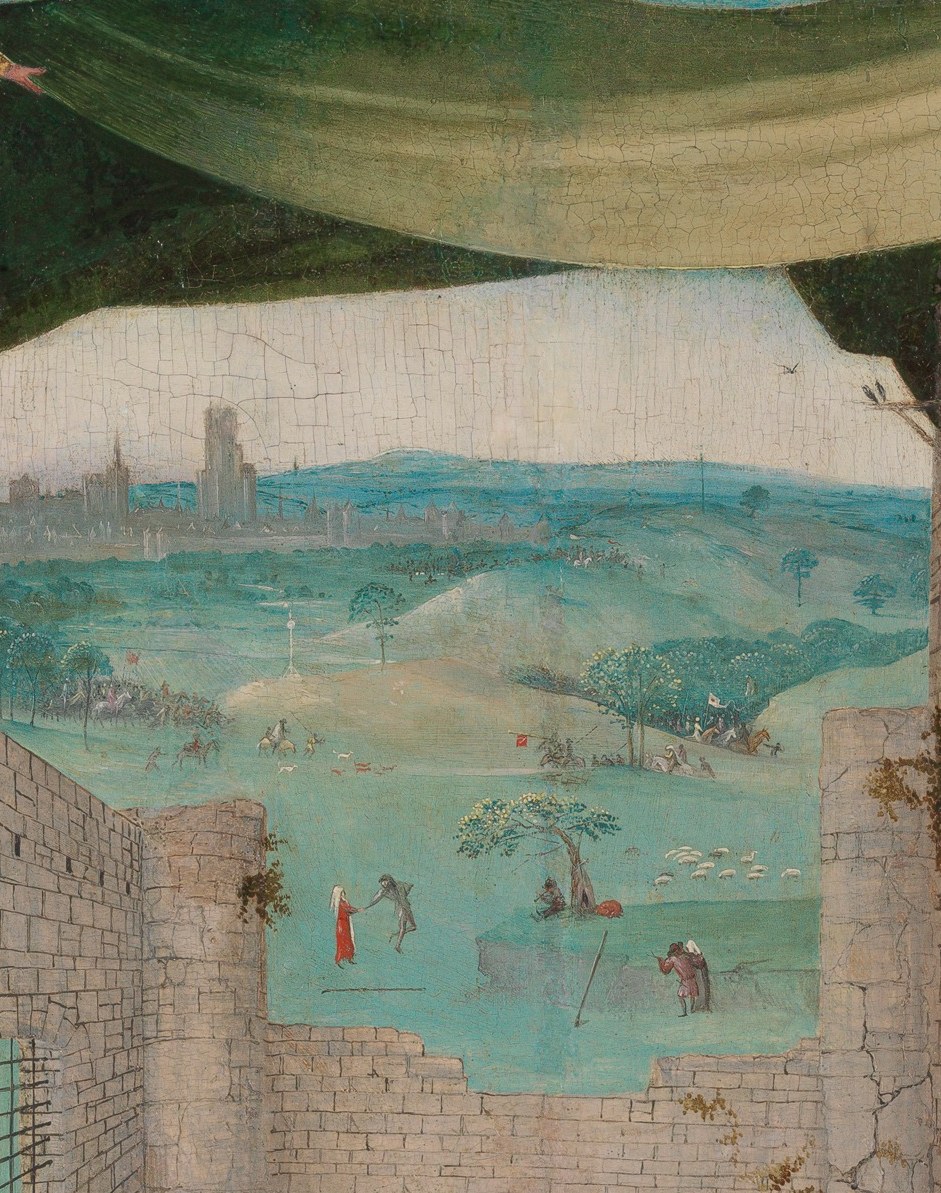
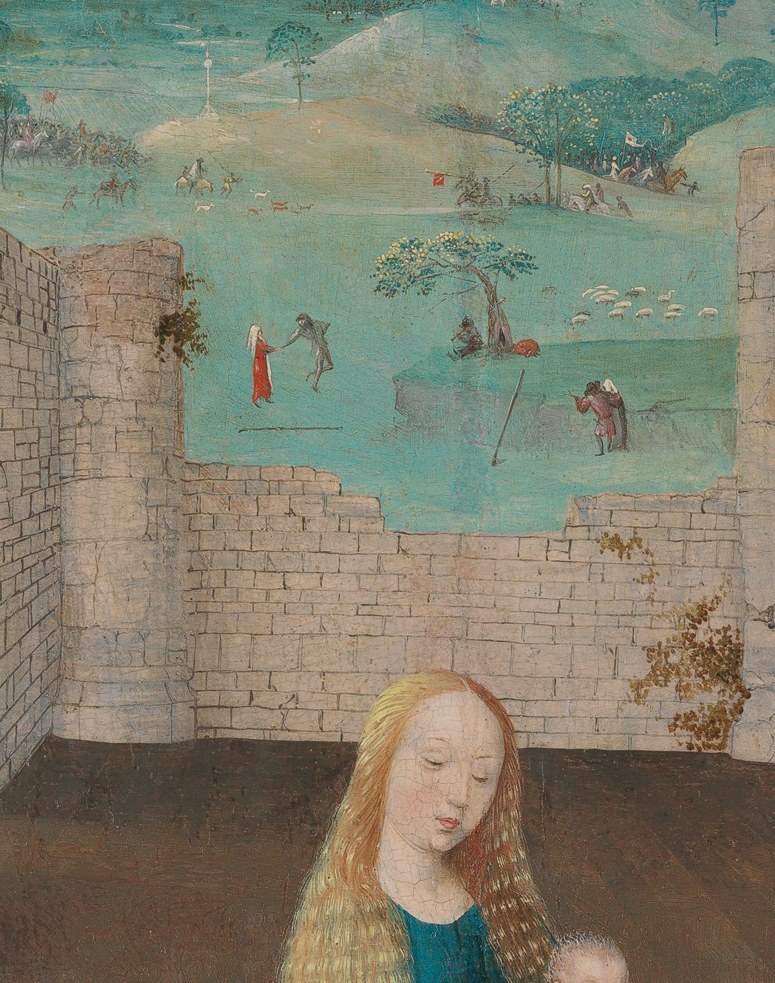
Look at the kneeling king in red. The gold in his robe is not yellow pigment trying to mimic light; it is actual thin sheets of hammered metal catching the ambient light of the room you are standing in. The same technique appears in the chalice and subtly in the distant landscape, pushing the sense of depth.
Bosch painted this around 1475, early in his career, in the town of 's-Hertogenbosch in what is now the Netherlands. Despite his later wild, surreal fame, this panel is a relatively traditional scene, the three Magi presenting gifts to the Christ Child, but the material ambition is already there. The pervasive use of metal leaf was an expensive, almost defiant choice for a young painter.
Oil paint can make you believe you see light. Gold leaf simply is light, right there on the wood. Next time you see a Bosch, look for the shimmer.
#arthistory #hieronymusbosch #earlynetherlandish
Details
Transcript
Hieronymus Bosch is famous for hell. But this early painting of his does something else. The robes glow, but not from paint. Gold leaf, laid into the fabric. Bosch almost never used gold leaf. Here he used it everywhere. The real trick is the perspective. The landscape uses gold to push light backward. The divine light in this scene? It is actual metal.