The Angel of the Annunciation by Simone Martini
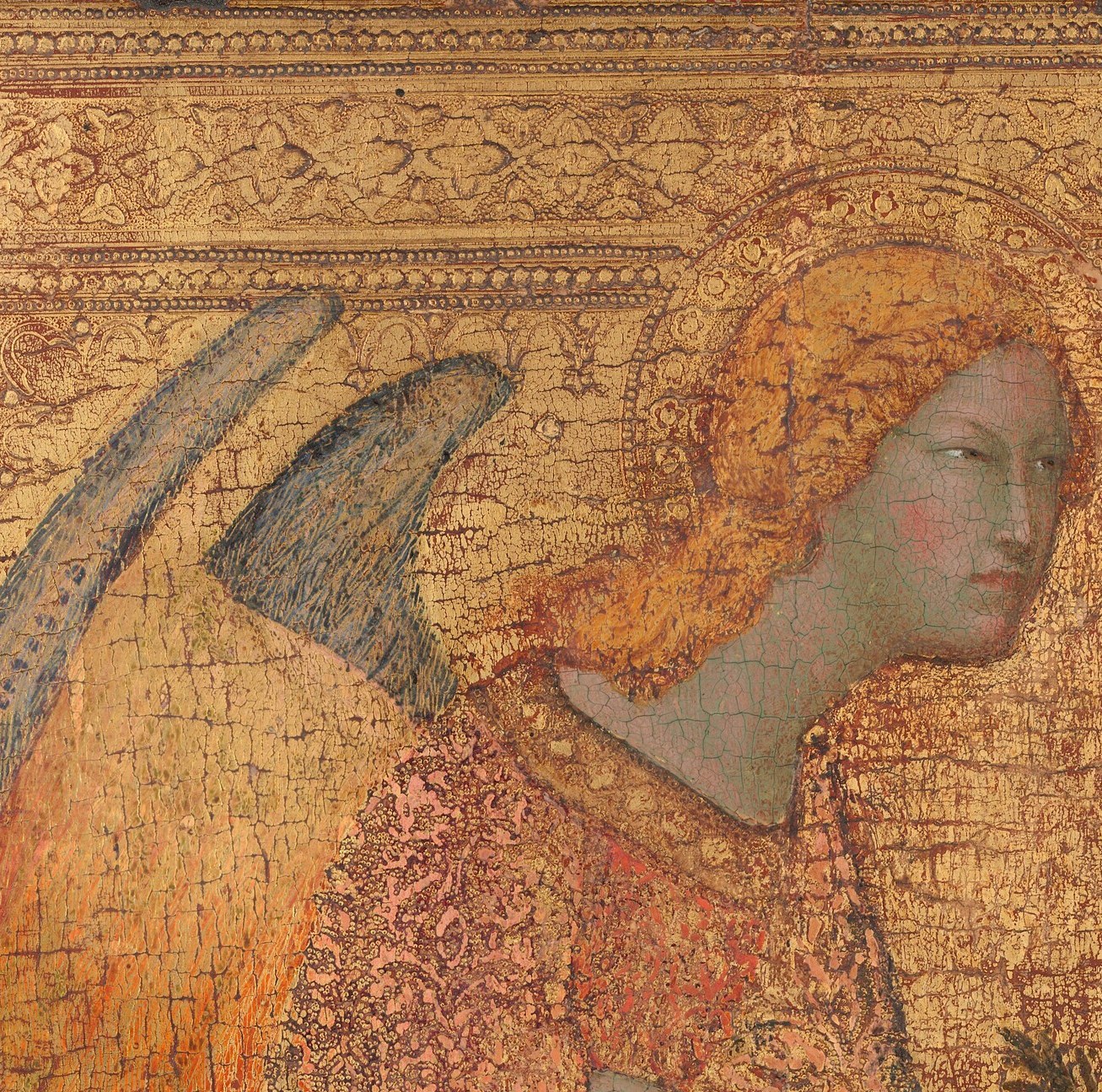
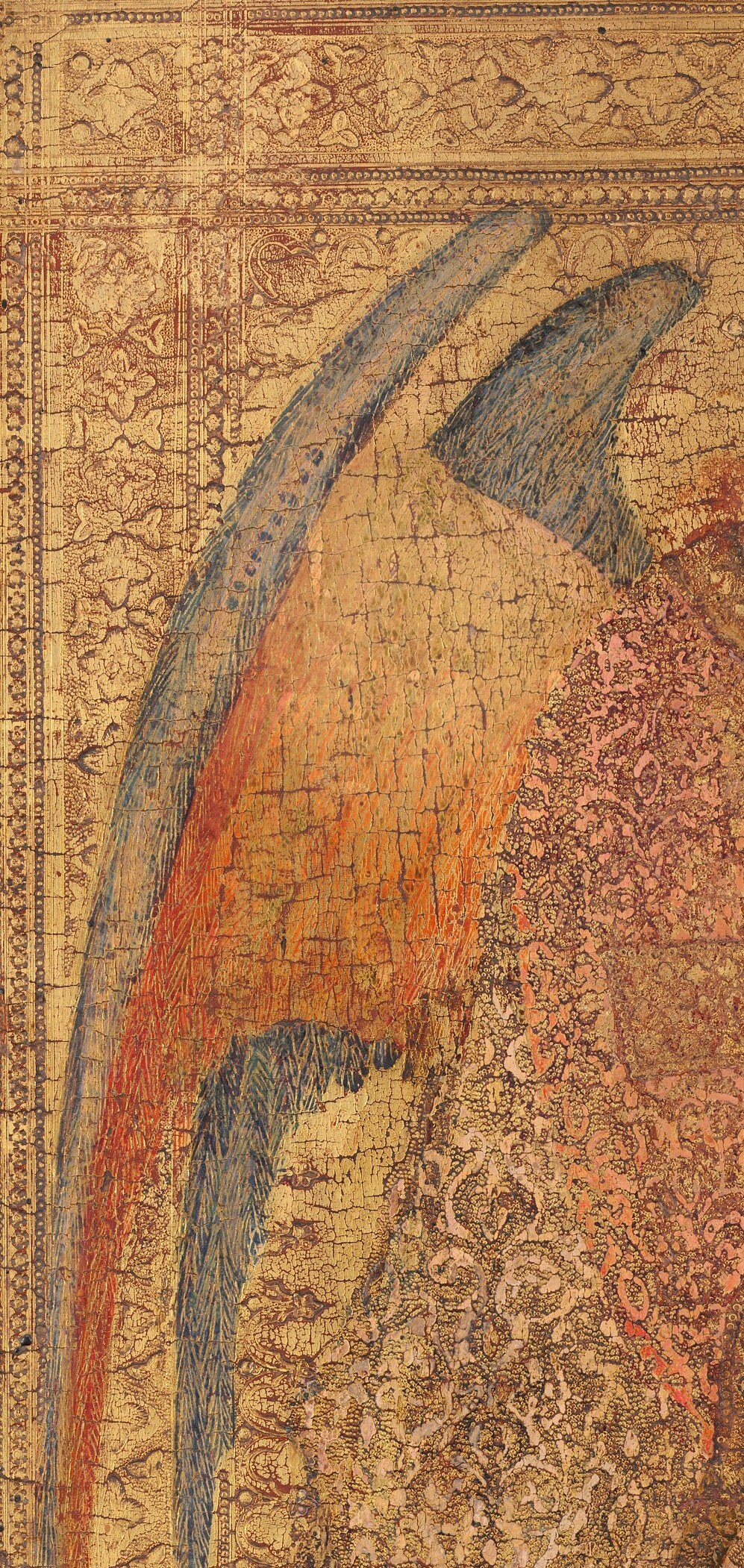
This is Simone Martini’s 'The Angel of the Annunciation,' painted around 1330. It is not a fresco, and it is not an oil painting. It is egg tempera on a poplar panel, and the gold you see is real: a thin sheet of hammered gold leaf laid onto a sticky clay ground and then burnished to a mirror shine.
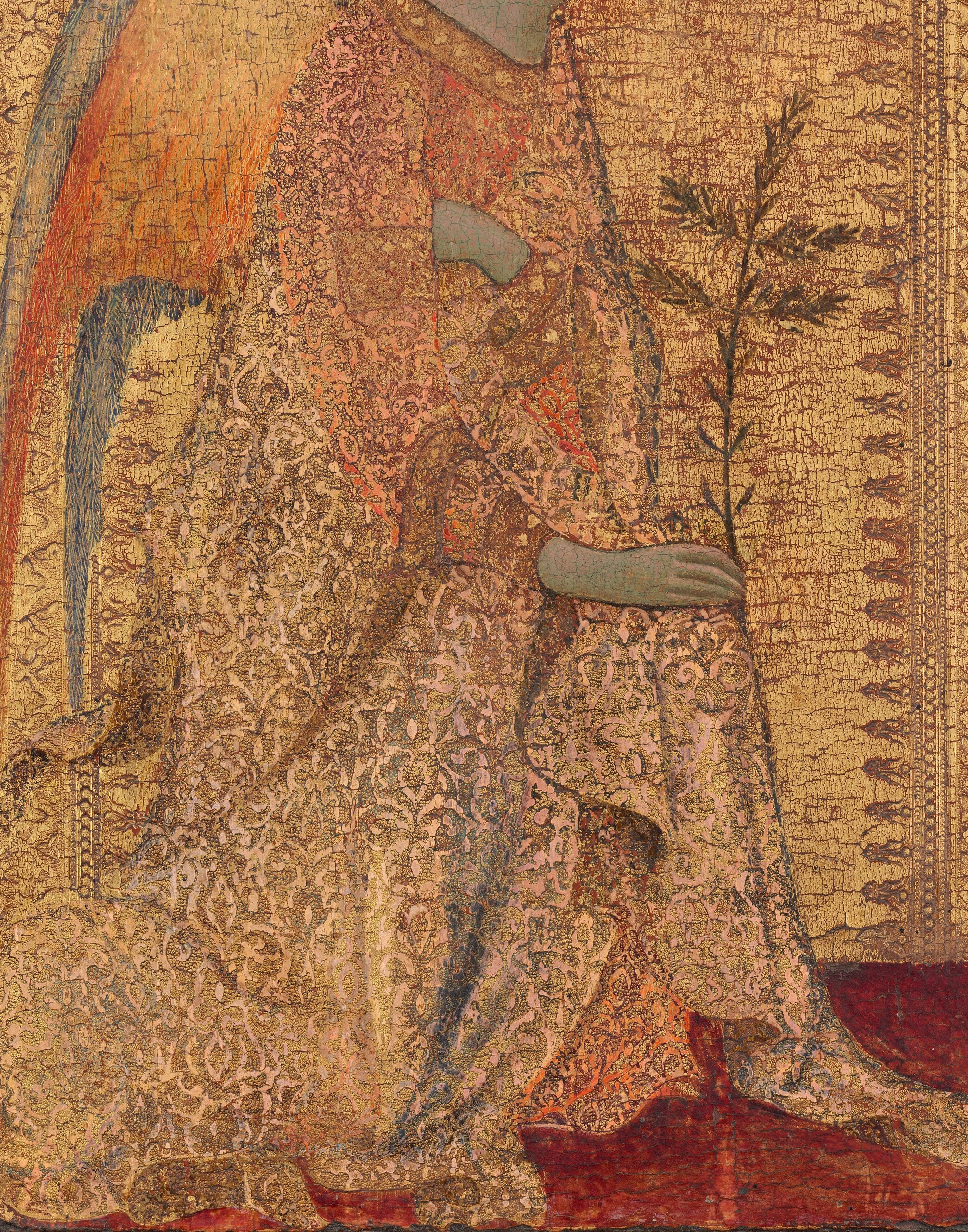
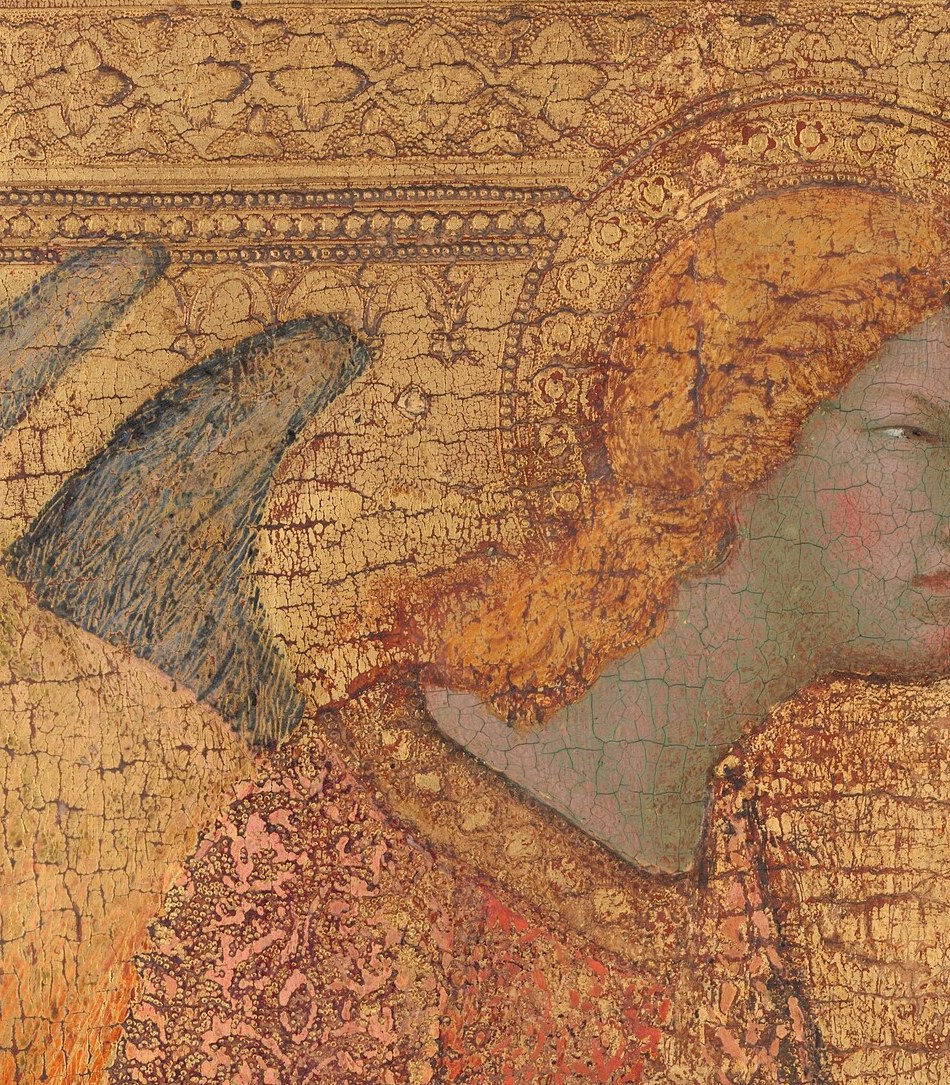
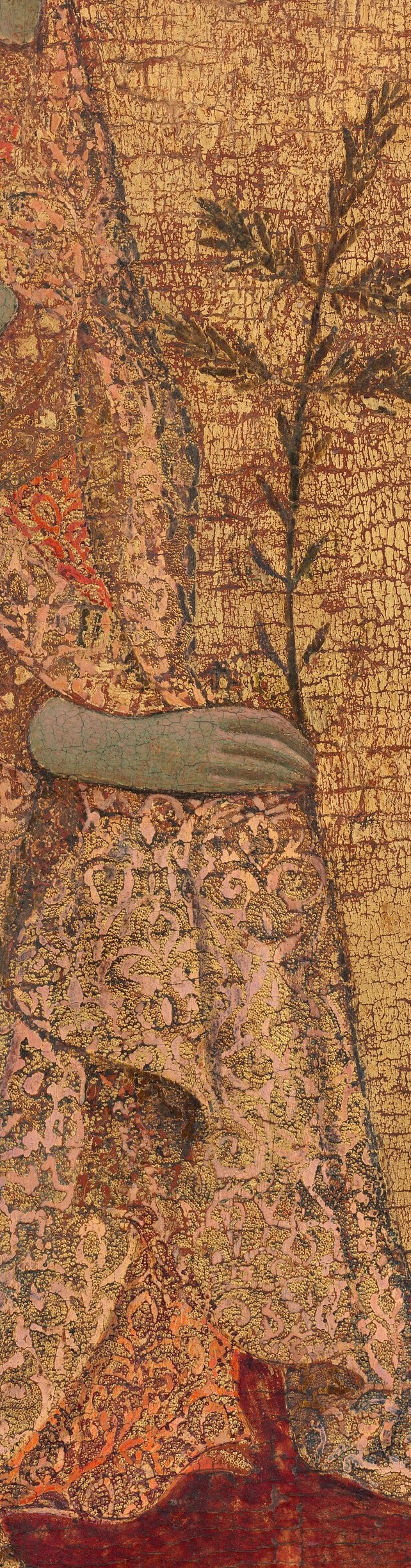
Look closely at the halo. The radiating lines are not drawn with a brush. A metal punch was tapped into the soft metal leaf with a small hammer, creating an indented pattern that catches light differently from the flat gold around it. Now look at the angel’s mantle. The intricate brocade design was made by sgraffito, scratching through the still-damp paint and gold to expose the reddish clay layer underneath. This creates a physical texture that a camera can almost feel.
The panel was originally part of a larger altarpiece, likely flanking a central Virgin. Martini worked in Siena, where gold-ground panels like this one were the height of luxury and devotion. A piece like this required the collaboration of a painter, a gilder, and a carpenter, each a master of a different craft. The halo alone might have taken days of patient tooling.
Centuries later, the single panel survives, separated from its original context but intact enough to teach us exactly how a fourteenth-century workshop built a sacred image. The next time you stand before an early Renaissance panel, look for the tiny hammer marks. They are the fingerprints of the maker.
Details
Transcript
It looks like a delicate embroidery of light. But this is not paint. A tiny metal punch hammered each radial line into real gold leaf. Look at the cloak. The brocade is carved, not brushed. Sgraffito: the artist scratched the pattern through wet gold to the clay beneath. This panel was once part of a larger altarpiece. Now divided, the angel alone remains an intimate guide to a lost workshop.