The Penitent Mary Magdalene by Giacomo Galli
Giacomo Galli, known as Lo Spadarino, was a master of light and shadow. His 1630 oil painting, *The Penitent Mary Magdalene*, now at the Walters Art Museum, shows his remarkable ability to create tactile textures and deep emotion with paint.
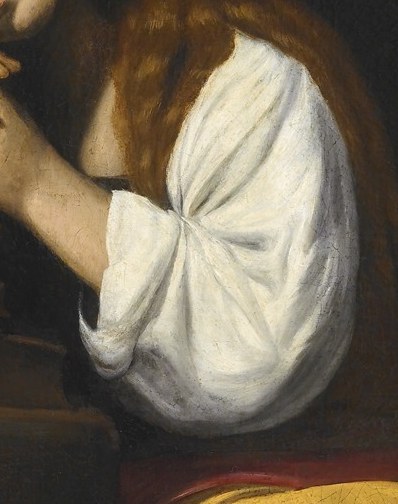
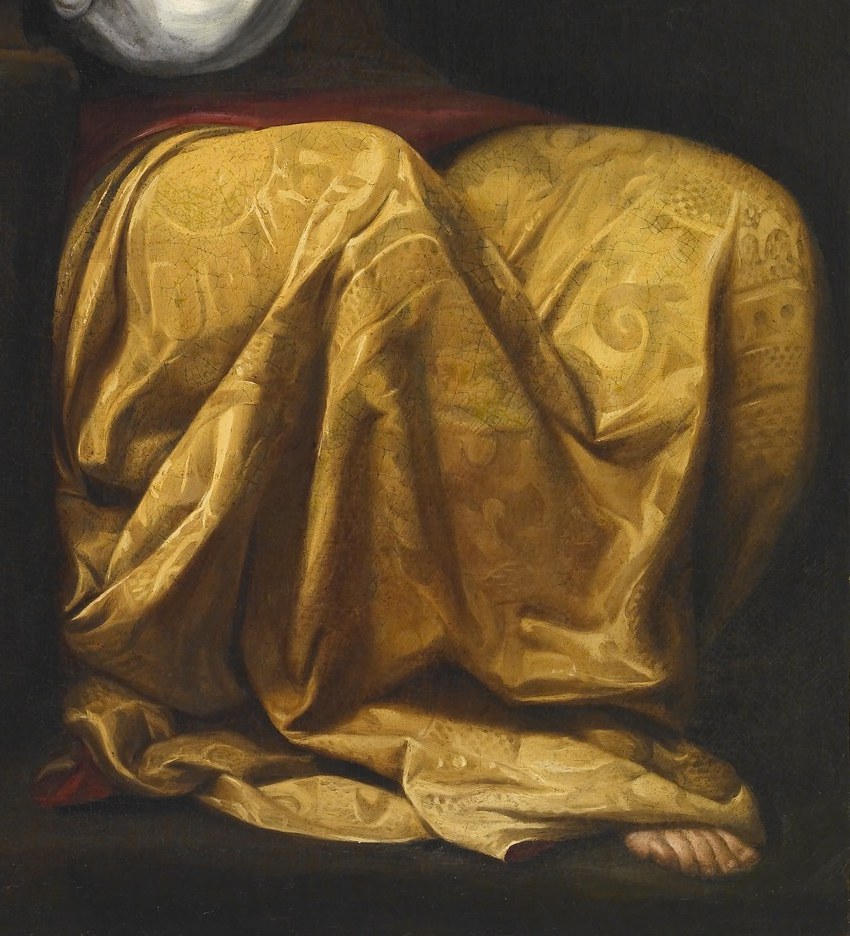
Observe how Galli uses light to sculpt the folds of Mary Magdalene's white sleeve, making the fabric appear almost three-dimensional. The rich gold brocade, a symbol of her former life, also demonstrates his skill in rendering luxurious textures.
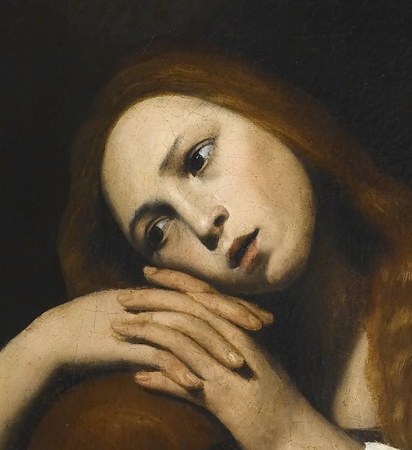
The painting's dramatic chiaroscuro, a hallmark of early Baroque art, focuses all attention on the figure. This technique enhances the emotional intensity of Mary Magdalene's penitence, particularly evident in the subtle rendering of her tear-filled eyes.
Galli, a Roman painter and engraver, was active in the early 17th century, known for his devotional works. This painting remains a powerful example of his artistic prowess. What details capture your eye most?
Details
Transcript
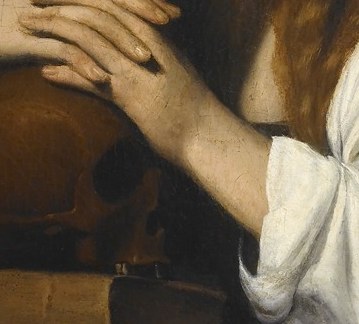
Mary Magdalene, lost in sorrow, holds a book and a skull. Every fold of this white sleeve is pure illusion. The painter built this fabric with light, not outlines. Even the rich brocade feels real, an echo of her past. Galli was a master of shadow and dramatic, sculpted light. See the wetness and subtle redness of her weeping eyes.