Ferdinand I of Castile welcoming Saint Dominic of Silos by Bartolomé Bermejo
Bartolomé Bermejo’s “Ferdinand I of Castile welcoming Saint Dominic of Silos,” painted around 1490, at the Museo del Prado, captures a significant moment where temporal power meets spiritual authority.
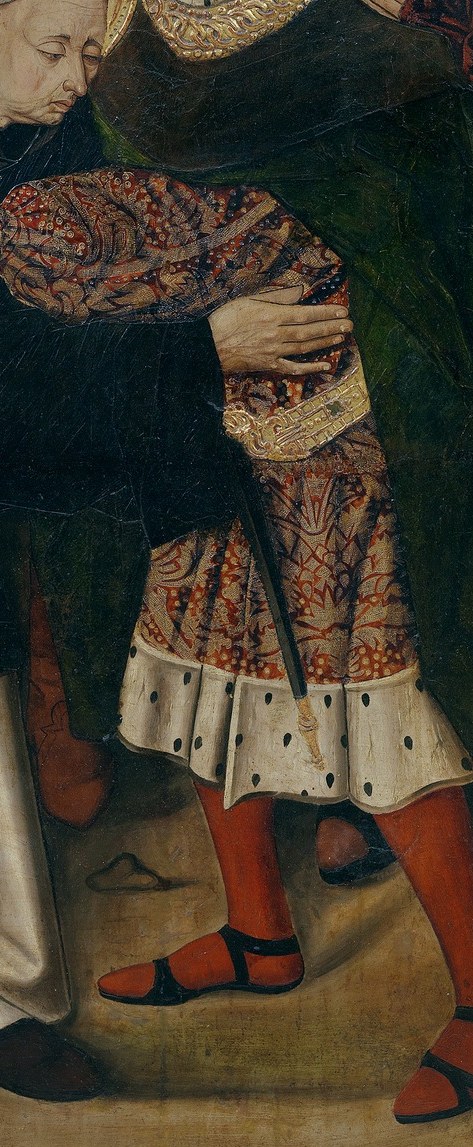
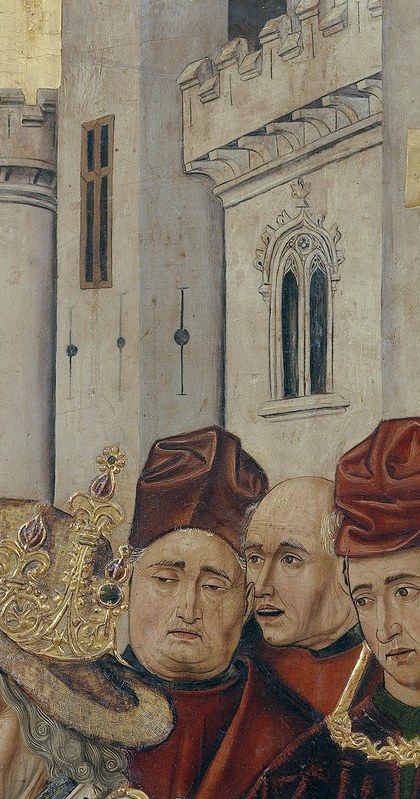
The painting shows the Castilian monarch King Ferdinand I extending a hand to Saint Dominic of Silos. Notice the stark contrast between Dominic's humble monastic habit and the opulent, intricately patterned clothing of the king and his courtiers, including the king's ornate crown and a courtier's jeweled scepter. These details emphasize the visual dialogue between royal grandeur and spiritual humility.
This work was likely a courtly commission, intended to commemorate King Ferdinand I's patronage of the church and to reinforce the legitimacy of Castilian monarchs through their association with revered saints. Saint Dominic of Silos was a symbol of spiritual reform during a period when the kingdoms of León and Castile were consolidating power.
Bermejo, a Hispano-Flemish painter, employed refined oil techniques to achieve delicate textures and luminous metallic surfaces, typical of the High Renaissance's emphasis on realism. What details in the painting most capture your eye?
Details
Transcript
This Spanish scene, painted 1490, depicts a royal welcome. King Ferdinand I of Castile greets Saint Dominic of Silos. Dominic's simple habit contrasts with the court's rich attire. The king's jeweled crown signifies his royal power and wealth. This painting commemorated Ferdinand I's pious patronage. It also served to legitimize royal rule through saints. The muted background provides depth, keeping focus on the figures.