The Midnight Ride of Paul Revere by Grant Wood
View the artwork: The Midnight Ride of Paul Revere →
Grant Wood painted The Midnight Ride of Paul Revere in 1931, nearly 160 years after the ride itself. The painting hangs today in the Metropolitan Museum of Art in New York, but it constructs its memory from Iowa, where Wood was the leading voice of American Regionalism. He was not interested in getting the history literally right. He was interested in how a nation remembers.
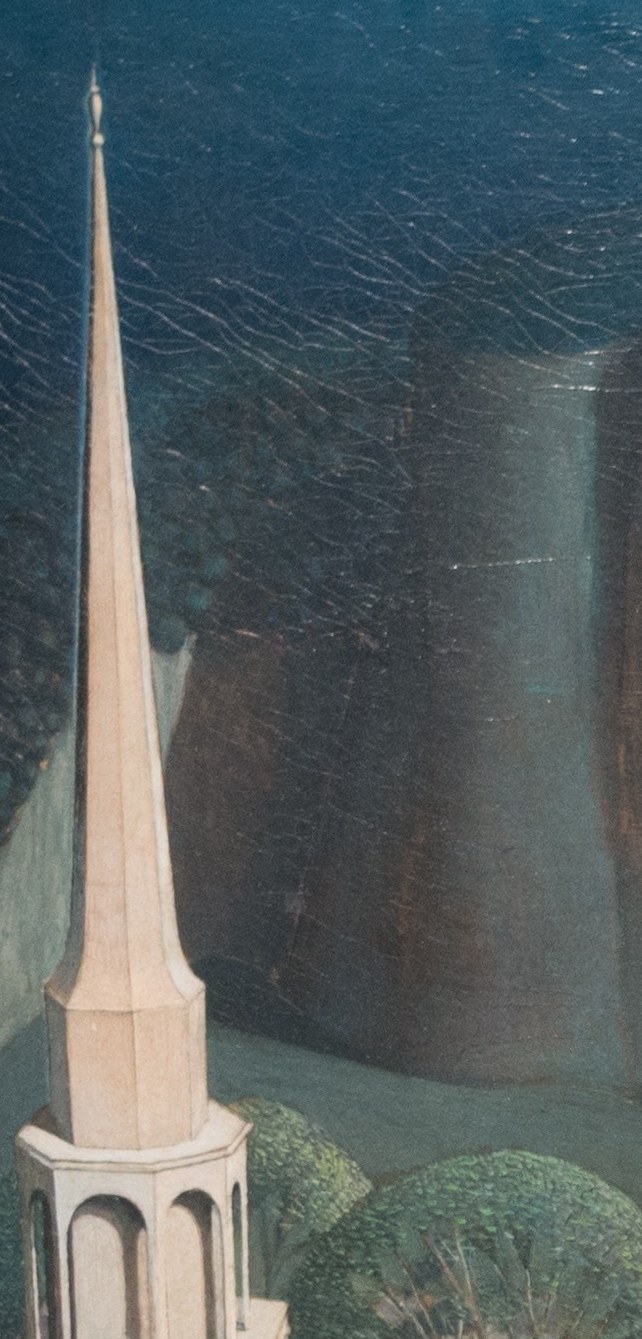
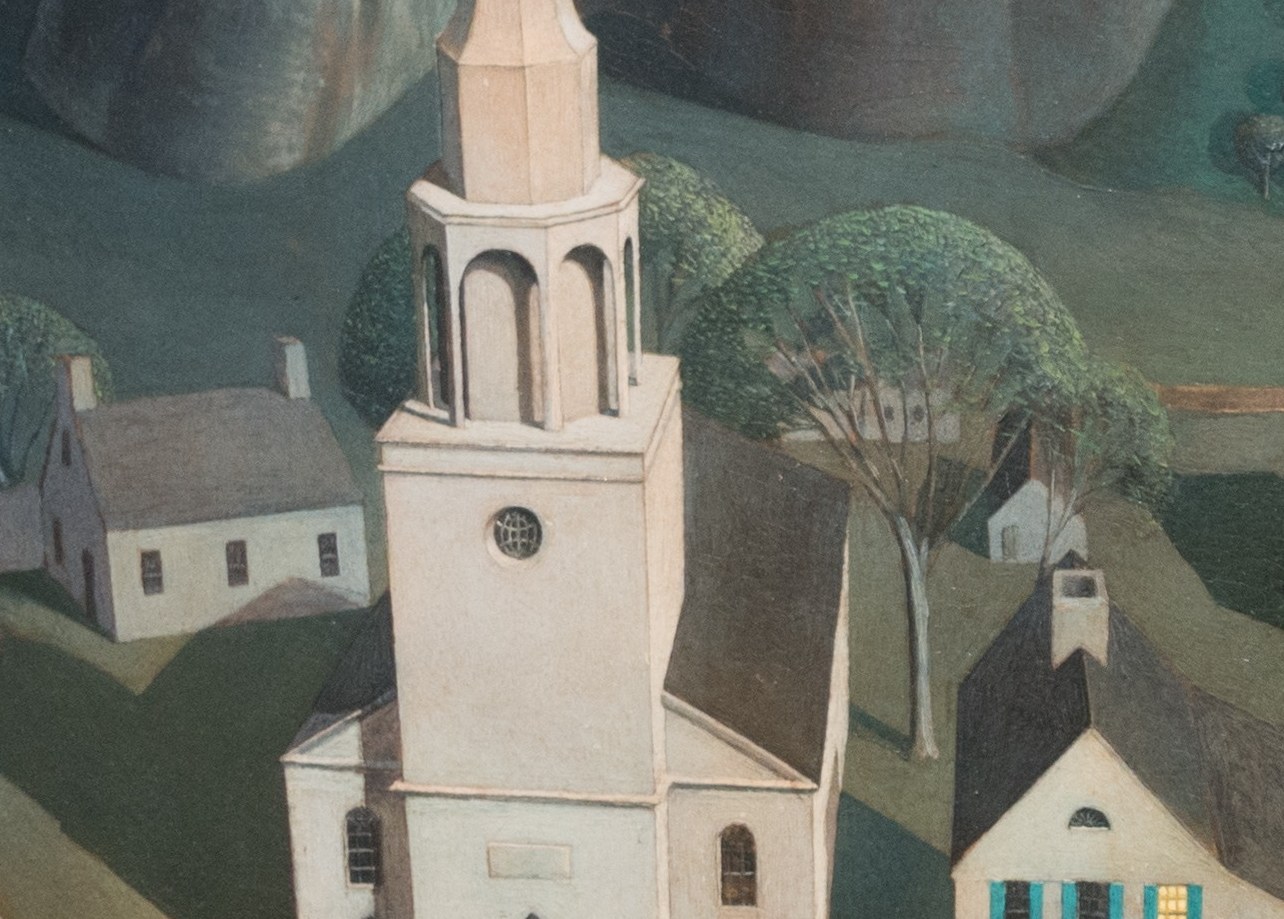
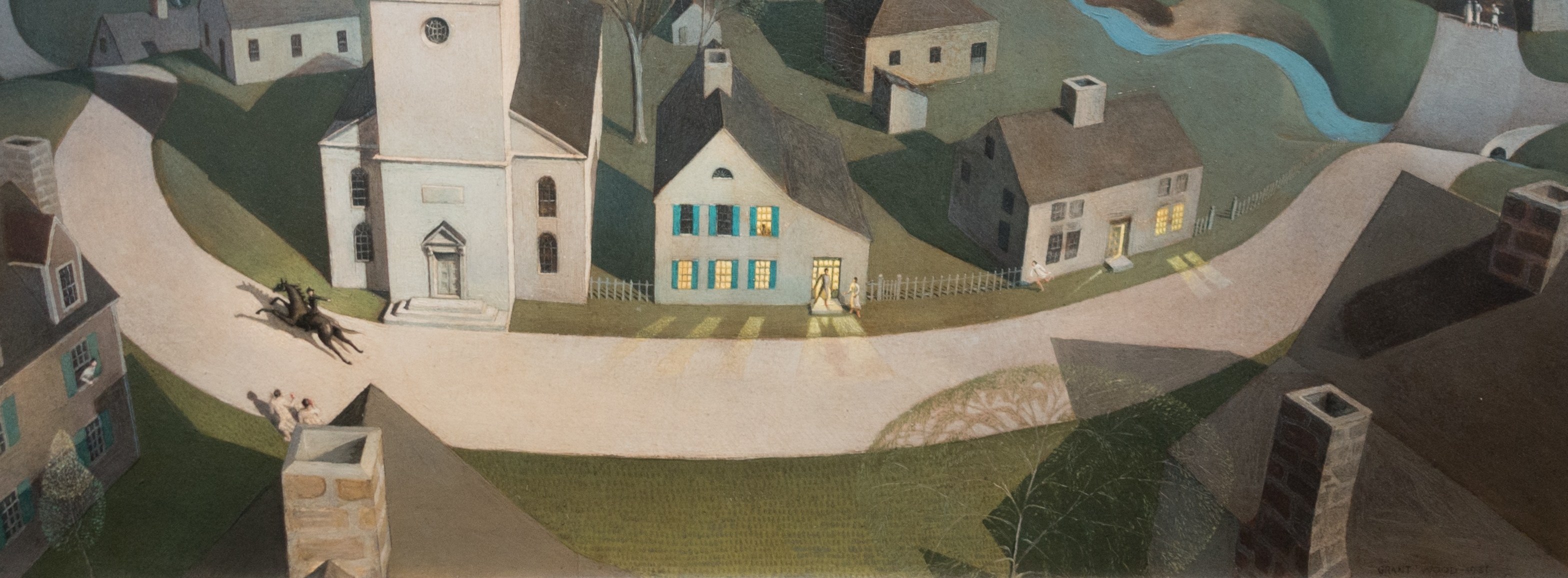
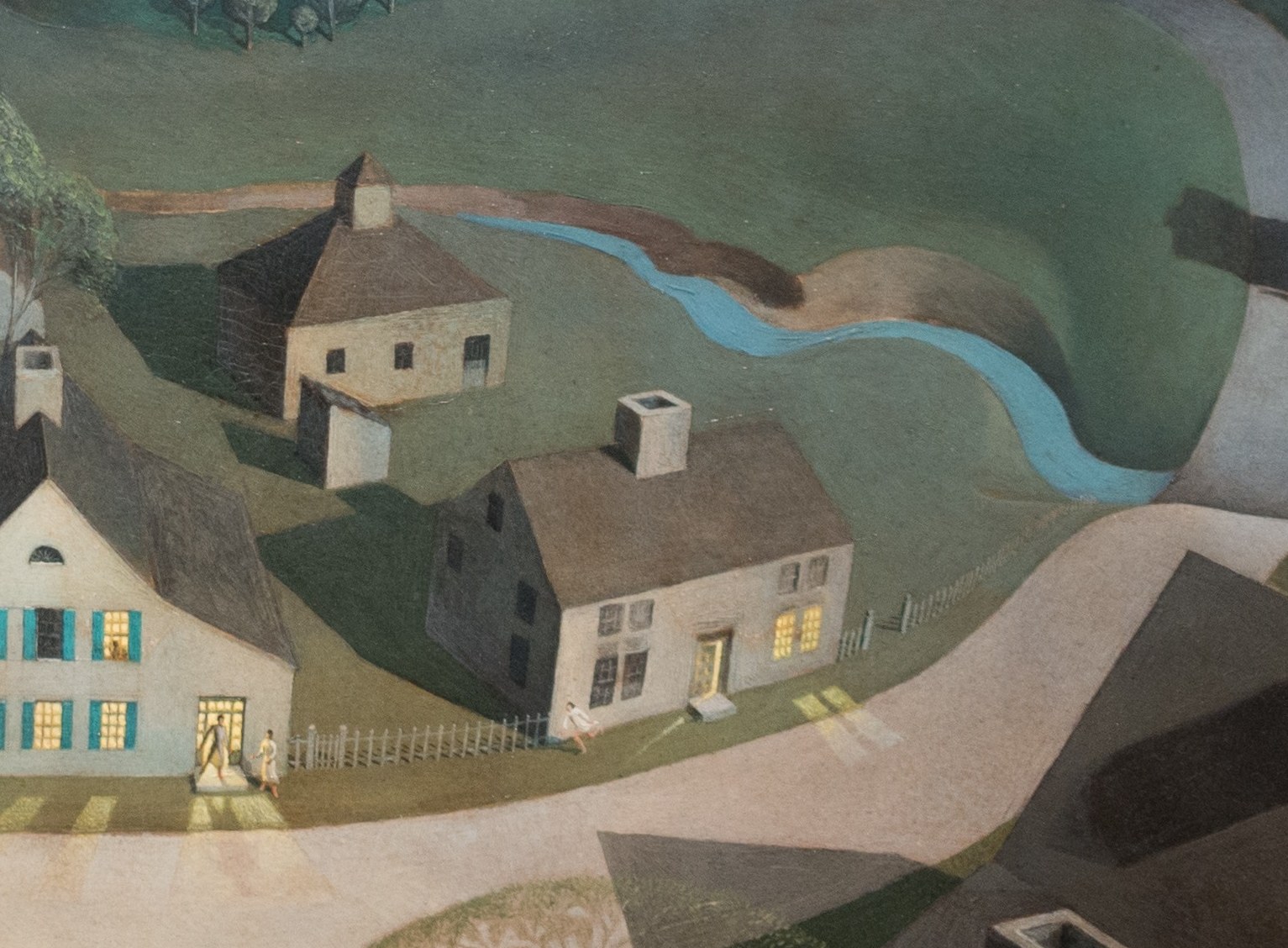
The first thing to notice is the scale. Revere is almost invisible beneath the bird's-eye view. The hero is a tiny figure racing along an S-curve road through a town rendered like a model railroad layout. The white church steeple, luminous and still, dominates the center of the composition. The darkened windows of the surrounding houses tell you everything: nobody knows he is coming.
The charged quiet comes from a surprising source. Wood took the horse directly from Henry Wadsworth Longfellow's 1860 poem 'Paul Revere's Ride,' which had already turned the silversmith into a folk hero. But the animal's stiff-legged, rocking-horse gallop is drawn from a child's toy in Wood's studio. That deliberate naivety, paired with the eerie moonless glow, makes the painting feel less like a document and more like a memory passed down through generations.
A town asleep, a rider passing through, and everything about to change. What do you imagine the church bells will sound like when they finally ring?
#arthistory #regionalism #grantwood
Details

Transcript
April 18, 1775. This town is about to wake to a war. A lone rider on the moonlit road. Paul Revere. The church stands white and silent. Its weathervane points the way east. The darkened windows of every house. The town still sleeps. Grant Wood painted this in 1931, not from history, but from a poem. He modeled Revere's galloping horse on a child's hobby horse.