Hexi by Song Xu
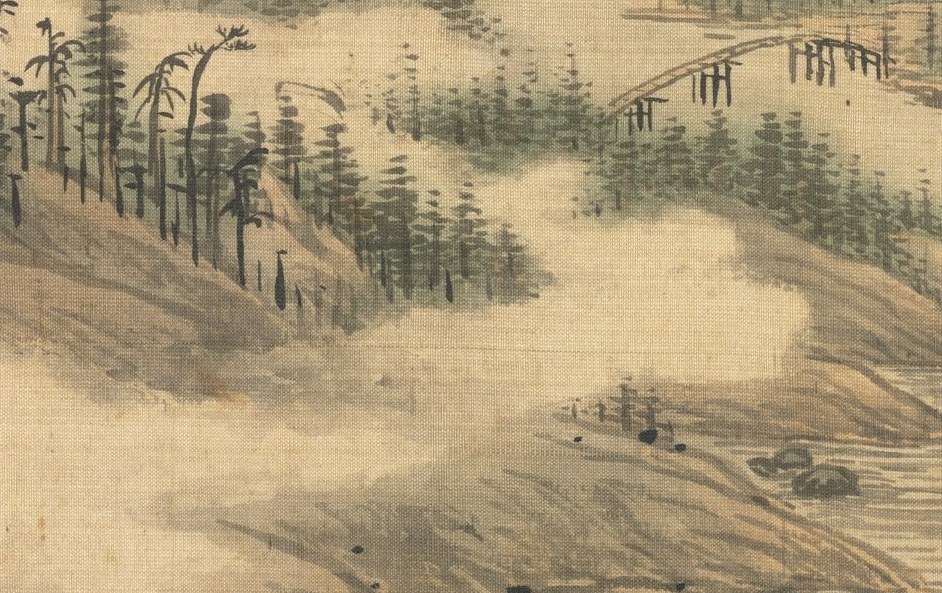
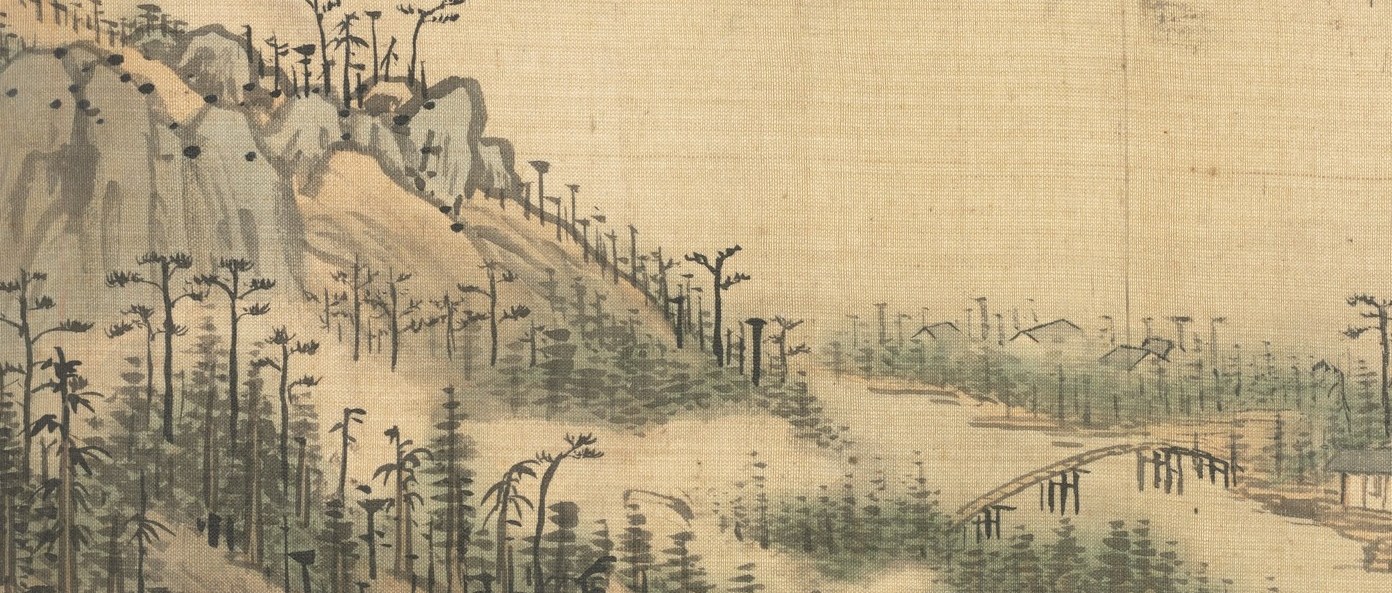
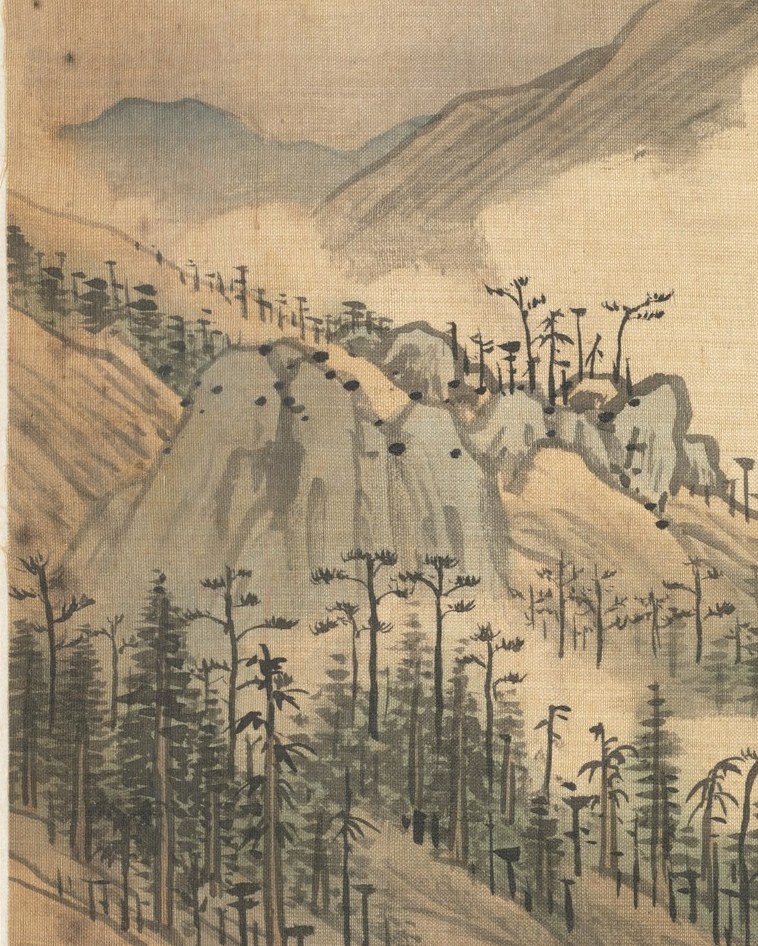
Hexi, by the late Ming dynasty painter Song Xu, lives in The Cleveland Museum of Art and has rarely been reproduced at a resolution that rewards a close look. Dated 1594, the ink and color on silk landscape shows a serene valley where the raw silk ground does as much work as the brush, it becomes the river, the sky, and the luminous bank of mist that divides the middle ground.
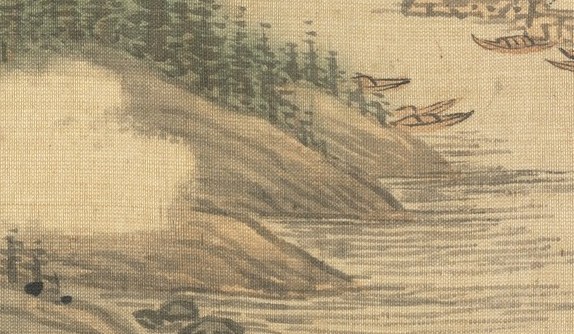
That white mist is the painting's most immediate feat: unpainted emptiness that carries real visual weight, a classic Chinese technique known as 'leaving blank.' The river threads the same way from foreground to village, offering the eye a path through the composition. Once you find the tiny boat and its lone figure near the right bank, the scale collapses, a human presence smaller than a flyspeck, dwarfed by ink-wash ridges.
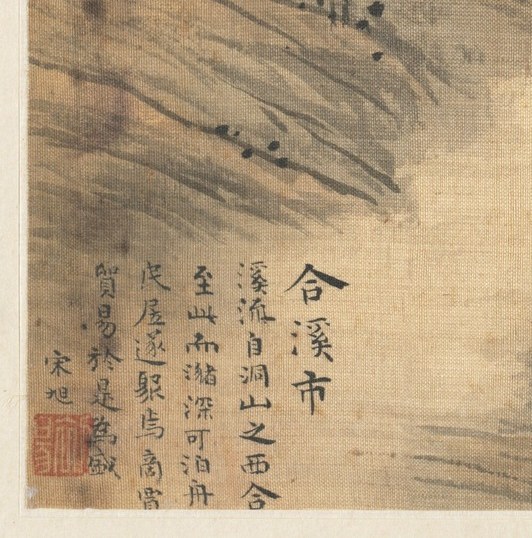
A slower inspection reveals the painting's hidden literary dimension. In the lower left corner, Song Xu placed a colophon and at least one red cinnabar seal. The colophon likely encodes a poem or dedication; the seals authenticate the work and its owner. In Chinese literati painting, text and image share equal status, reading this inscription would unlock the conversation between painter, patron, and landscape that the image alone only implies.
Next time a museum uploads a high-resolution scan of Hexi, zoom straight to the lower left. The painting's meaning is still written on it, waiting for someone to translate.
Details
Transcript
A valley swallowed in mist and empty silk. The river is unpainted ground, bright as air. A single boat carries a figure smaller than a word. Song Xu made this in 1594, late in the Ming dynasty. Most people stop at the mist. But there is a hidden layer. Look at the lower left corner. A colophon, likely a poem, hides beside red cinnabar seals. These marks authenticate the hand and hold the painting's unread story.