The Holy Family by Ludovico Mazzolino
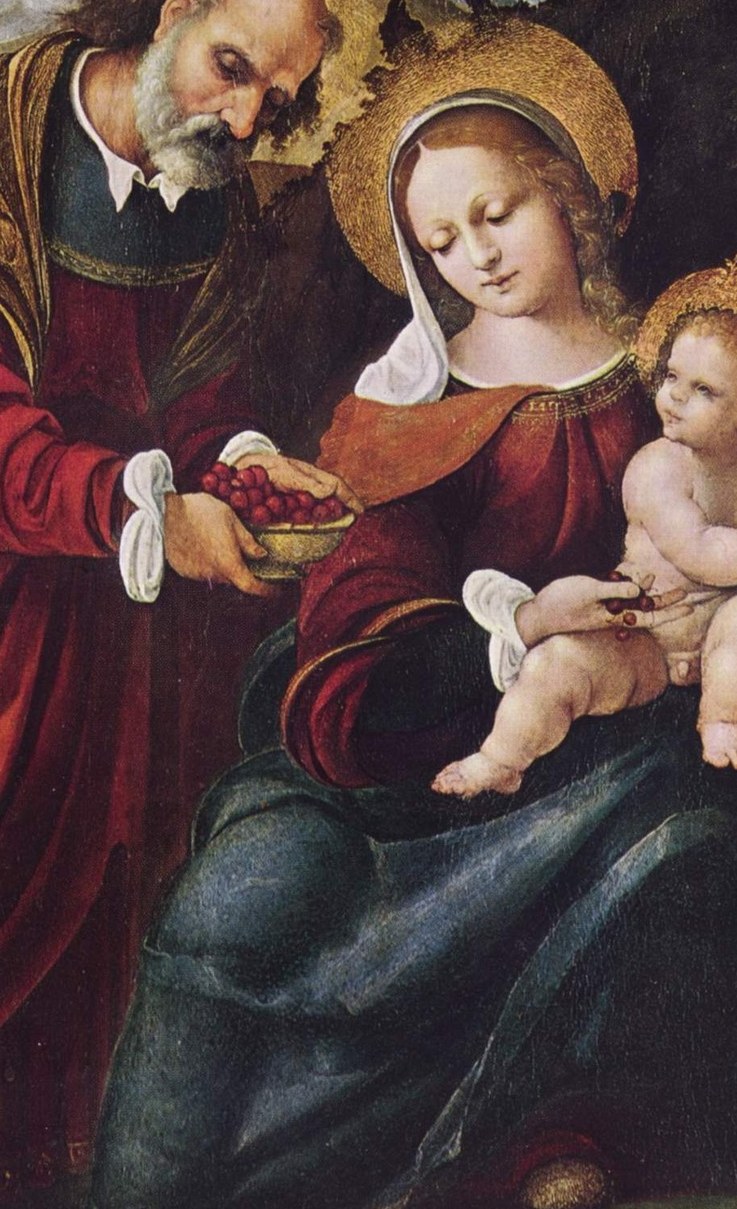
The Holy Family by Ludovico Mazzolino, painted in 1516 on wood, now in the Alte Pinakothek in Munich. Mazzolino, also called Il Ferrarese, was active in Ferrara and Bologna during a moment when Renaissance clarity was giving way to early Baroque intensity.
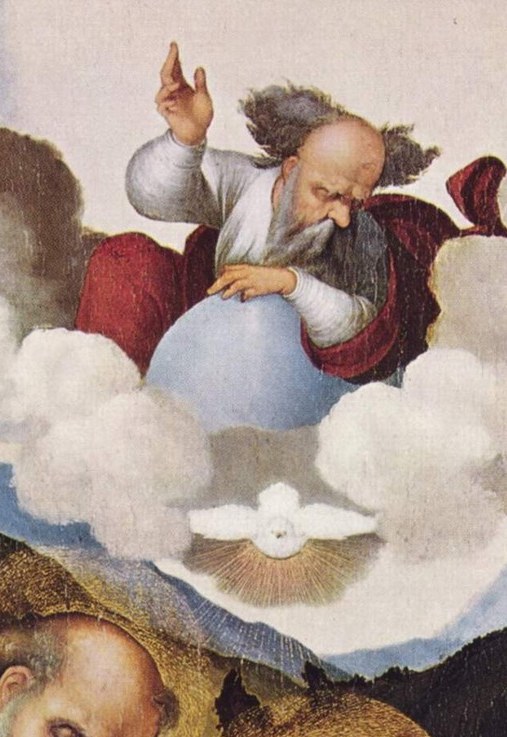
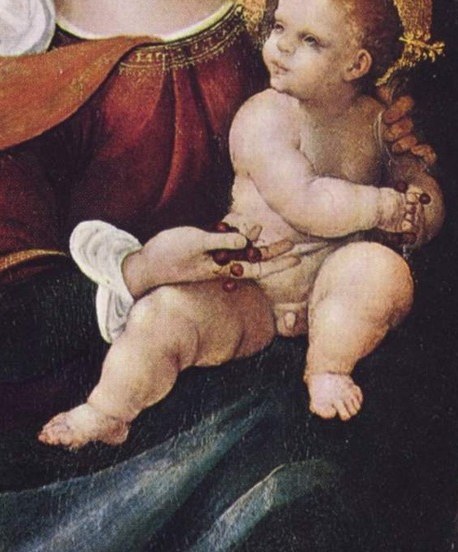
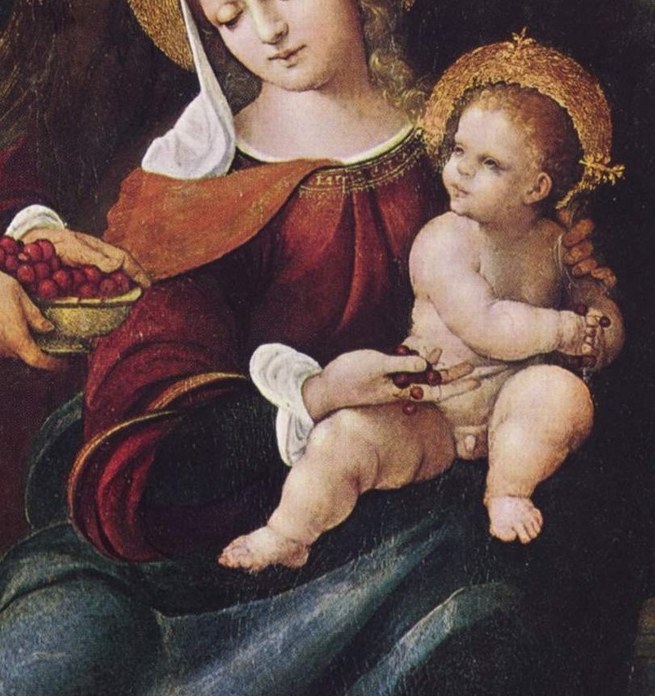
The composition stacks three registers: a divine authority figure in the clouds, the dove of the Holy Spirit bridging heaven and earth, and the family below. Joseph's offering of berries is a traditional symbol of the Eucharist and the Passion to come. The Christ Child's direct gaze is unusually intimate for a small devotional panel.
Mazzolino died around 1528. The panel passed through private collections before the Alte Pinakothek acquired it in the late 19th century. It now hangs among the museum's Italian Renaissance works, an obscure survivor from a painter whose name has mostly faded from the record.
What remains is simpler than theology: a wooden panel, a child's face, and five centuries of people stopping to look.
Details
Transcript
1516. The Renaissance was folding into the Baroque. A stern figure in the clouds gestures down. Joseph offers berries. Christians saw the Eucharist. The Christ Child meets your eyes. Five centuries on a wooden panel, and he still does.