Saint Jerome by Jan Matsys
Jan Matsys's 'Saint Jerome', painted around 1530 and held in the Museo del Prado, offers a window into Renaissance religious and intellectual life. The painting portrays Saint Jerome, known for his monumental task of translating the Bible into Latin, a version known as the Vulgate.
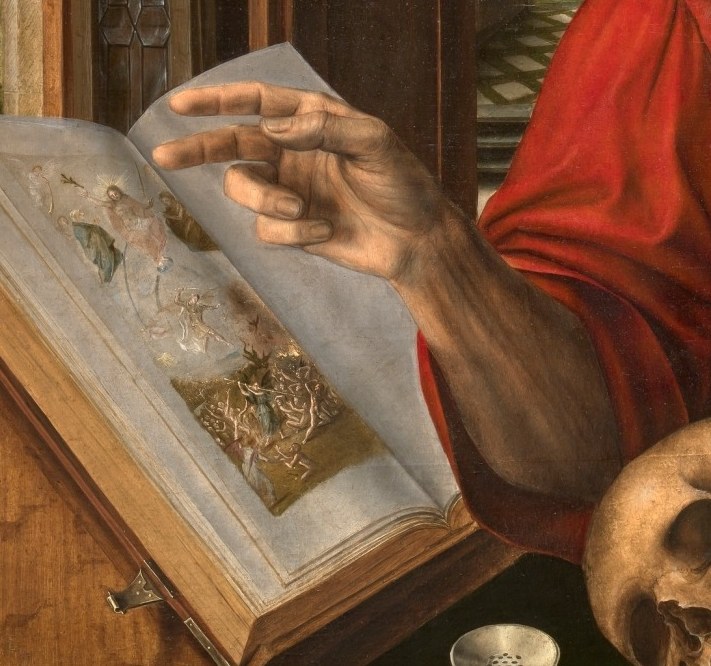
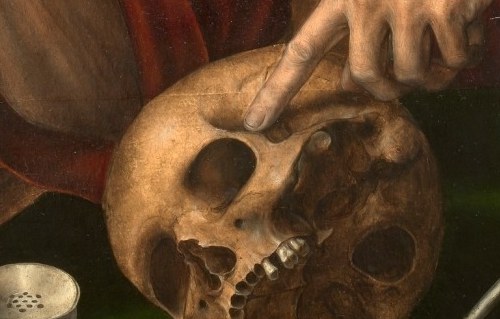
Notice the details that illuminate his scholarly devotion: the open book, the spectacles suggesting countless hours of reading, and the lit candle for late-night study. The human skull on his desk is a classic memento mori, a stark reminder of life's transience and the spiritual contemplation that occupied his thoughts.
Matsys, a Flemish artist, created this work during a period when Northern European painters were increasingly influenced by Italian Baroque aesthetics. This piece beautifully merges the precise detail characteristic of Flemish art with the dramatic use of light and shadow favored in Italy, creating a scene of profound depth and realism.
What do these objects tell you about the life of a scholar in the 16th century?
Details
Transcript
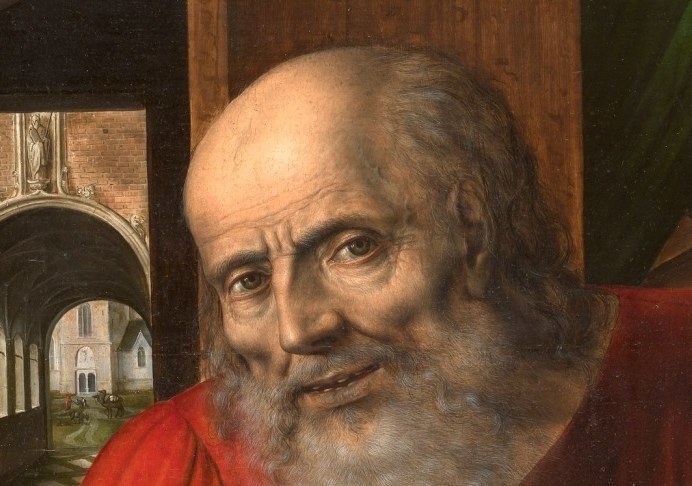
This is Saint Jerome, depicted around 1530. He was the scholar who translated the Bible into Latin. His spectacles suggest long hours of study and reading. The lit candle offers light for his work, even at night. The human skull is a reminder of life's fleeting nature. His face shows deep contemplation, reflecting on mortality and faith. This work combines Flemish detail with Italian dramatic lighting.