Jerusalem from the Mount of Olives by Théodore Frère
Théodore Frère's "Jerusalem from the Mount of Olives" (1880) is a coded landscape now in the collection of The Metropolitan Museum of Art. Frère, a French Orientalist who traveled extensively through North Africa and the Middle East, painted this view not just as a travelogue but as a symbolic arrangement. Every element was chosen for a reason.
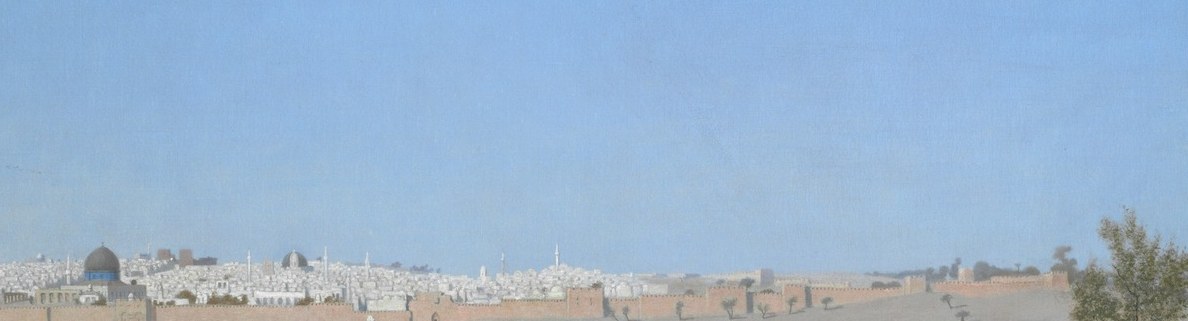
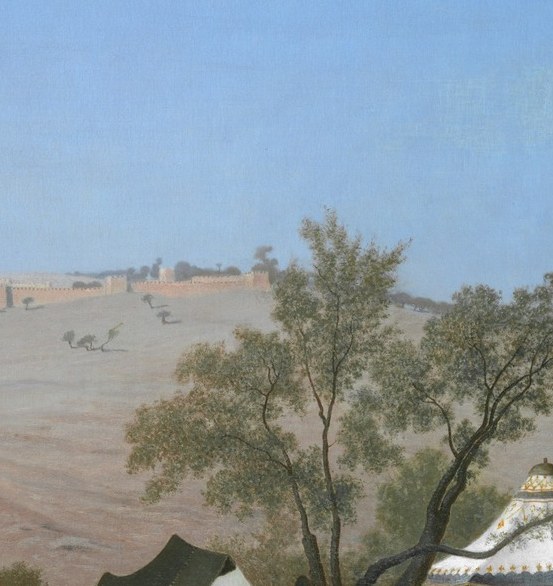
Look at the horizon first. The walled Old City sits crowned by the unmistakable dome of the Dome of the Rock, a deliberate Orientalist calling card. On the right, the titular olive trees anchor the painting's vantage point. In the foreground, dozens of resting camels create a living carpet of tawny forms: a caravan paused, its journey temporarily stopped.
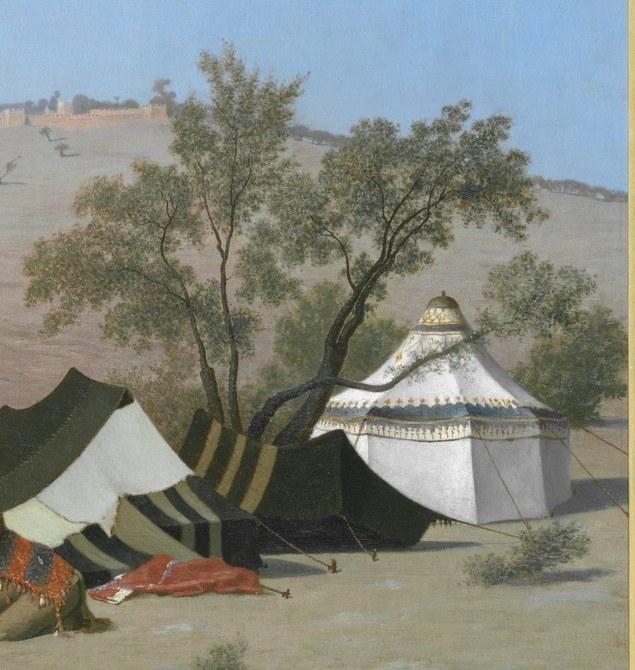
The real code lies in the contrast. A white tent encampment on the right represents portable, nomadic domestic life. It sits in direct opposition to the permanent stone walls and domes of the distant city. The message is the permanence of faith and civilization against the impermanence of wandering. Frère himself came from a family of painters; his brother Pierre-Édouard and nephew Charles Édouard also carried on the artistic legacy.
What other contrasts do you see between the foreground encampment and the city on the hill?
Details


Transcript
Jerusalem sits on the horizon like a jewel. Its Old City walls mark a sacred boundary. A prominent dome rises above: the Dome of the Rock. The painter stops at the Mount of Olives, named for these trees. Camels rest in the foreground. The caravan has paused. A white tent stands in contrast to the stone city. The message: nomadic life is impermanent; the holy city endures.