Beggars at a Doorway by Master of the Béguins
View the artwork: Beggars at a Doorway →
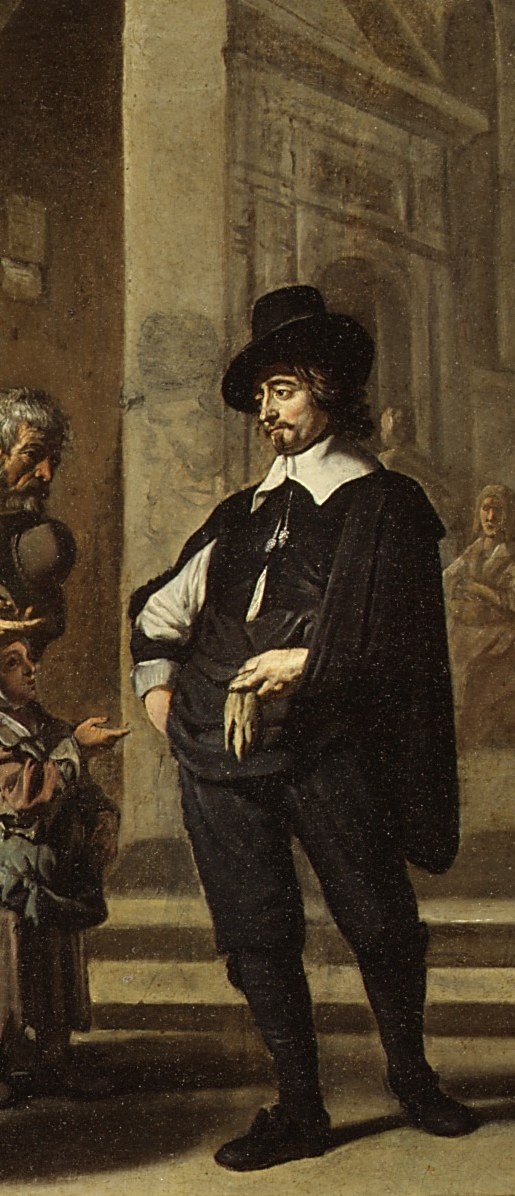
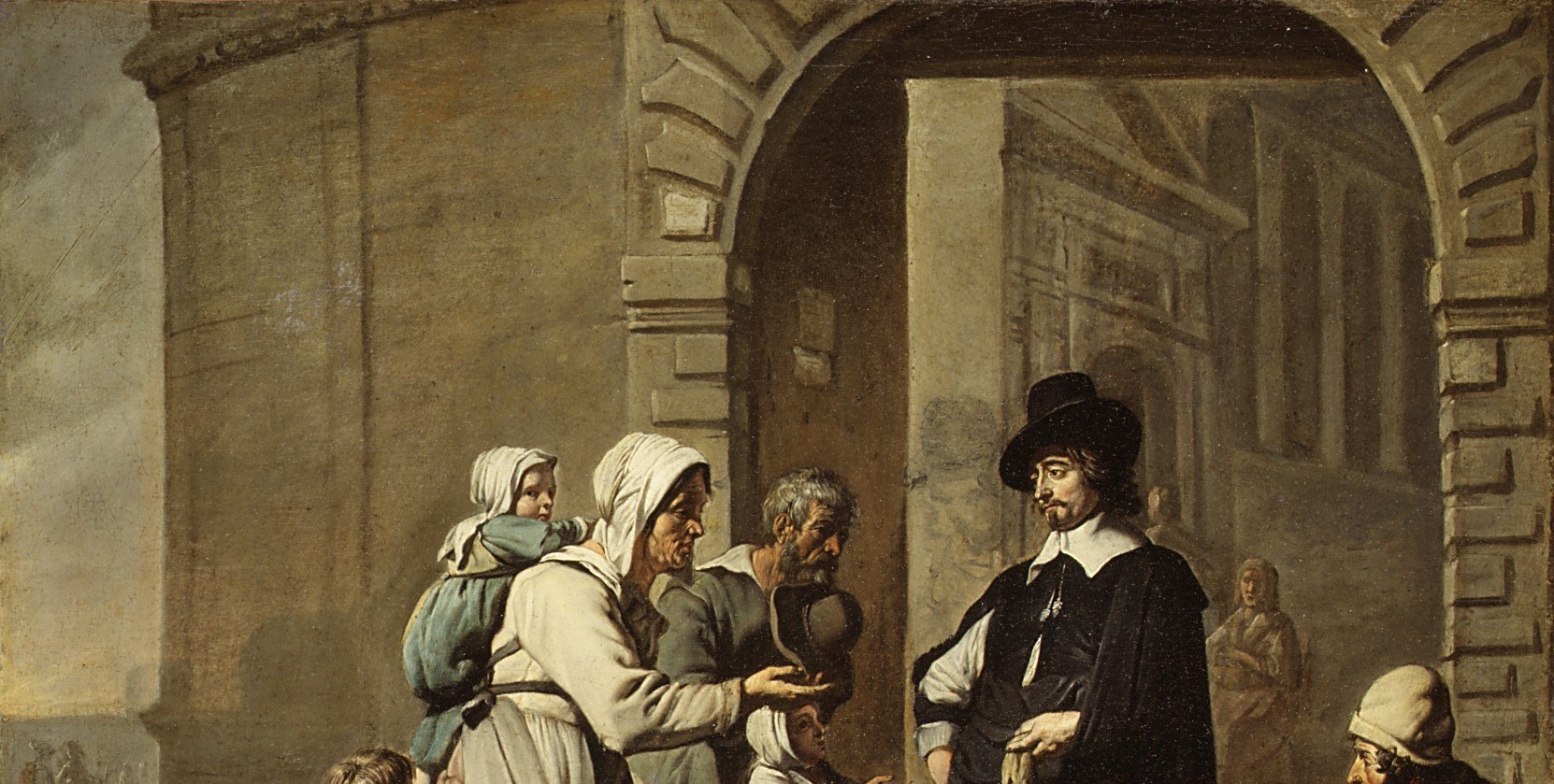
This is "Beggars at a Doorway," painted around 1700 by an artist known only as the Master of the Béguins. It's a copy, and that's exactly what makes it valuable.
The painting reproduces a lost work by the Le Nain brothers, French Baroque painters active in the 1640s. The original disappeared. Without this faithful copy, we would have no visual record of the composition at all. The Master of the Béguins, whose real name remains unknown, worked in France and took his nickname from the béguines, lay religious women whose communities he often painted.
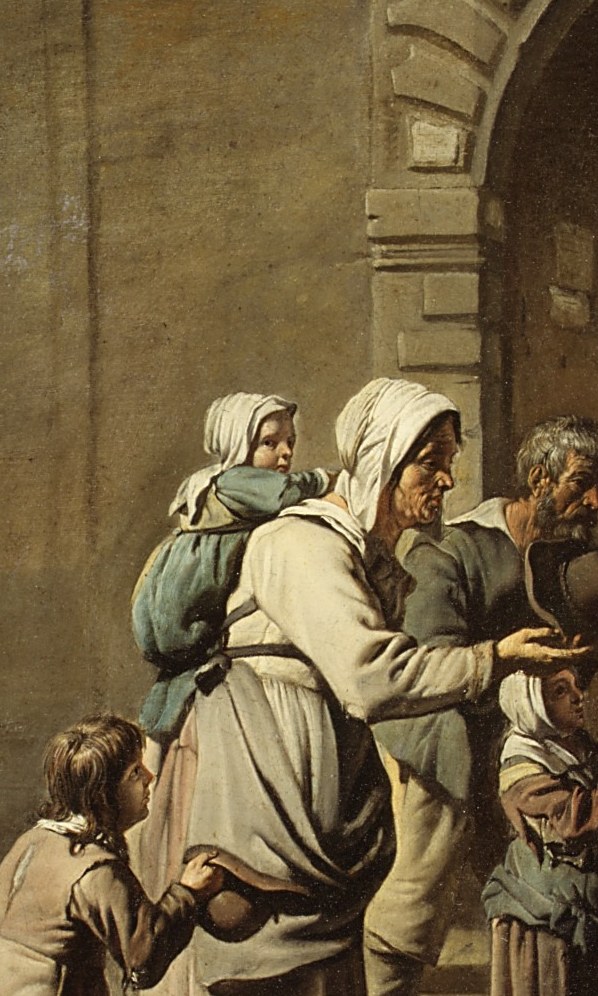
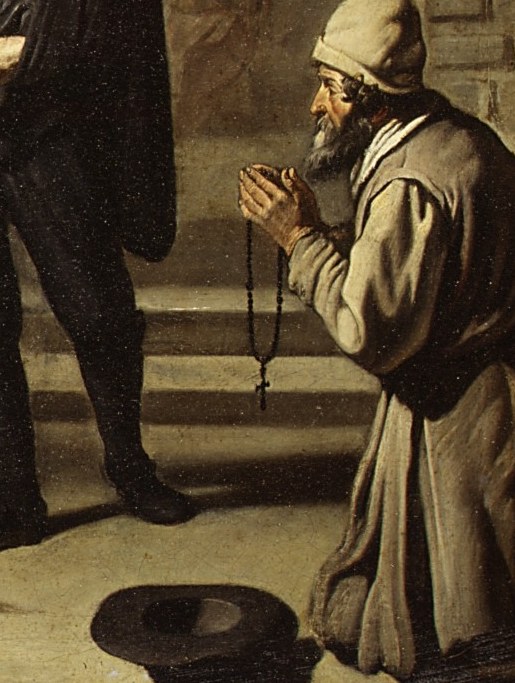
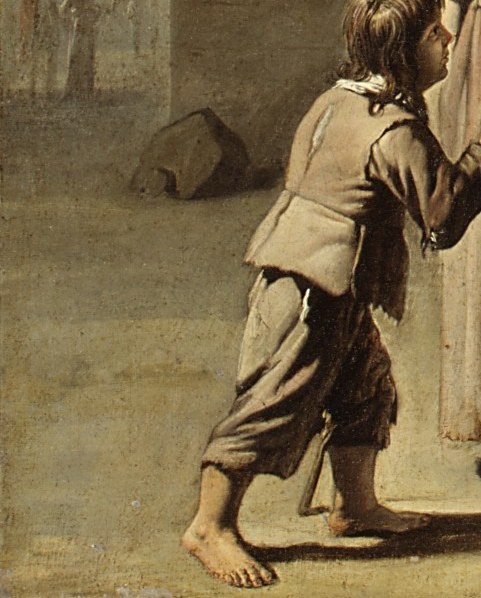
Look at what the copyist preserved. The kneeling man's face is turned up toward the donor, caught between hope and resignation. The most telling detail is nearly hidden: a small child clings to the elderly woman's back, peeking over her shoulder. One figure, easily missed, carries the whole weight of inherited poverty.
The drama unfolds on the threshold of a grand stone building, a church or civic institution. The beggars are neither inside nor turned away. They occupy the liminal space that was, for many, the closest they would ever get to power. The Le Nain brothers were known for painting the rural poor with unflinching dignity, and this copy, made decades later, preserves that vision.
A painting whose original is gone, by an artist whose name is lost, holding a scene that asks the same question now as it did in 1640: who do we see, and who do we walk past?
#arthistory #baroque #masteroftheBeguins
Details
Transcript
This painting is not quite what it seems. It copies a lost work by a French Baroque master. The kneeling man pleads with an open hand. Look past him, at the woman's shoulder. A child, hidden. Generational poverty in one detail. The original was painted around 1640 and vanished. This copy is the only record we have.