Artwork
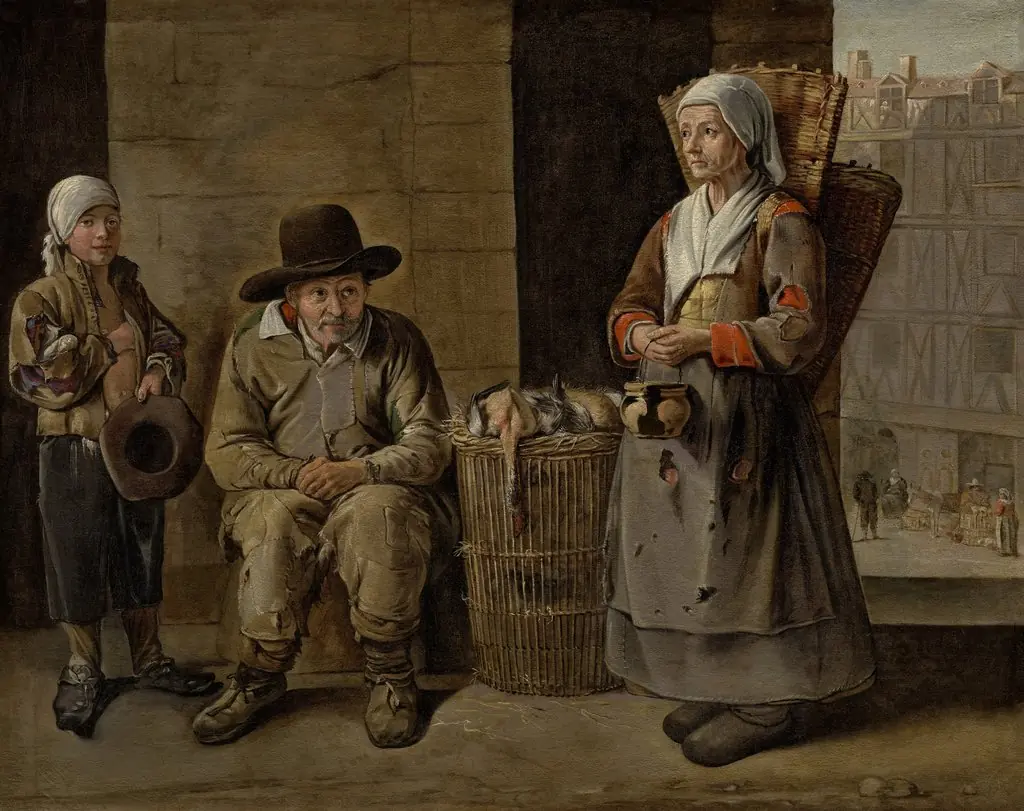
Beggars at a Doorway
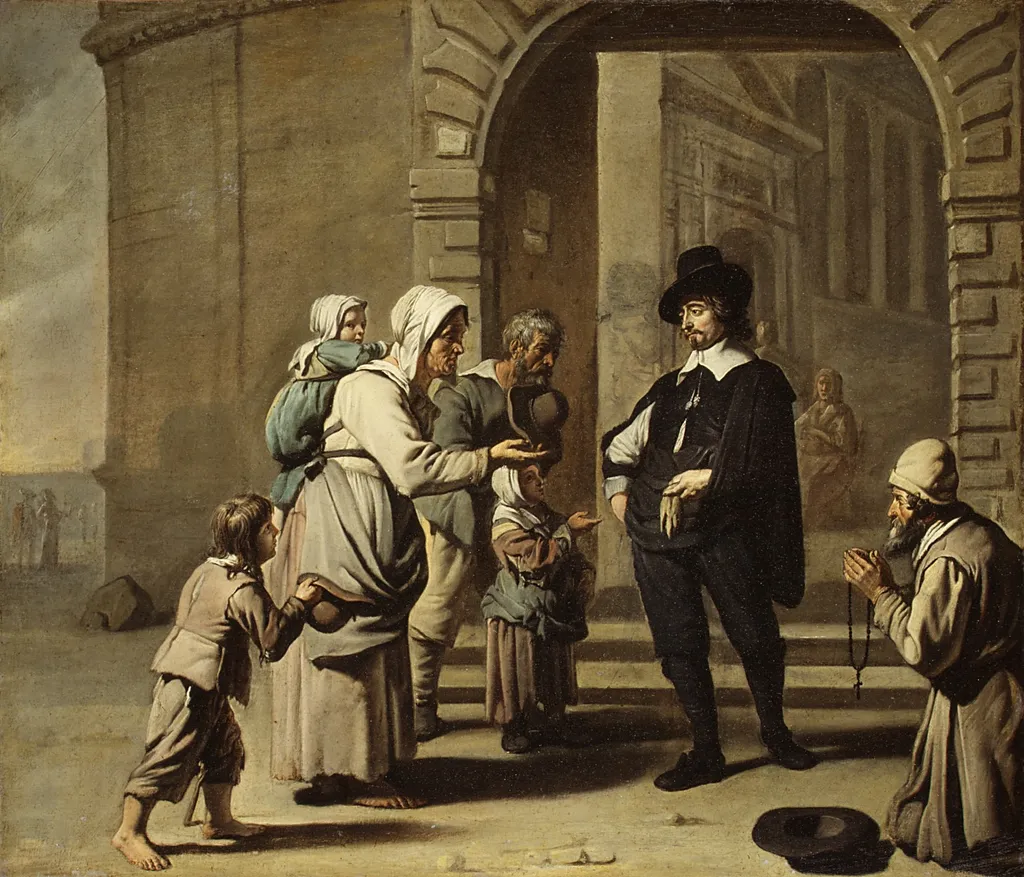
Beggars at a Doorway is an oil painting by the Rococo painting artist Master of the Béguins. It dates from 1700 and is held in the collection of the Metropolitan Museum of Art.
About this work
Subject & Meaning
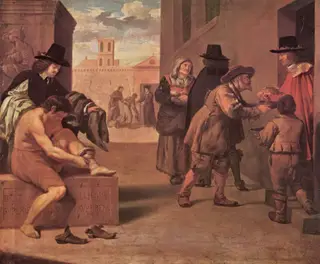
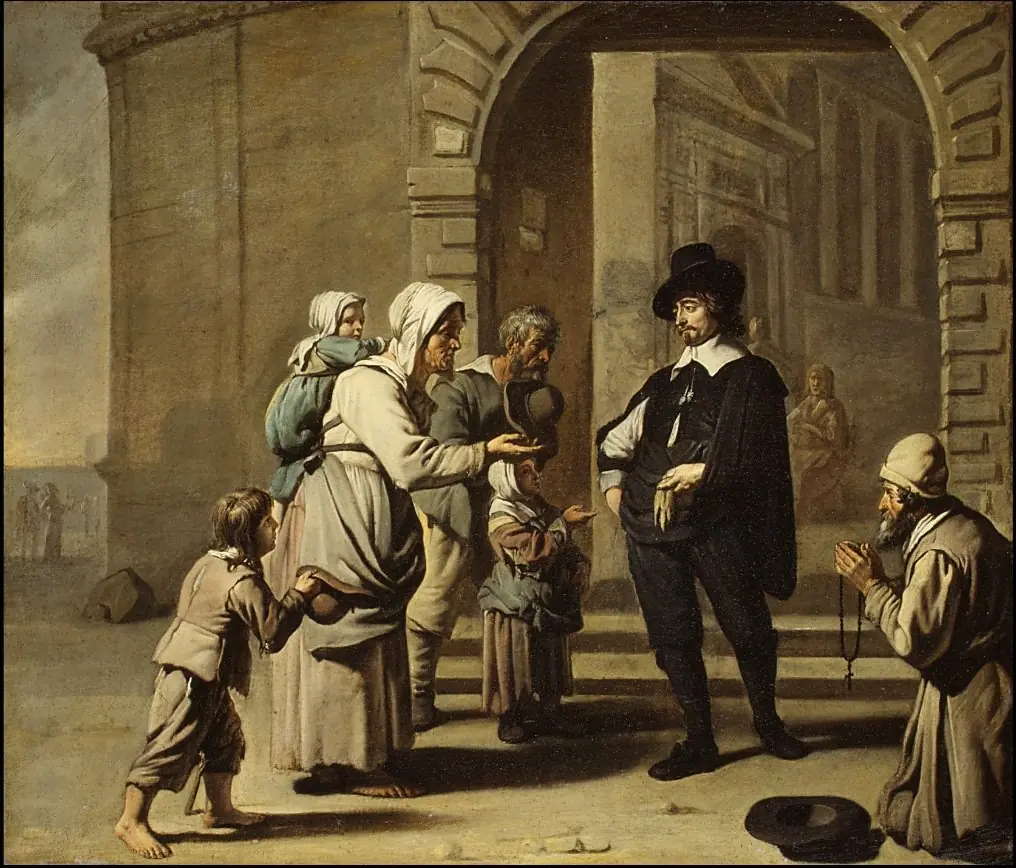
Beggars at a Doorway is a genre scene by the Master of the Béguins that depicts a moment of alms-seeking at a domestic threshold.
Beggars at a Doorway is a genre scene by the Master of the Béguins that depicts a moment of alms-seeking at a domestic threshold. The painting portrays figures including a woman, a man, and a child engaged in begging, with a rosary among the depicted objects. The presence of the rosary signals a religious dimension, suggesting the supplicants frame their appeal through piety.
The doorway setting reinforces a moral reading, functioning as a liminal space between the private household and the public street, where charity was traditionally extended. The work reflects the seventeenth-century Netherlandish and French interest in everyday encounters between the poor and their benefactors, presenting begging as both a social condition and an occasion for Christian compassion.
Technique & Style
Executed in 1700, this genre scene is an oil painting on canvas. The work measures 51.4 cm in height and 59.4 cm in width. Attributed to the Master of the Béguins, a figure possibly identified as the Flemish artist Abraham Willemsens, the piece depicts a group of figures, a man, a woman, and a child, engaged in begging, with a rosary among the iconographic details.
The composition focuses on these human subjects within a domestic or street setting characteristic of seventeenth-century genre art. The material construction is consistent with standard Flemish or French practices of the period, utilizing oil pigments applied to a woven textile support.
History & Provenance
Beggars at a Doorway is an oil-on-canvas painting dated 1700 and attributed to the Master of the Béguins, possibly identified with the Flemish painter Abraham Willemsens (active by 1627, died 1672). The work entered the collection of the Metropolitan Museum of Art through a documented ownership chain beginning with Louis César de La Baume Le Blanc and passing through Martin comte Cornet de Ways Ruart and William T. Blodgett, who acquired it by 1871, and then John Taylor Johnston. The painting is held at the Metropolitan Museum of Art under accession number 12.194.
It has been included in exhibitions including "The Taste of the Seventies" and presentations related to the Le Nain brothers.
Overview
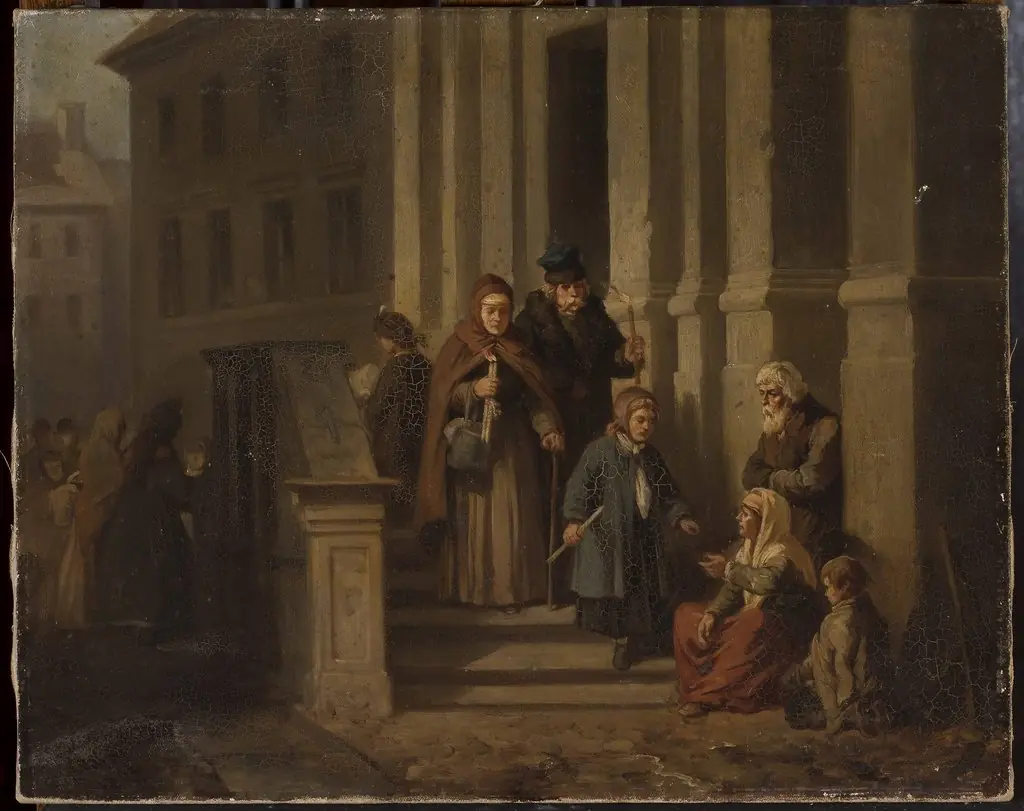
The painting titled Beggars at a Doorway is an oil work depicting a gathering of individuals at the entrance of a substantial stone edifice. The composition brings together men, women, and children, all portrayed in modest attire, suggesting a scene of destitution. The artist employs a dramatic lighting scheme to emphasize the figures and their circumstances.
Own this work as a print
Artist & collection
Artist
Master of the Beguins is the conventional name for an anonymous painter active in France around the middle of the seventeenth century.