Madonna of the Rosary by Caravaggio
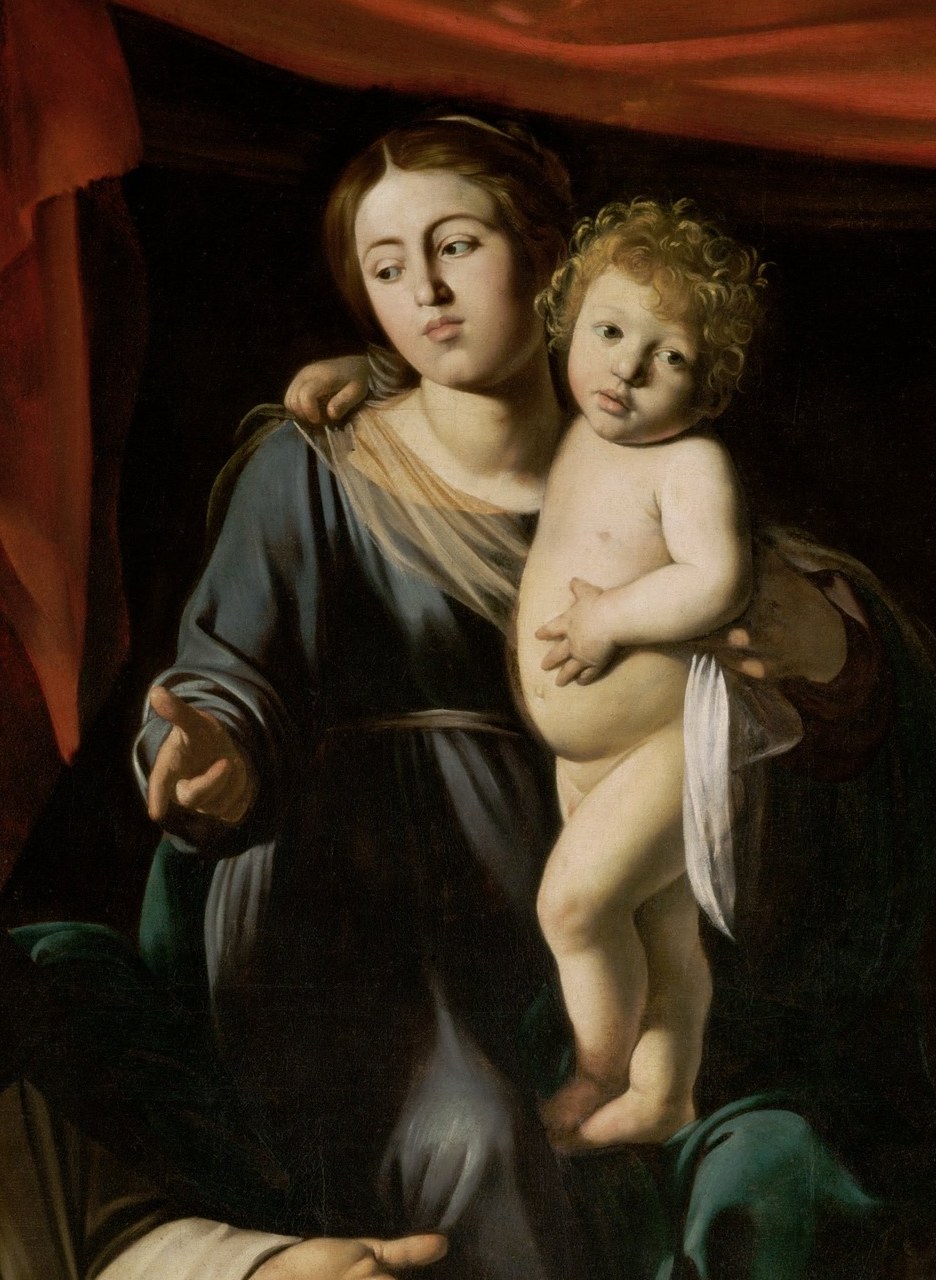
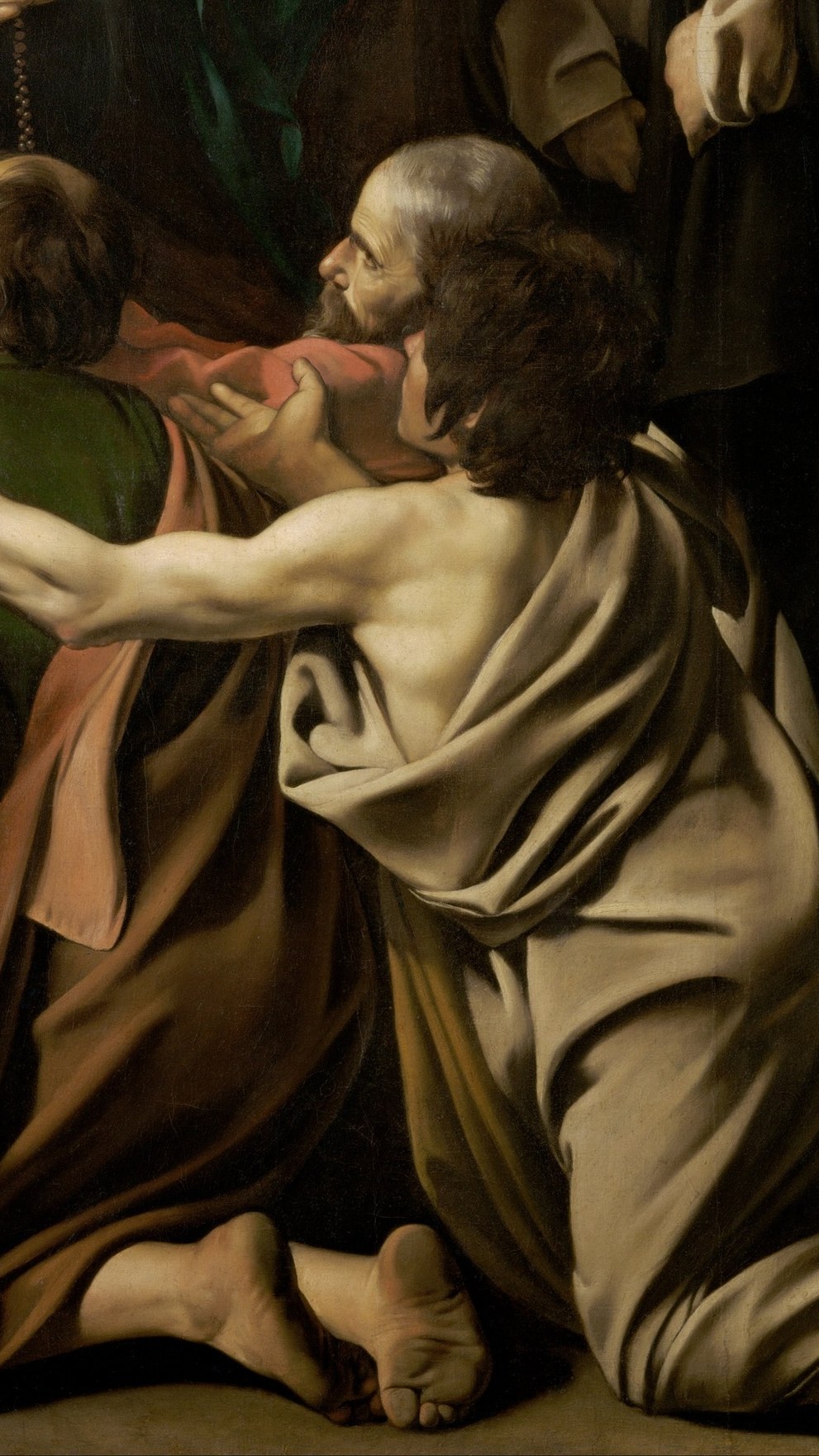
Caravaggio's "Madonna of the Rosary," painted in 1607 and now at the Kunsthistorisches Museum in Vienna, is a fascinating puzzle. Unlike his other works, this large altarpiece follows a conventional Baroque church commission format, yet its origins are shrouded in mystery.
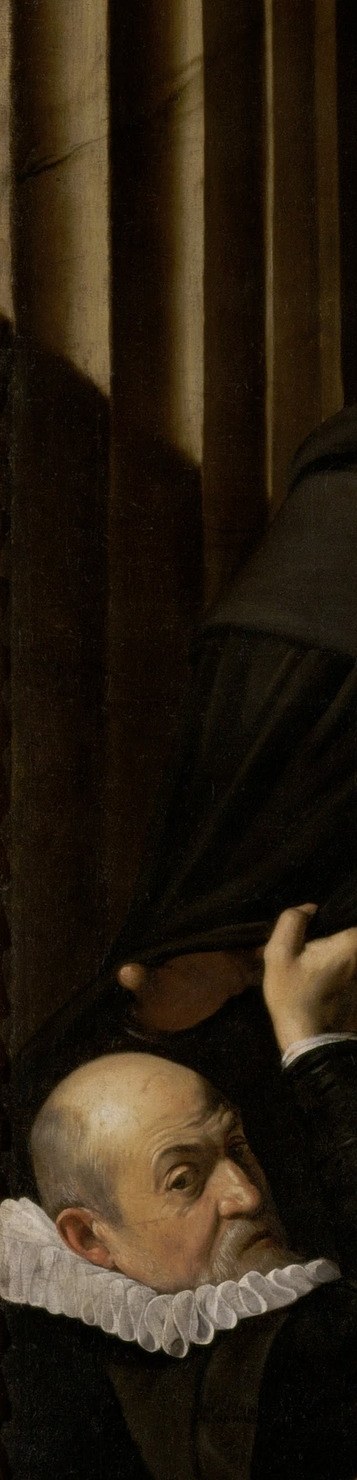
Notice the detailed column base and the sweeping red drapery. These elements are thought to be subtle references to the powerful Colonna family, suggesting they may have commissioned the work. The man in the black ruff, the donor, also seeks protection under Saint Dominic's cloak, a common gesture in such commissions.
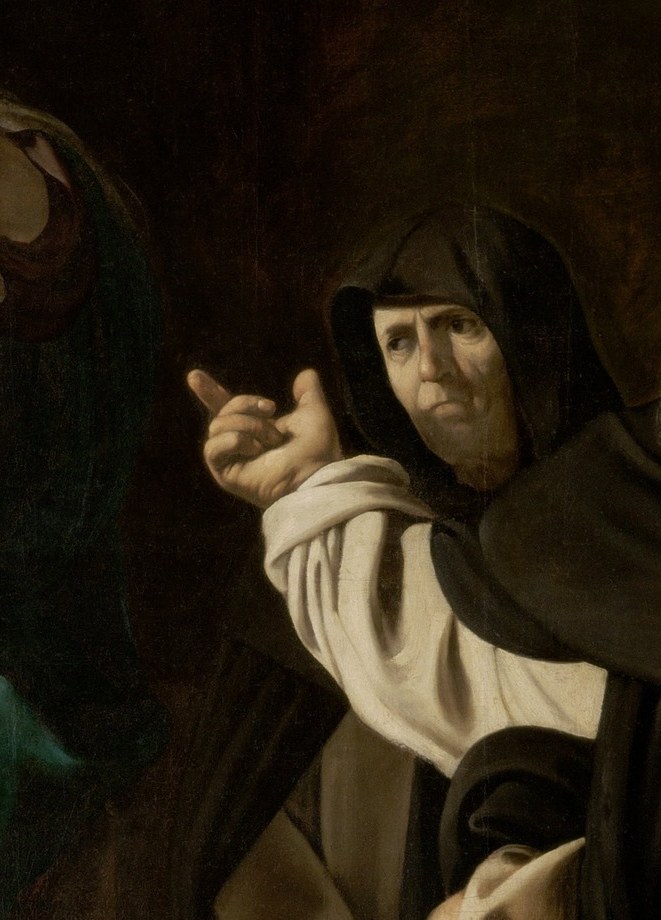
Intriguingly, Saint Peter Martyr is depicted with a distinct scar on his forehead. Caravaggio himself was known to have a visible head wound around the time he painted this, hinting at a personal connection within the religious narrative. The painting's journey continued when, shortly after its completion, it was put on the market and acquired by a Flemish consortium, which famously included Peter Paul Rubens, before finding its way to Antwerp.
What other personal details might artists embed in their work?
Details
Transcript
This Caravaggio altarpiece is unlike any other he painted. The commissioner is unknown, but hints are hidden in plain sight. The column and red drapery may reference the Colonna family. The man with the ruff is the donor, seeking protection. Look at the scar on Saint Peter Martyr's forehead. Caravaggio himself had a visible head wound around this time. The painting was quickly on the market, bought by a consortium. Rubens was part of the group who brought it to Antwerp.