The arrival of the Russian embassy in Amsterdam, 29 August 1697 by Abraham Storck
Abraham Storck’s painting, *The arrival of the Russian embassy in Amsterdam, 29 August 1697*, completed in 1702, captures a significant diplomatic event during the Dutch Golden Age. This work, held by the Rijksmuseum, records the arrival of a Russian diplomatic mission.
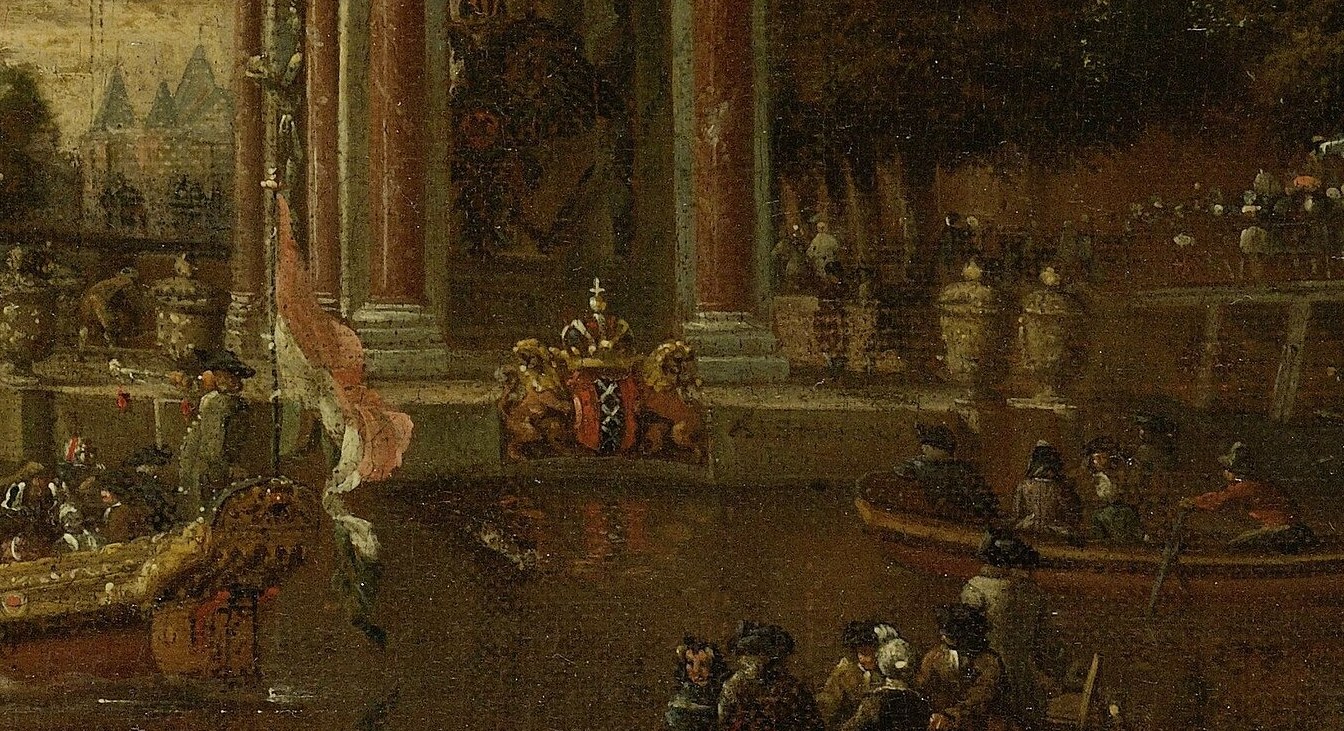
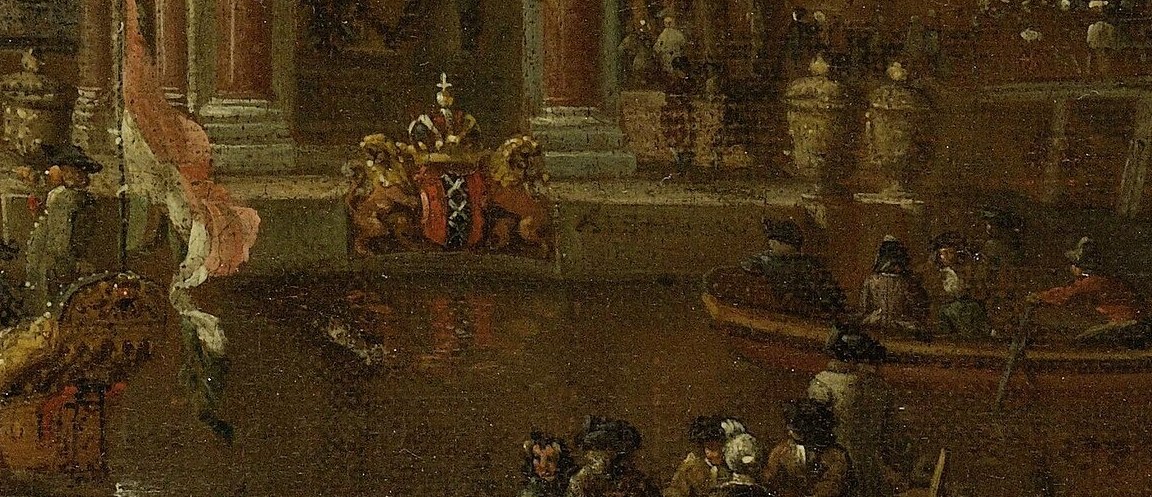
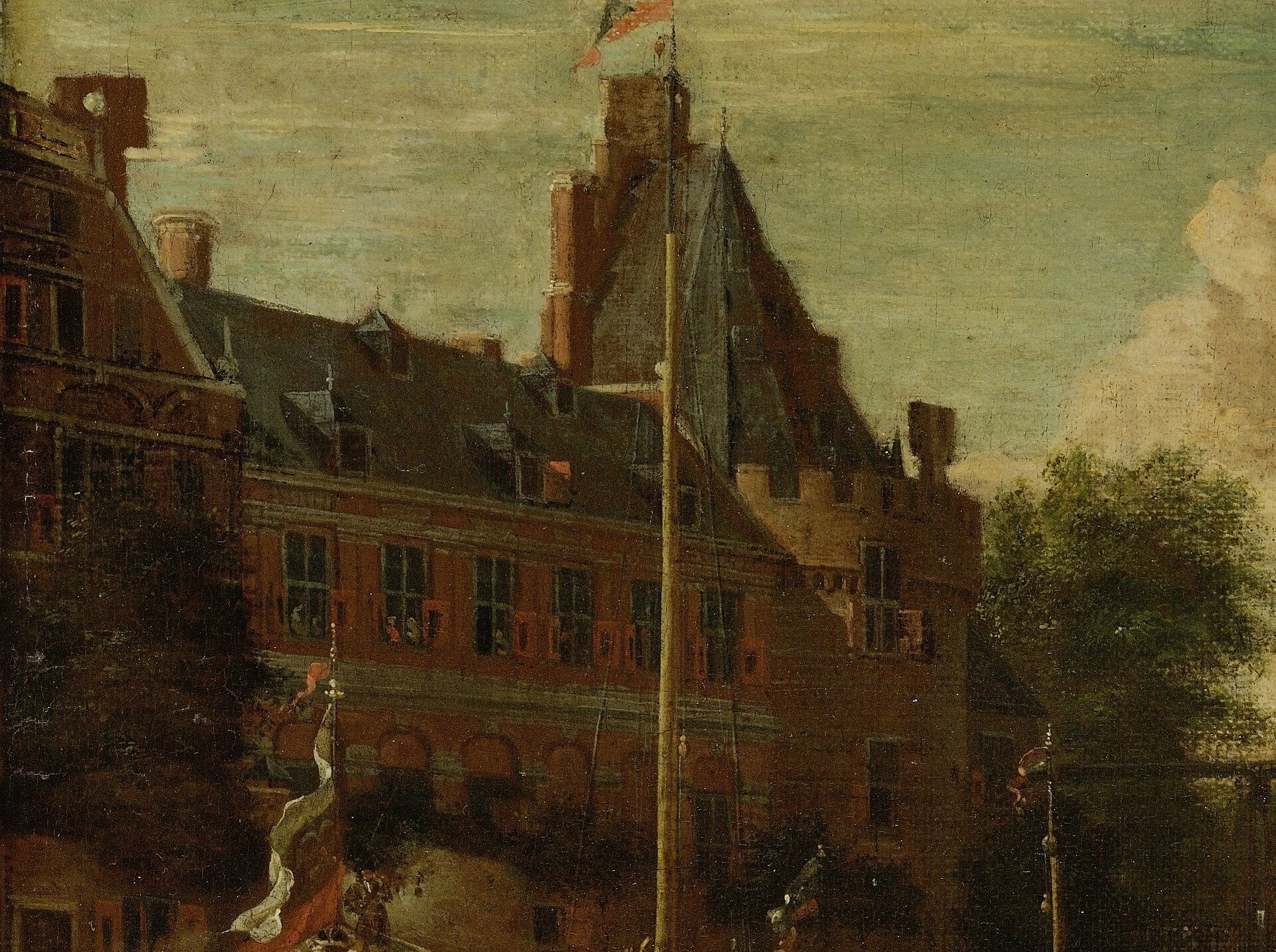
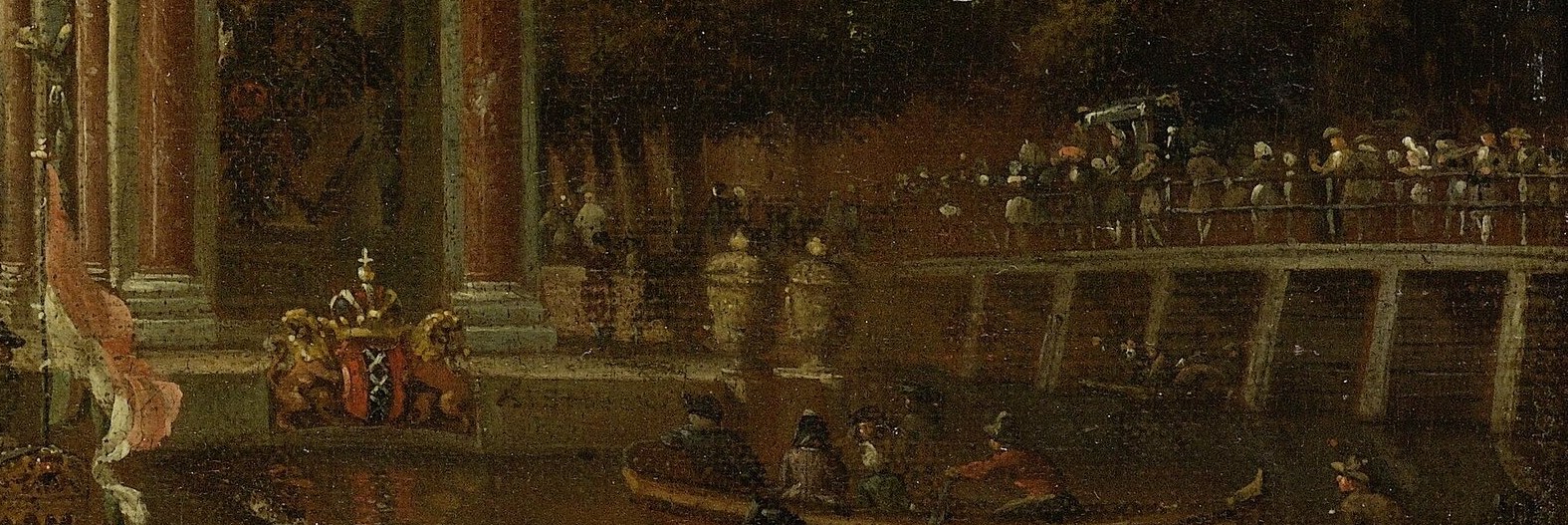
The canvas shows a bustling Amsterdam waterfront, with the Amstel River framed by the historic Kloveniersdoelen building and a stone bridge. The flag on the main mast of the large ship clearly identifies it as a Russian vessel, signalling the importance of this embassy.
The painting commemorates the visit of Tsar Peter the Great to Amsterdam in 1697. Storck, known for his marine and civic scenes, created this work five years after the actual event, documenting a moment that underscored Amsterdam's crucial role in international trade and diplomacy.
Storck's meticulous detail in rendering water, sky, and architecture, alongside the lively crowd, offers a vivid snapshot of public life and international exchange in late 17th-century Amsterdam. What details in the crowd catch your eye?
Details
Transcript
This painting captures a grand diplomatic event in Amsterdam. Look closely at the large ship's flag. It's the flag of Russia, signifying an embassy's arrival. In 1697, Tsar Peter the Great visited Amsterdam. The prominent building is the Kloveniersdoelen, a civic guard headquarters. This event highlights Amsterdam's role in international relations.