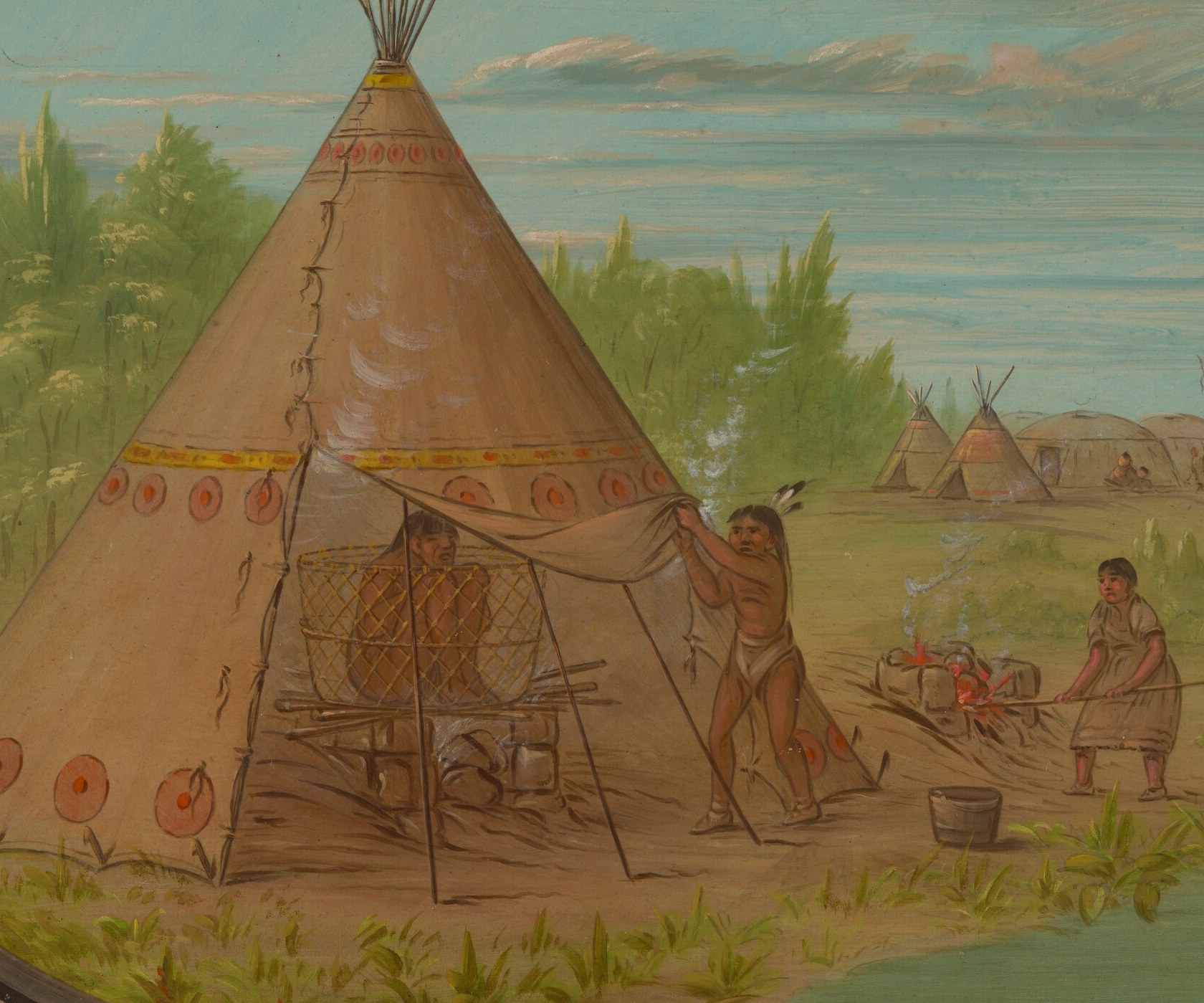
Vapor Bath - Minatarree by Catlin, George
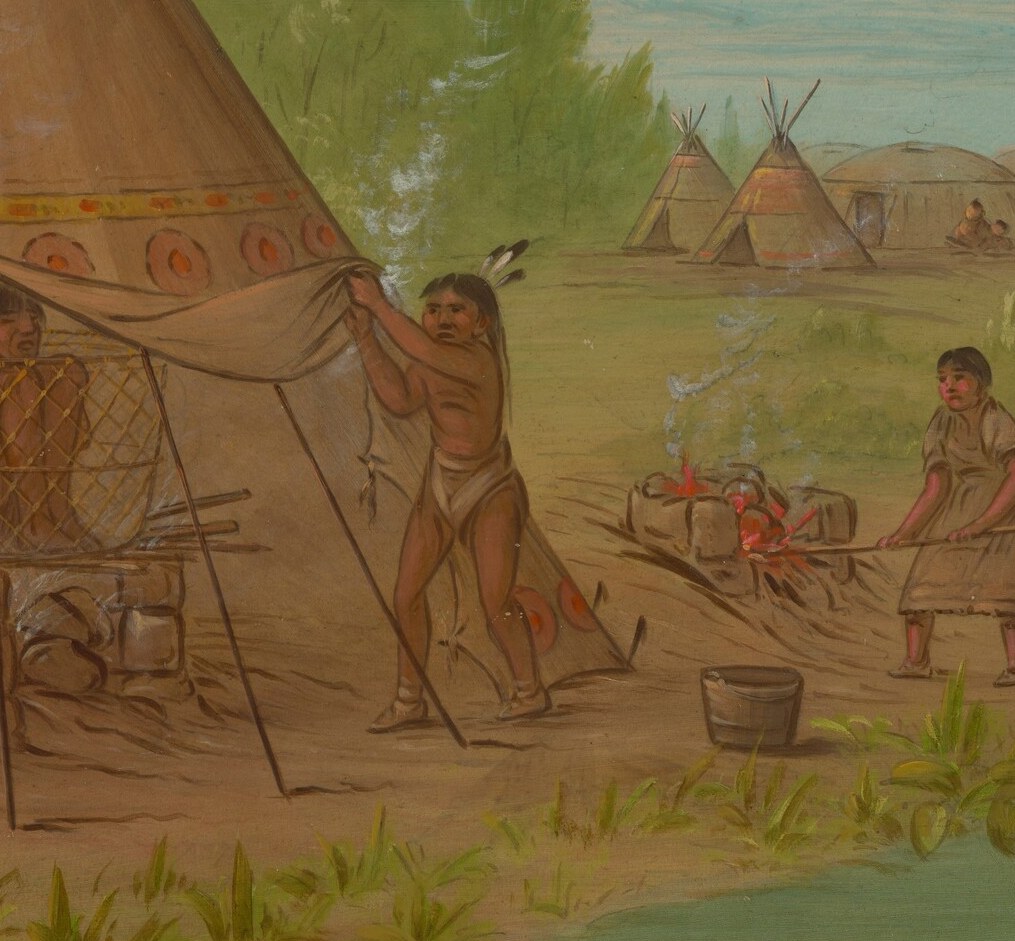
George Catlin, a lawyer-turned-artist, created *Vapor Bath - Minatarree* between 1861 and 1869, an oil painting now housed in the Smithsonian American Art Museum. Catlin was known for documenting Native American cultures during a period of rapid change, and this work captures a moment of communal life among the Minatarree people.
At the center of the painting is a steam bath, a significant ritual practice. Most viewers might miss the small detail in the lower-left corner: the artist's signature and a catalog number. Catlin often added these to his works, serving as an early form of inventory for his extensive collection documenting Plains Indian life.
Catlin embarked on five expeditions to the American West in the 1830s, producing countless sketches and paintings. Though this particular work dates from later, it reflects observations made during those earlier travels. His meticulous documentation aimed to preserve visual records of indigenous customs for an eastern audience.
What other hidden marks or details do you think artists sometimes include in their work?
Details
Transcript
This painter traveled the American West, documenting indigenous life. He captured daily scenes like this communal steam bath. But look closely, there's a tiny detail almost always missed. In the lower left corner, a number and a signature. It's the artist's catalog number for this painting.