Portrait of Ferdinand van Boisschot by Anthony van Dyck
This is the Portrait of Ferdinand van Boisschot by Anthony van Dyck, painted around 1630 and held at The Metropolitan Museum of Art. Van Dyck, a leading Flemish Baroque artist, captures the sitter with masterful technique, but there's a hidden detail for the keen eye.
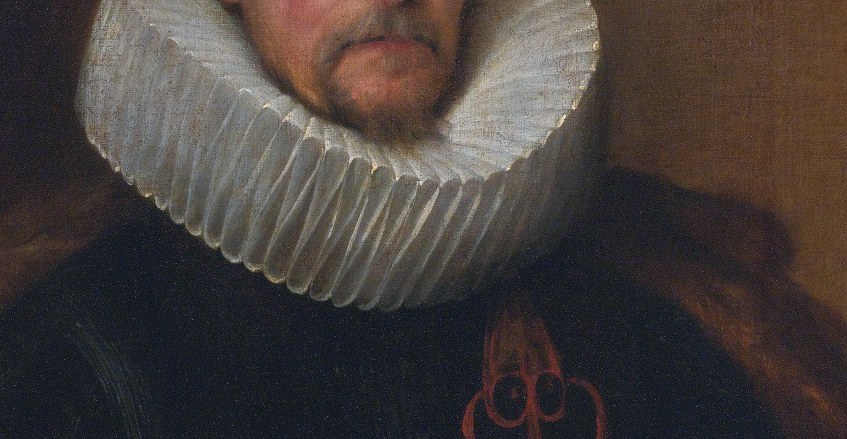
Observe the sitter's attire: his crisp white ruff collar and the red ribbon detail on his chest, suggesting his status and affiliations. The composition, with its somber background and chiaroscuro, focuses entirely on Ferdinand van Boisschot himself, drawing attention to his introspective gaze.
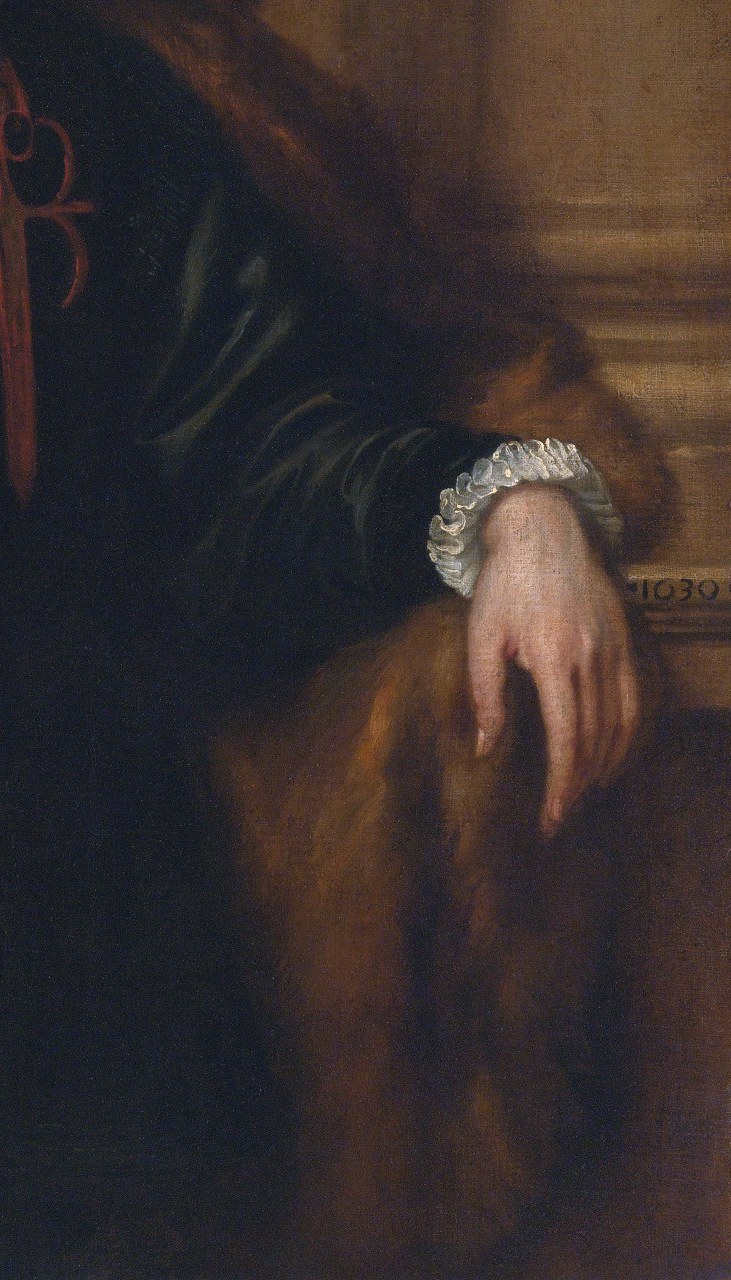
Van Dyck apprenticed under Peter Paul Rubens and became a renowned court painter. This portrait, created during a period of significant artistic development for van Dyck, showcases his signature refined style, particularly in the subtle rendering of light and shadow that gives depth to the sitter's features. The faint inscription on the wall, a potential signature or date, is a testament to the artist's subtle inclusions.
Look closer, and you might just spot the artist's hidden mark.
Details
Transcript
He looks like any other serious man. Notice the starched white ruff. His red ribbon suggests an order or honor. Van Dyck painted this in 1630. Look closely at the wall behind him. A faint inscription might be a signature. Van Dyck used subtle shadow for realism.