Allegory of Avarice by Jacopo Ligozzi
Jacopo Ligozzi's Allegory of Avarice (1598) is a moral warning painted by a man who spent years drawing specimens for the Medici court. Before he made allegories, Ligozzi was a scientific illustrator, one of the best in late-Renaissance Florence, and that training is the hidden key to this painting. It hangs today in The Metropolitan Museum of Art.
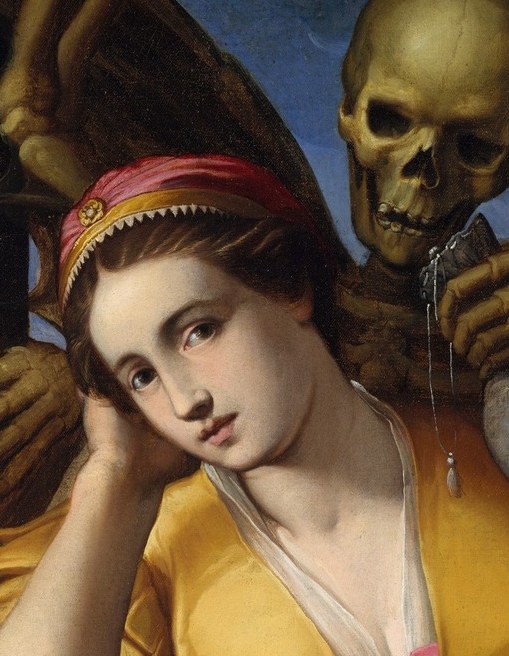
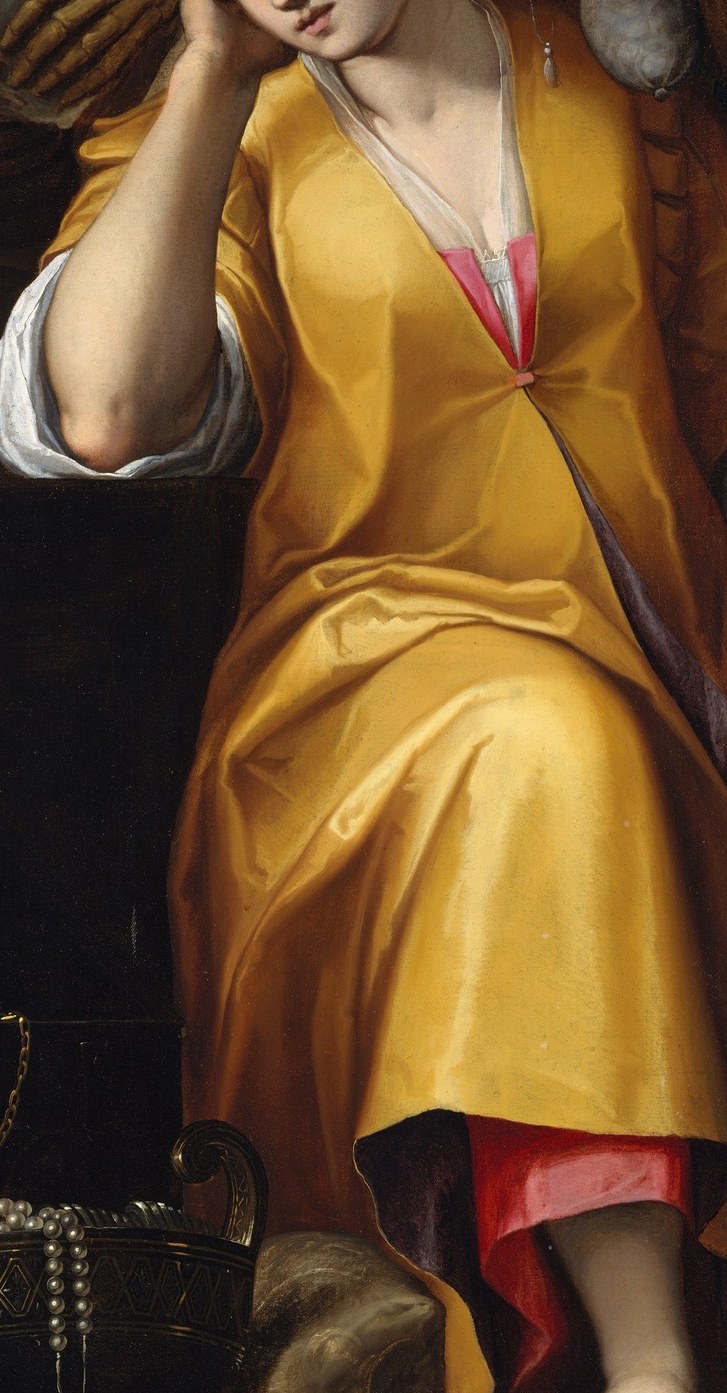
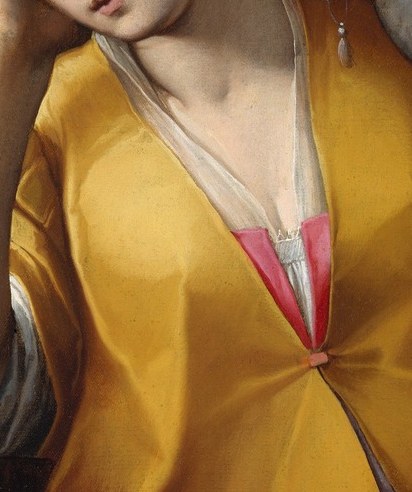
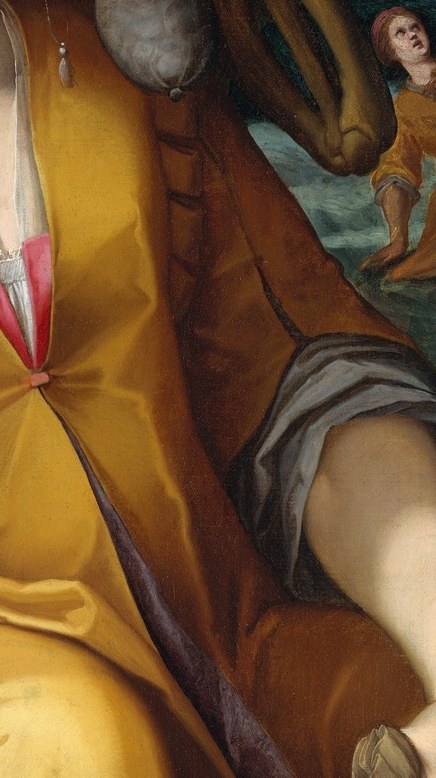
The woman in gold is Avarice herself, her hand pressed to her cheek in the Mannerist gesture of melancholia. But the moral argument is in the textures. Ligozzi builds her golden dress from dozens of distinct ochre tones, satin that catches the light and falls into shadow with real weight. Against it, the white linen at her neckline is crisp and precise, a completely different surface, rendered with a miniaturist's control.
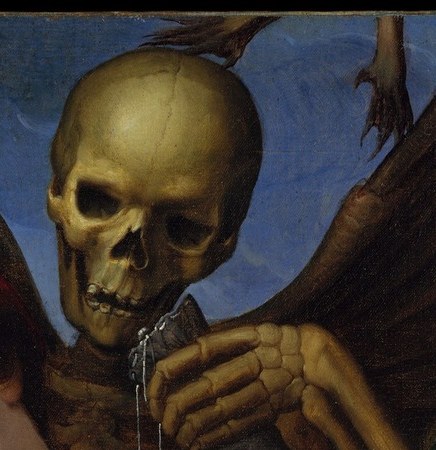
And then there is the skeleton. Death leans over her shoulder, ribs and spine described with anatomical exactness Ligozzi learned in the dissecting rooms and specimen cabinets of the Medici. The bony arm wraps around her like a possessive embrace. That detail, bone rendered as accurately as the fabric and the flesh, is what makes the allegory work. The skeleton isn't a symbol painted from imagination. It's built from observation.
Avarice consumes the living, and Death is already here. Ligozzi makes you see both at once, in the same light, with the same brush. What do you notice first: the gold, or the bone?
Details
Transcript
She looks consumed by her own thoughts. But the real story is in the textures. Start with the gold satin. Not one shade of yellow, dozens. Now the white linen at her neckline. Look at the precision. Ligozzi was a scientific illustrator before he was a painter. That training let him paint bone like no one else, every rib an inventory. Flesh, fabric, bone. Three materials, one brush, 1598.