Christ in Glory by http://www.wikidata.org/.well-known/genid/a72ec0ea4f047acb0470721031e0077d
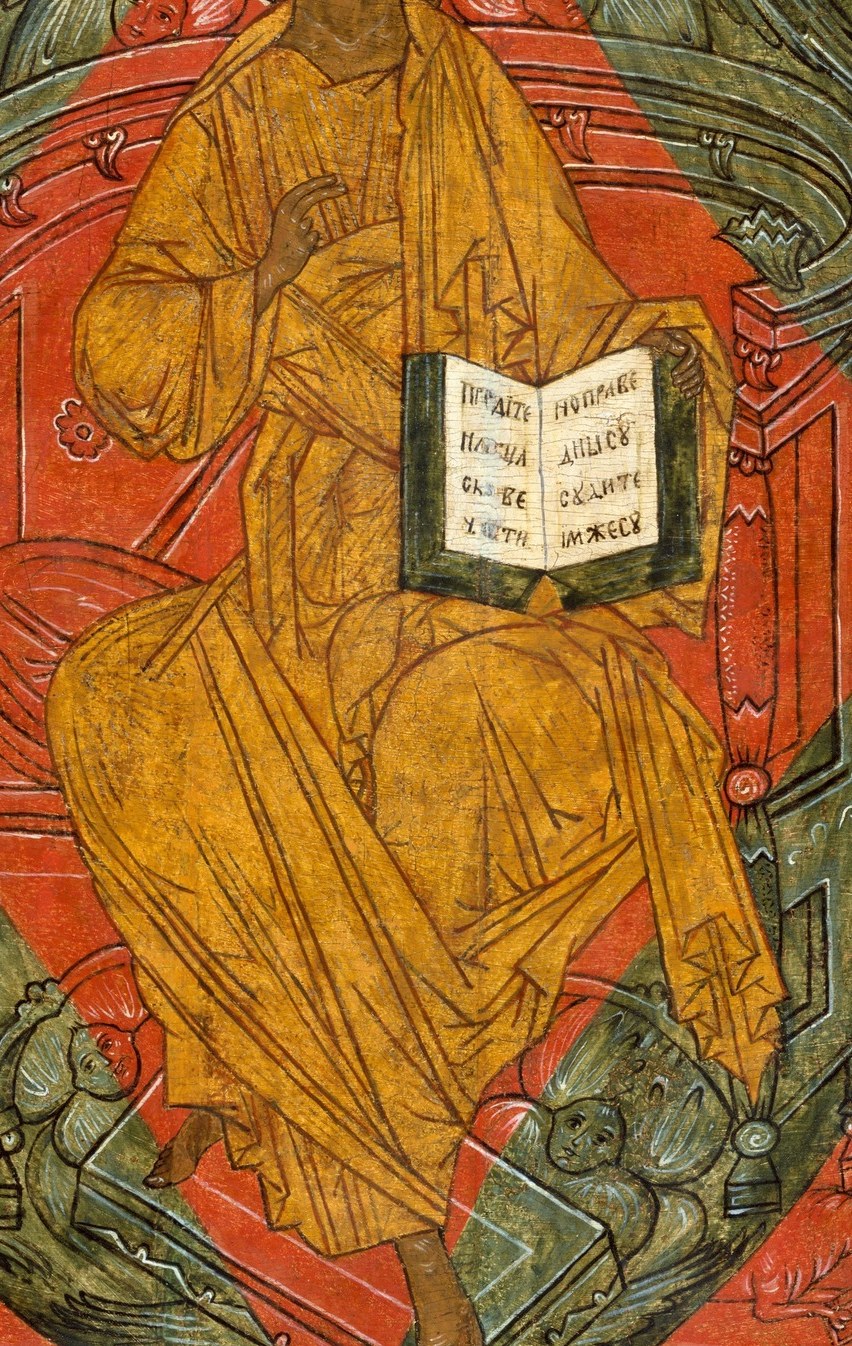
This iconic image, Christ in Glory, was created around 1500 using tempera. It stands as a prime example of religious art from its era, renowned for its symbolic depth and enduring technique. The painting’s enduring fame is evidenced by its high ranking among historically significant artworks.
Observe the central figure's commanding gaze, rendered with directness. His yellow robe signifies divinity, set against a vibrant red background that radiates divine presence. Note the Greek inscriptions 'IC' and 'XC' on either side, abbreviations for Jesus Christ, confirming the subject. Smaller angelic faces and detailed foliage surround Christ, while a lion and lamb in the margins represent biblical themes of strength and sacrifice.
Created using the tempera technique, the painting’s clarity and vibrant colors have been preserved over centuries. The meticulous rendering of details, from the foliage to the symbolic animals, showcases the skill of the unknown artist. This piece is celebrated not just for its religious message but also for its masterful execution and historical significance, ranking 8562 out of approximately 241,000 known artworks.
This image invites contemplation on the enduring power of religious iconography and the artistic traditions that shaped them.
Details
Transcript
He stares out from 1500. This is the Greek for Christ. He wears yellow for divinity. Red behind him means divine aura. Tempera paint lasts centuries. A lion and lamb guard his glory. This icon is ranked 8562 of 241,000.