Saint Lucy and a Donor by Veronese
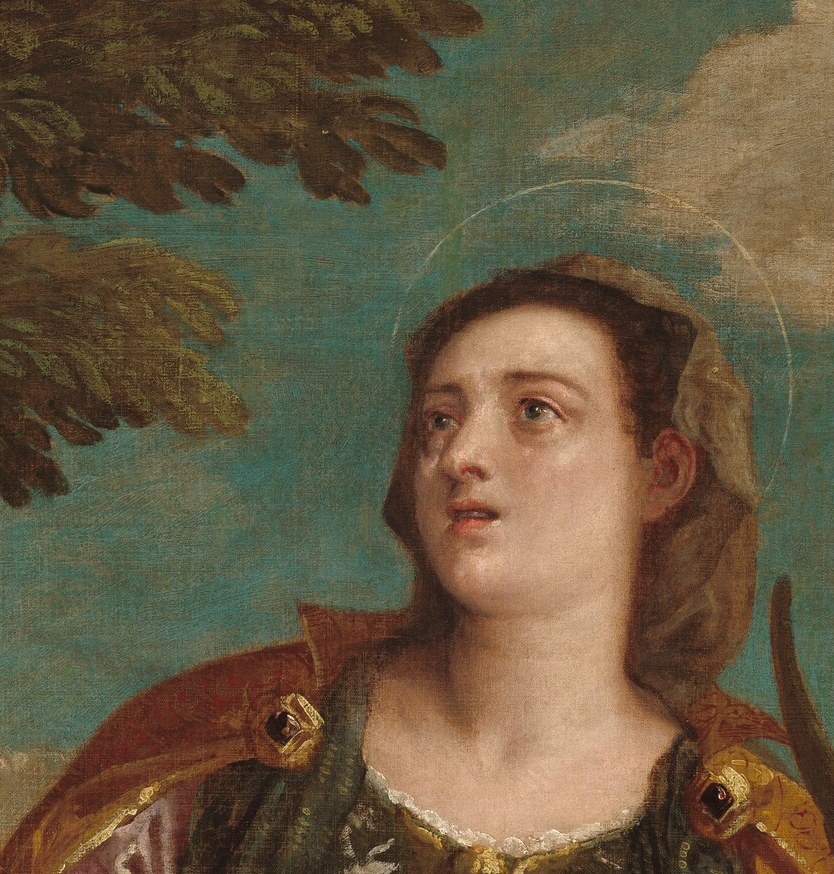
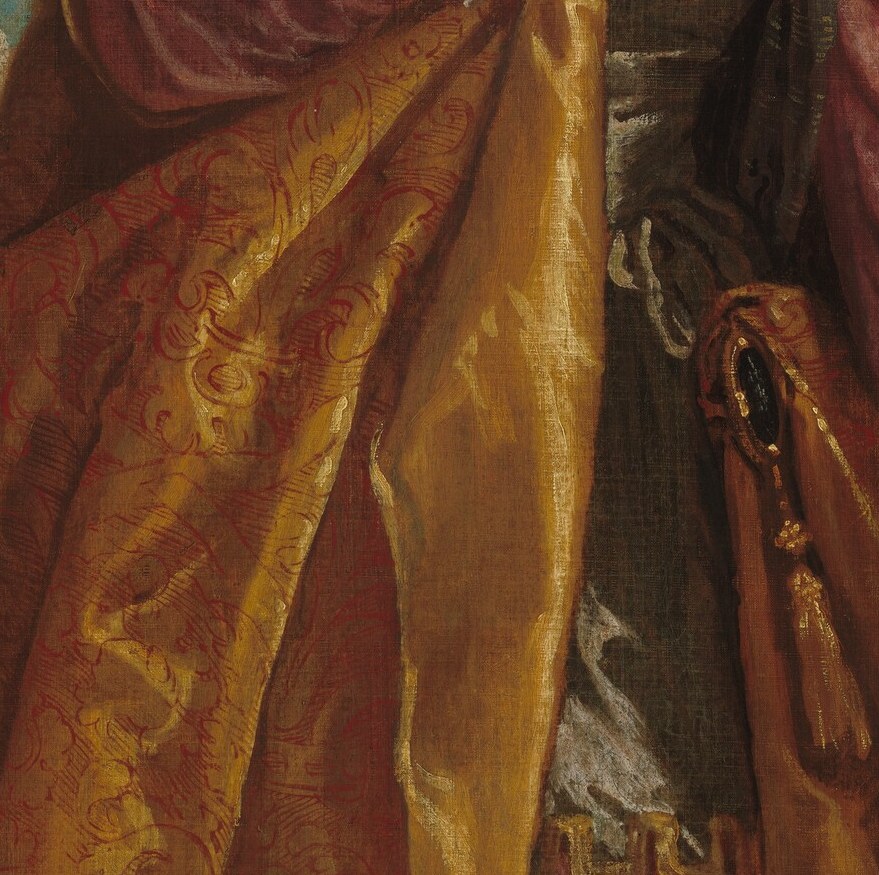
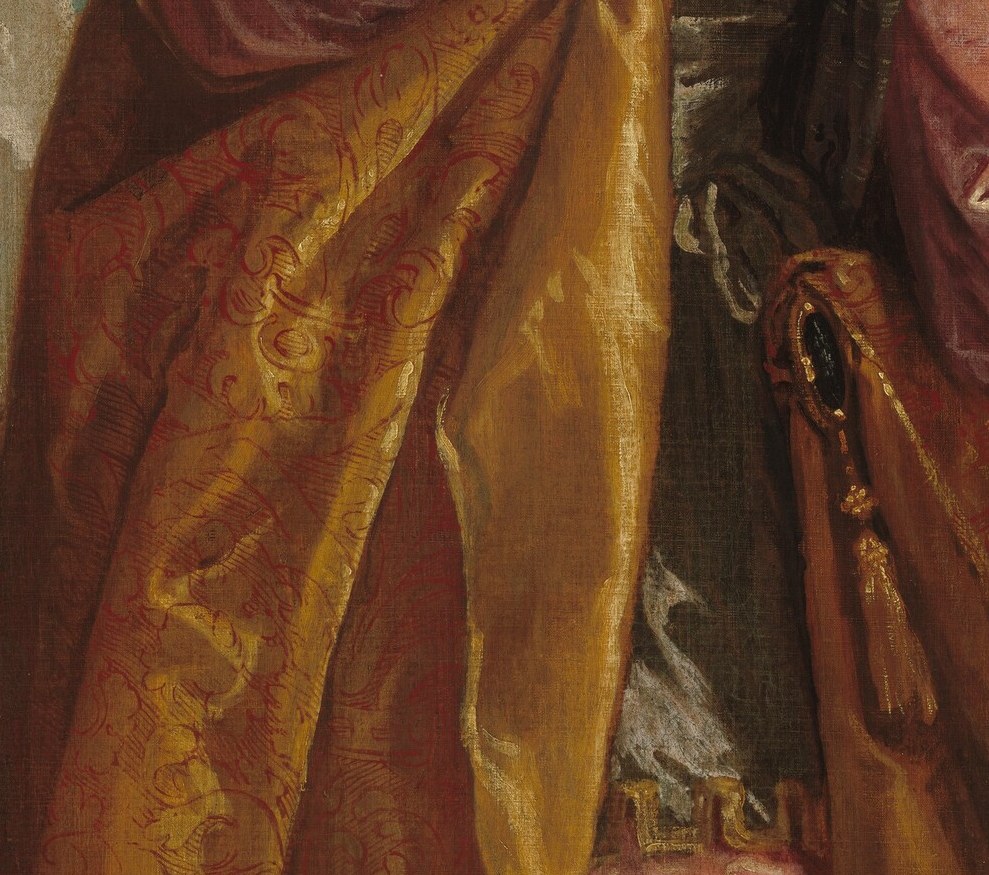
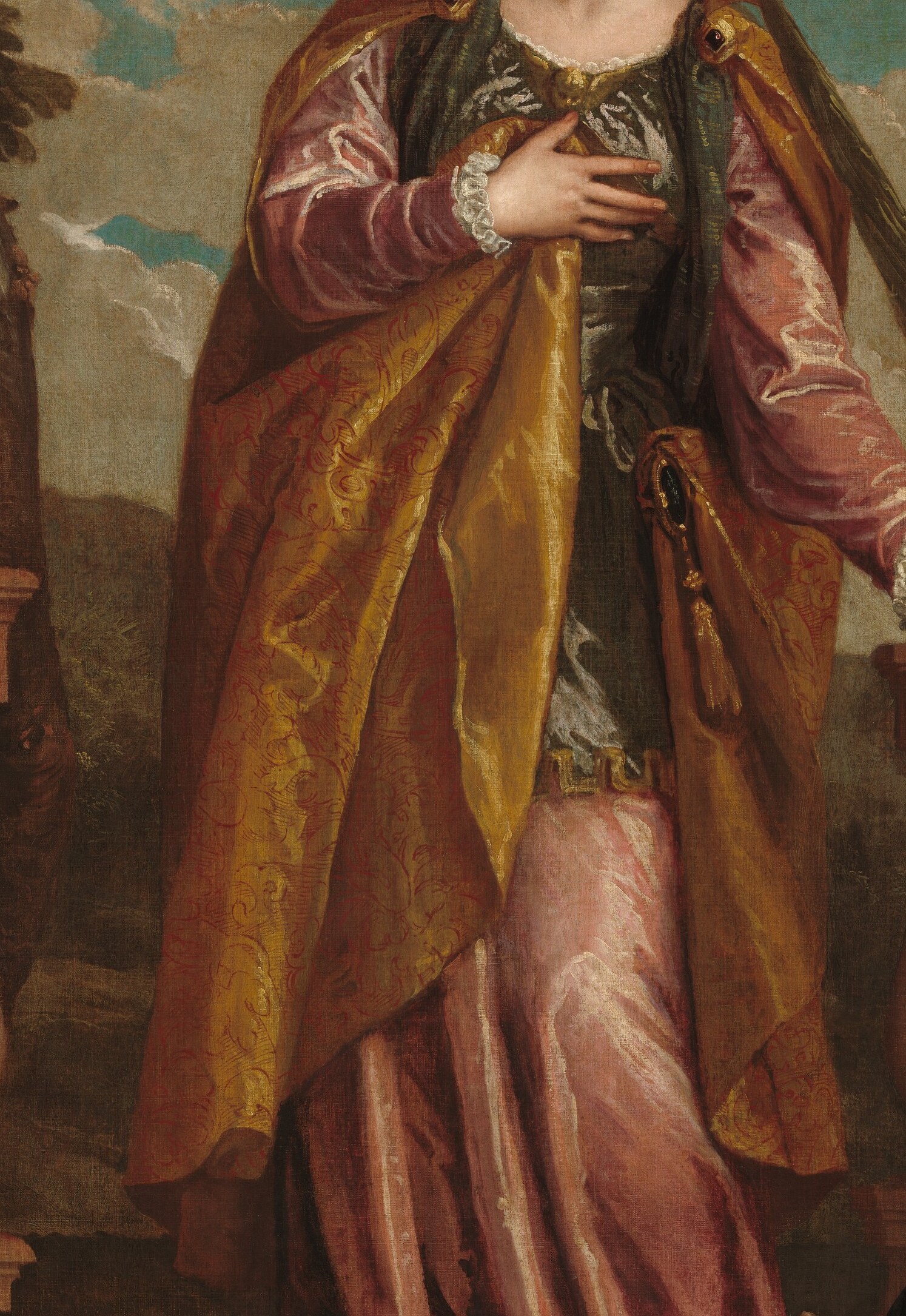
Saint Lucy and a Donor, painted by the Venetian master Veronese around 1590, is a portrait of martyrdom as courtly theater. Saint Lucy stands in a shimmering amber gown, holding a plate that carries two disembodied eyes. The attribute is not subtle. It names her instantly, and it asks the viewer to sit with a violence that the beauty of the paint nearly disguises.
Look first at the plate. The eyes are grey, blank, and rendered with a clinical stillness that stands apart from the lush drapery around them. Then look at Lucy's hands: they cradle the plate not like a wound, but like an offering. Veronese refuses to let her become a victim. Her face tilts upward in the classic martyr's gaze, calm and resolved.
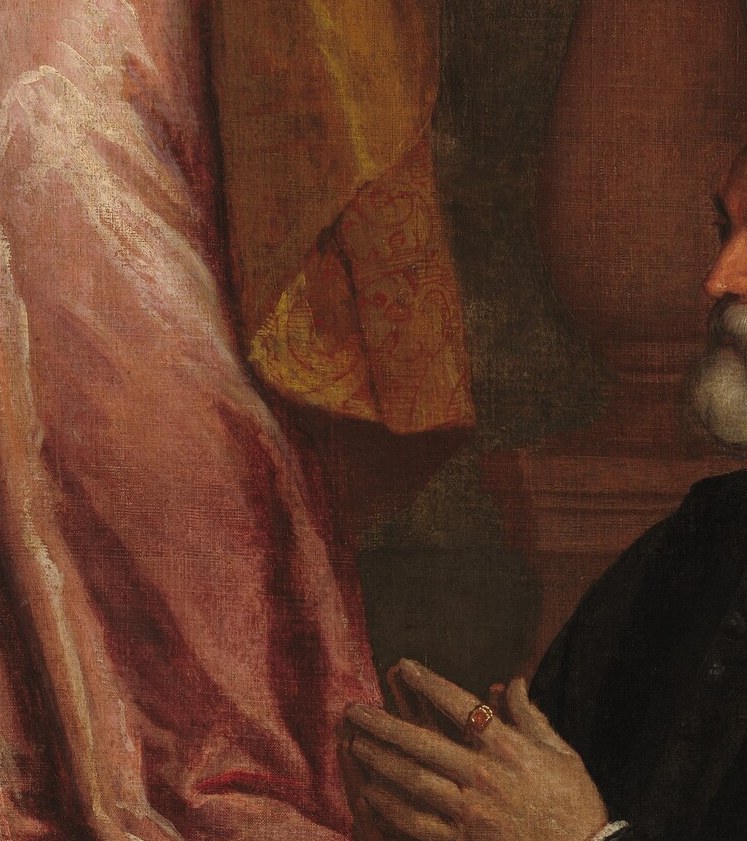
The painting follows a formula: a wealthy donor pays to be inserted into a sacred scene. Here, an unidentified man in dark robes kneels at the lower right, his bearded face turned toward the saint rather than toward heaven. His expression is direct, expectant, he wants something in return. That transaction, the exchange of money for intercession, was the engine of late Renaissance religious art in Venice.
Veronese, born Paolo Caliari in Verona, had been dead nearly a decade when this work was likely completed by his workshop. By the 1590s, his large-scale biblical feasts had already attracted the attention of the Inquisition, who questioned him about including dogs, dwarfs, and German soldiers in a Last Supper. He was a painter who understood trouble. A saint holding her own severed eyes was, for him, a remarkably restrained subject.
Details
Transcript
She carries the proof of her own death. A plate. Two eyes. Hers. The 4th-century story says Roman guards tore them out. This Venetian patron paid to kneel beside the horror. Veronese took the commission around 1590, when such violent piety was in demand. He dressed Lucy not in rags, but in shot-silk gold, as if for a ball.