The Pigeon Tower at Bellevue by Paul Cézanne
Paul Cézanne's "The Pigeon Tower at Bellevue" (1896, oil on canvas, housed in a private collection) is a masterclass in seeing the world anew. Cézanne, a pivotal French Post-Impressionist, built a distinctive pictorial language that influenced early Cubism, and this painting shows how he broke down and reassembled form through color and light.
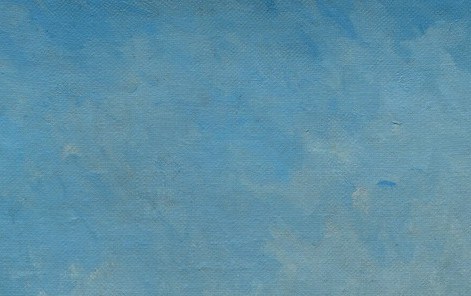
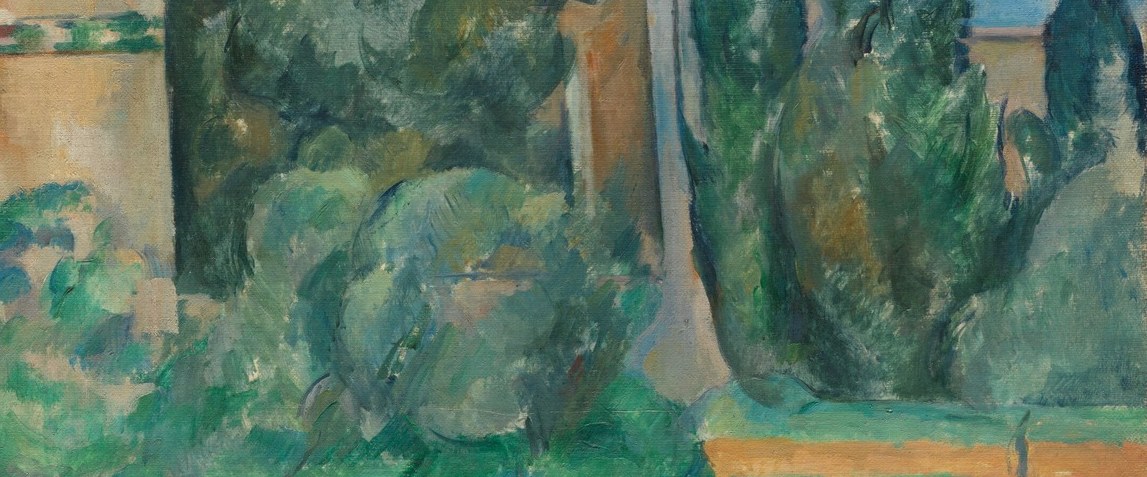
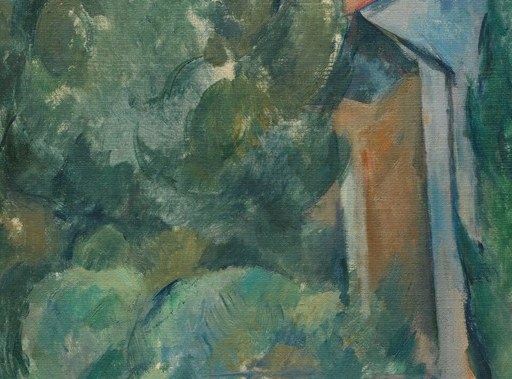
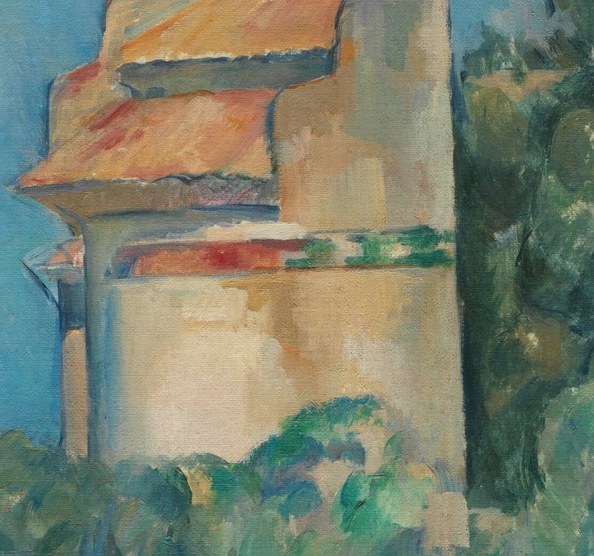
Look closely at how Cézanne uses visible, textured brushstrokes not just in the prominent pigeon tower, but across the entire landscape. The red tiled roof, the dense foreground foliage, and even the blue sky are rendered with a focus on their underlying structure, creating a vibrant, almost sculptural surface.
But the true delight is a hidden detail that many scroll past. Peek through the dense tree line at the horizon, and you'll spot a section of a distant building. Cézanne renders this unassuming structure with the same meticulous attention to geometric form as the main dovecote, proving that every element in his compositions was a subject of intense study.
It's a testament to his vision: finding profound structure and beauty in the quiet corners of a Provençal landscape.
Details
Transcript
This painter explored how color and light build forms. Notice the red tiled roof of the tower, almost abstract. The sky is a tapestry of visible, textured brushstrokes. Yet, in the distance, something else rises among the trees. A section of a hidden building, almost missed. He renders it with the same geometric study as the main tower.