Virgil's Tomb by Moonlight, with Silius Italicus Declaiming by Joseph Wright
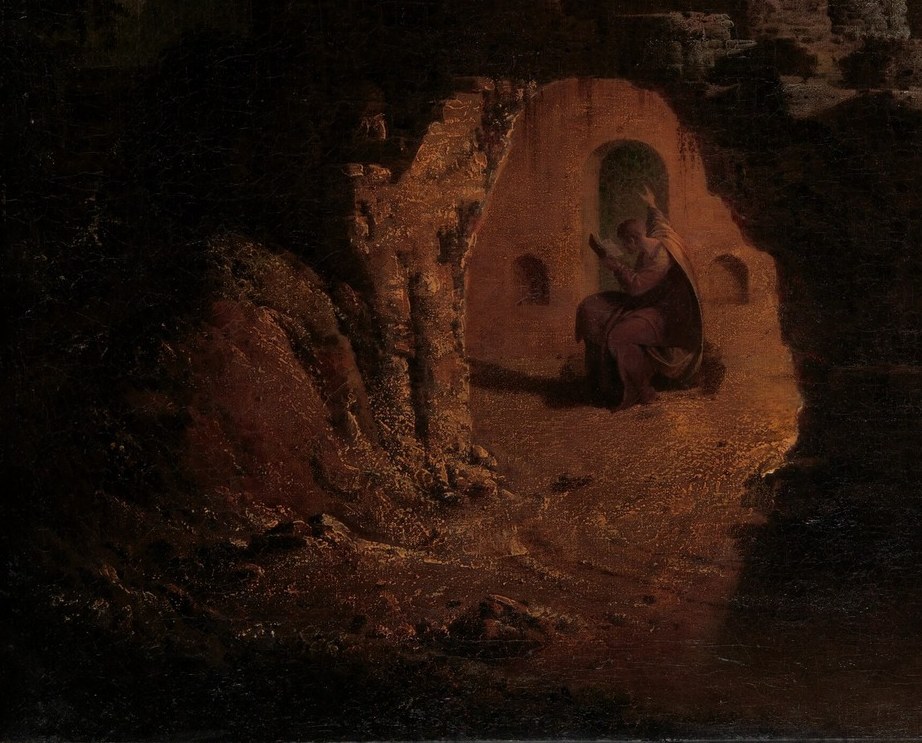
This is Joseph Wright of Derby's 'Virgil's Tomb by Moonlight, with Silius Italicus Declaiming', painted in 1779 and now at The Metropolitan Museum of Art. It records a true practice from the first century CE: the Roman poet Silius Italicus made annual pilgrimages to the tomb of Virgil, to honor the author of the Aeneid.
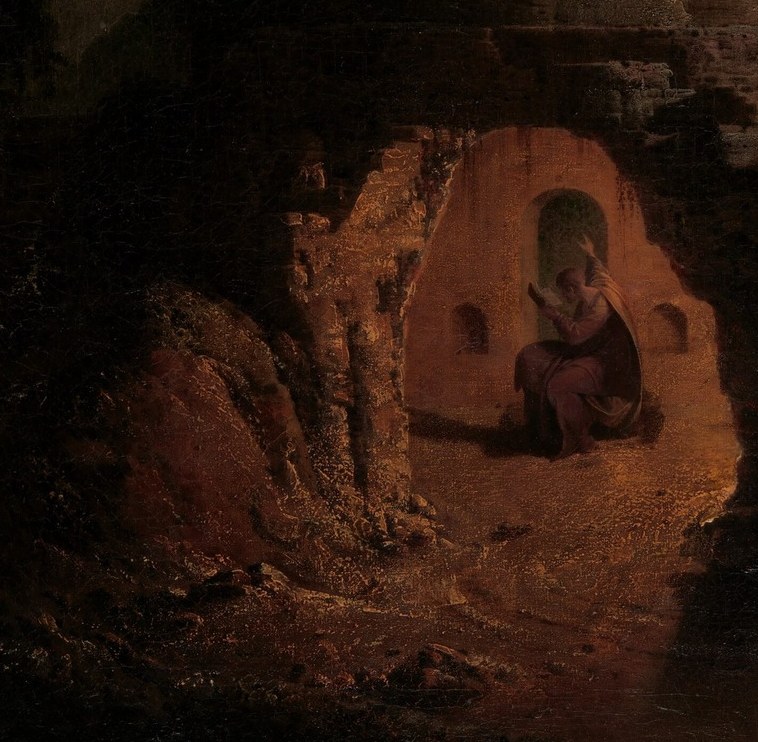
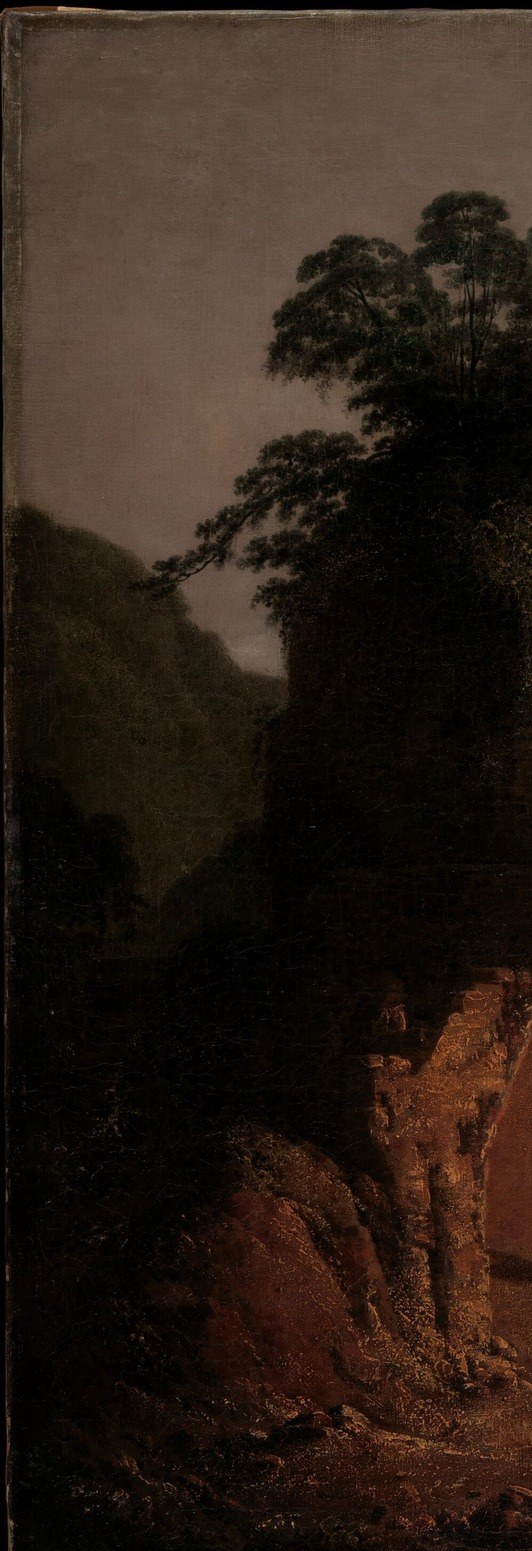
Wright builds the whole scene on a contrast of warm and cold light. A lamp burns out of sight inside the grotto, casting amber light on Silius and his scroll, while a full moon turns the clouds and the ground silver. The two light sources separate the living warmth of literary homage from the cold eternity of the tomb.
This is a Grand Tour painting, made for an 18th-century British audience that saw Italy as a landscape of cultural memory. Wright never visited Naples himself; he worked from drawings by other artists. But he understood that the real subject was not the place, but the act of remembering. Silius stands in for every traveler who came to that spot, and for Wright himself.
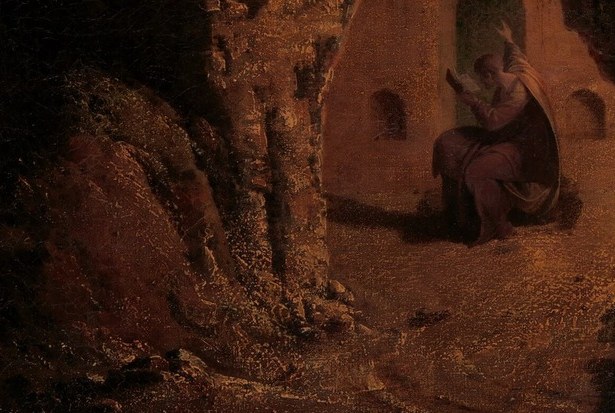
Look at the scroll in Silius's hands. It is easy to miss, but it changes the scene from mourning into a performance. He is not just visiting. He is reading Virgil's words back to Virgil.
Details

Transcript
Midnight at the tomb of Rome's greatest poet. A single lamp burns inside, against the cold moon. A man declaims poetry to the dead. He holds a scroll. He is performing the Aeneid inside its author's tomb. This man is Silius Italicus, a Roman senator and poet. Pliny the Younger wrote that Silius made this pilgrimage every year.