Simplon Pass by Sargent, John Singer
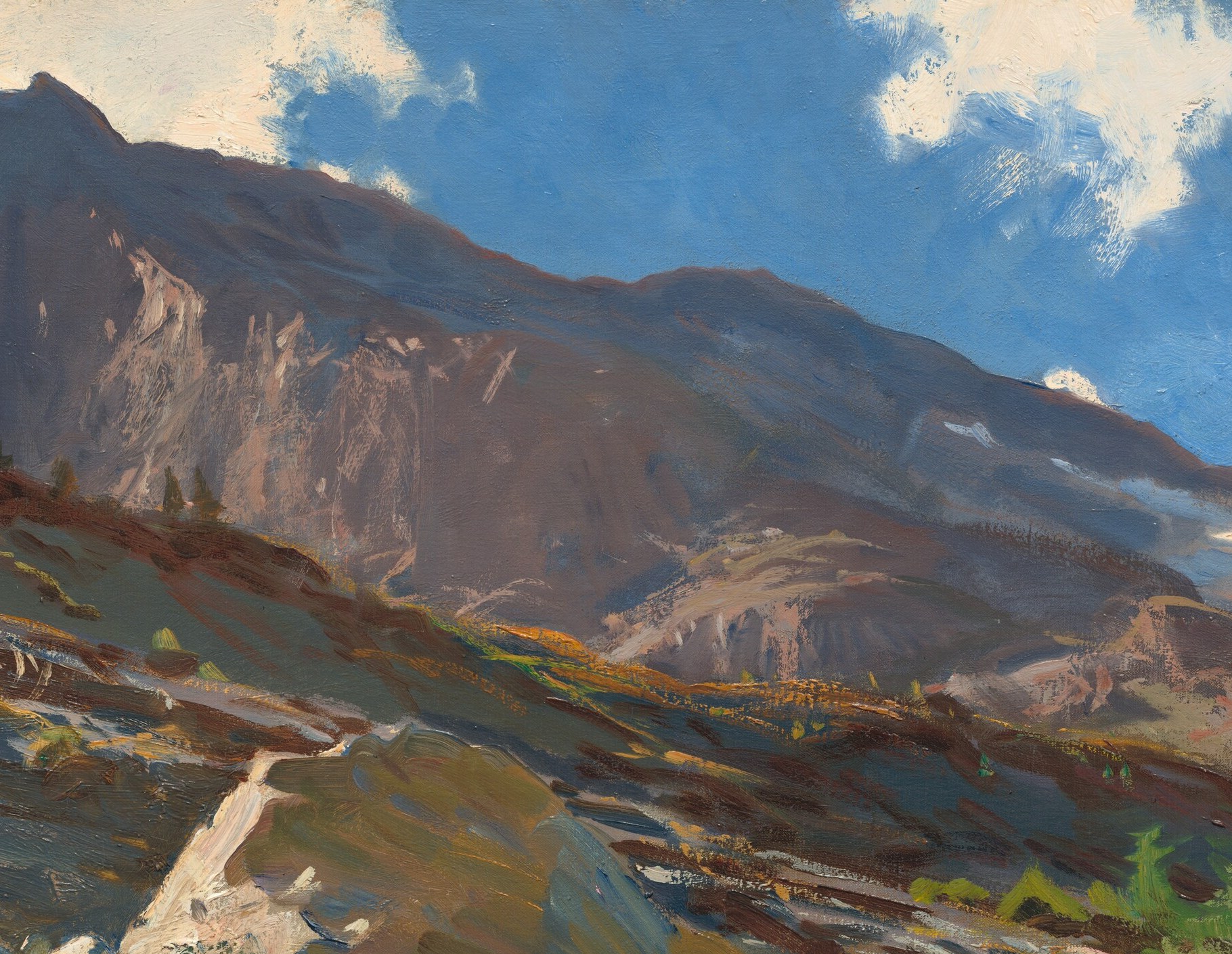
This is John Singer Sargent's 'Simplon Pass,' painted in 1911. After decades as the most sought-after portraitist of the Gilded Age, Sargent closed his studio and walked away from commissioned faces. He spent his later years chasing landscapes, and here in the Swiss Alps he painted the earth with the same eye he once reserved for silk and skin.
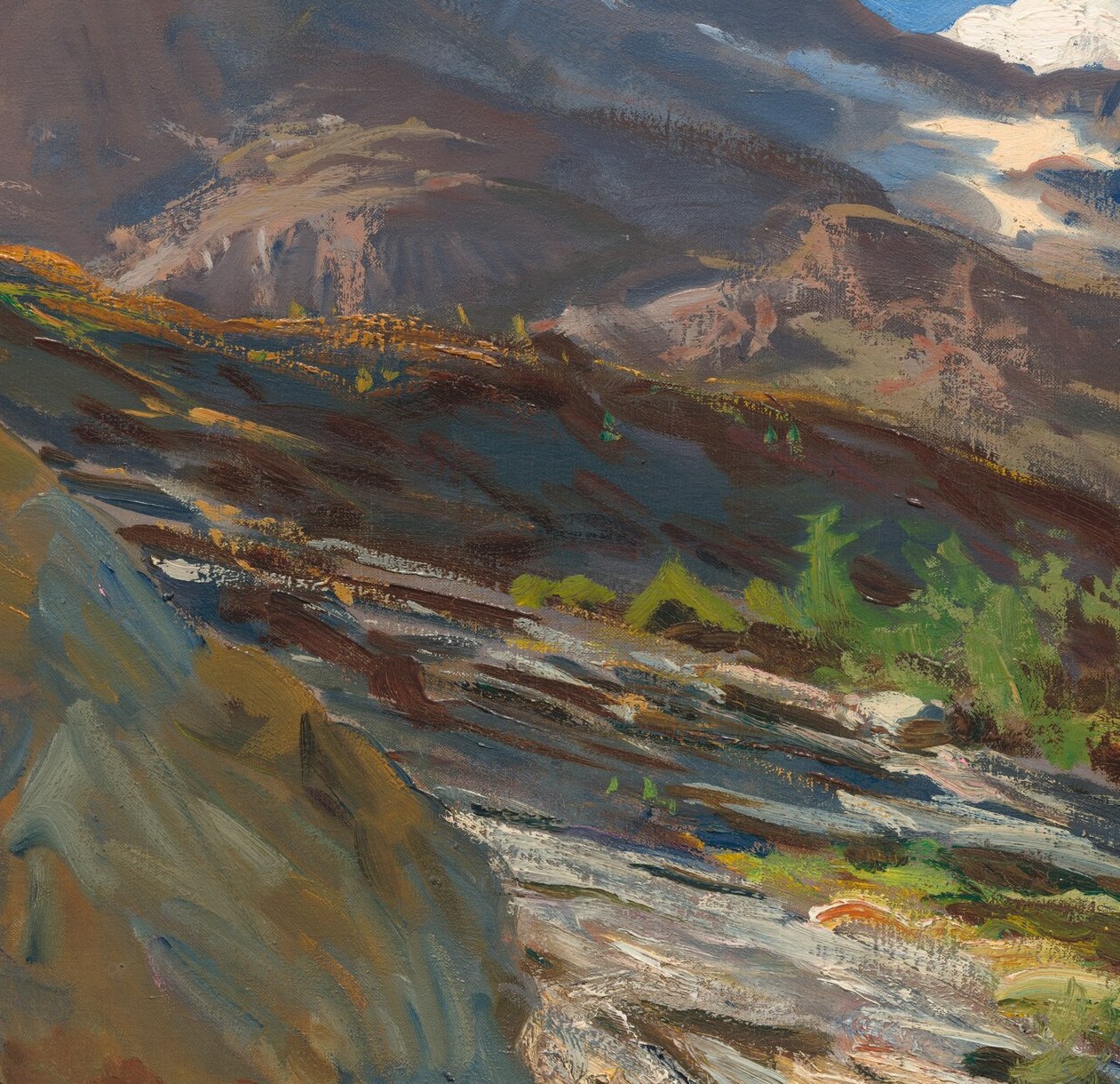
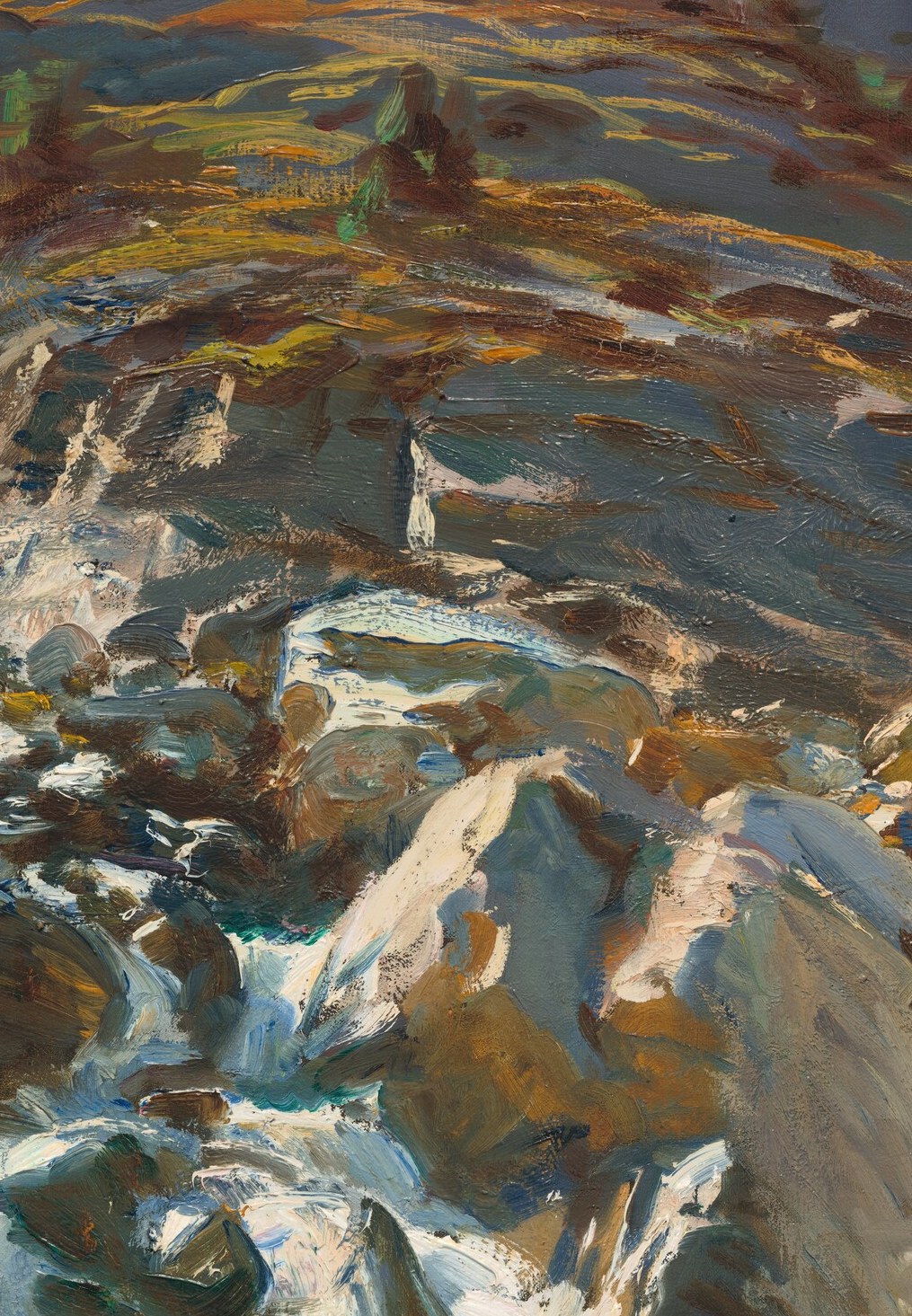
Find the tiny figure on the trail. Sargent reduced a human being to a single dark flick of the brush, then placed it against a wall of rock that fills the frame. That scale is not an accident. He chose a low vantage point specifically to make the mountain feel unkind. And look at the waterfall, the brightest white in the painting, where loaded brushstrokes turn water into motion.
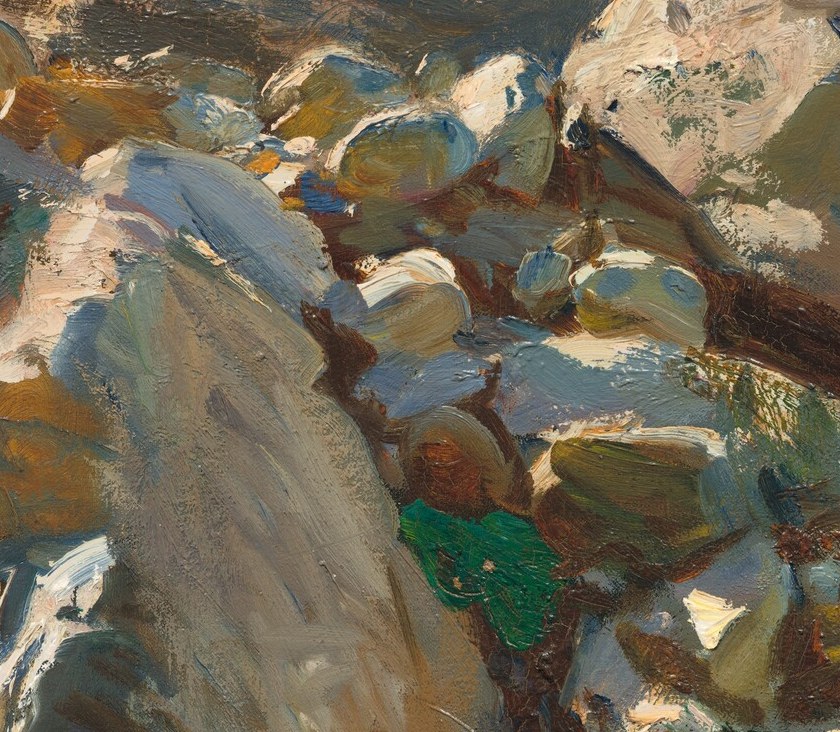
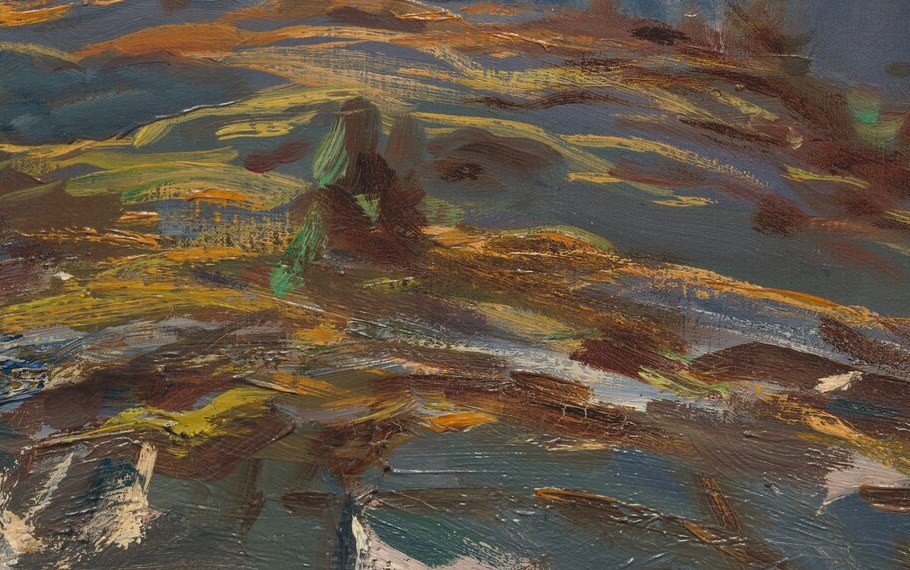
Sargent painted the Simplon Pass repeatedly. He crossed it on foot many times, often with his sister Emily, carrying his kit and looking for the exact angle where geology felt most alive. This version emphasizes structure: the cliffs are almost abstract slabs of umber, the foreground boulders built with thick, sculptural impasto. He was no longer trying to flatter a client. He was trying to catch the mountain off guard.
The figure on the path is barely there, but once you see it, the painting changes. It becomes a story about size, and solitude, and what it means to walk through a landscape that does not know you are there.
Details
Transcript
By 1911, he was tired of painting faces. John Singer Sargent fled society for the Alps. He painted the Simplon Pass like a portrait of the earth. Look for the human in the frame. A single brushstroke. A body. Dwarfed. He slashed the waterfall in with a palette knife.