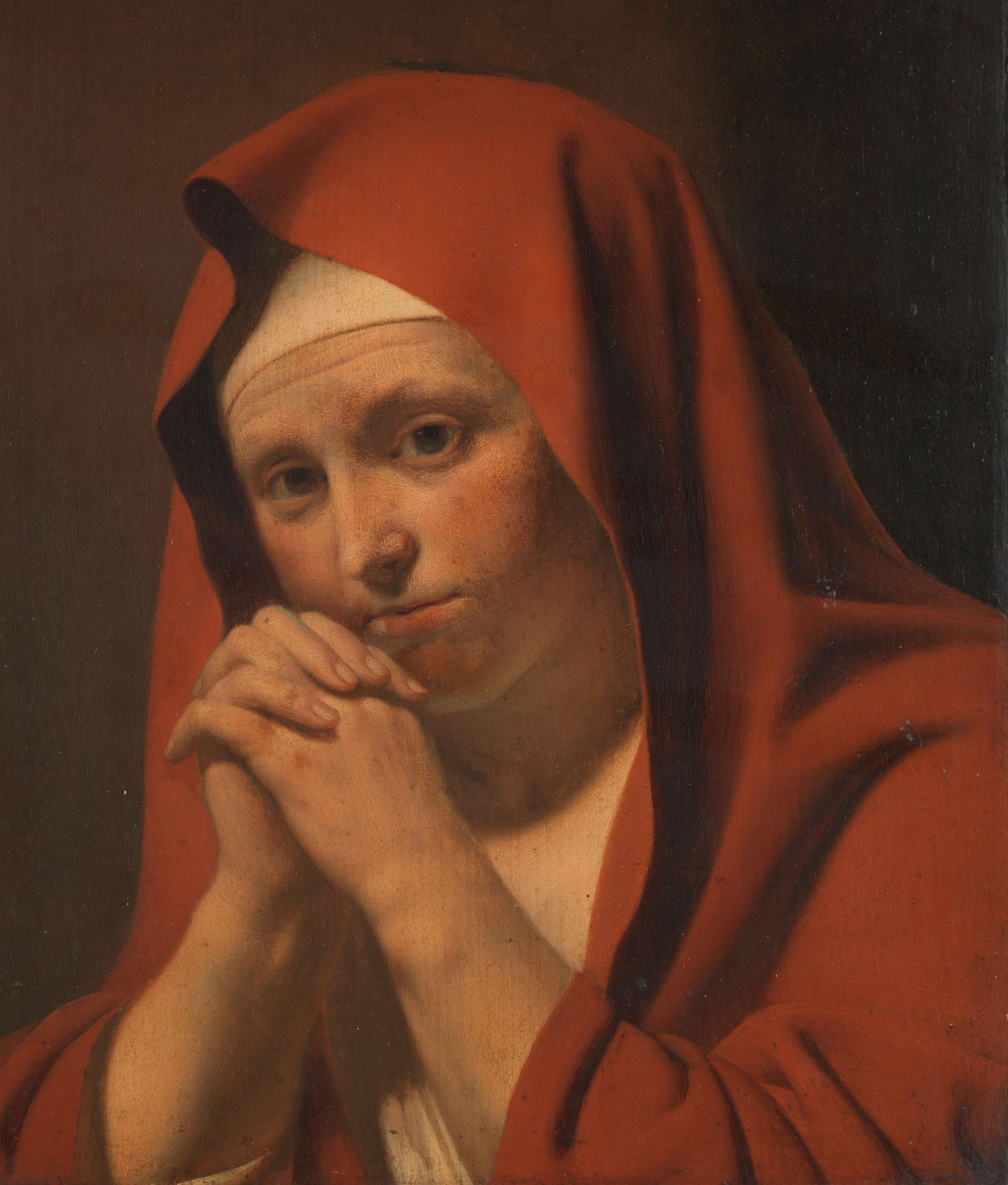
Woman praying by Caesar van Everdingen
Caesar van Everdingen's 'Woman Praying' (c. 1650) at the Rijksmuseum is a stunning example of chiaroscuro, the use of strong contrasts between light and dark.
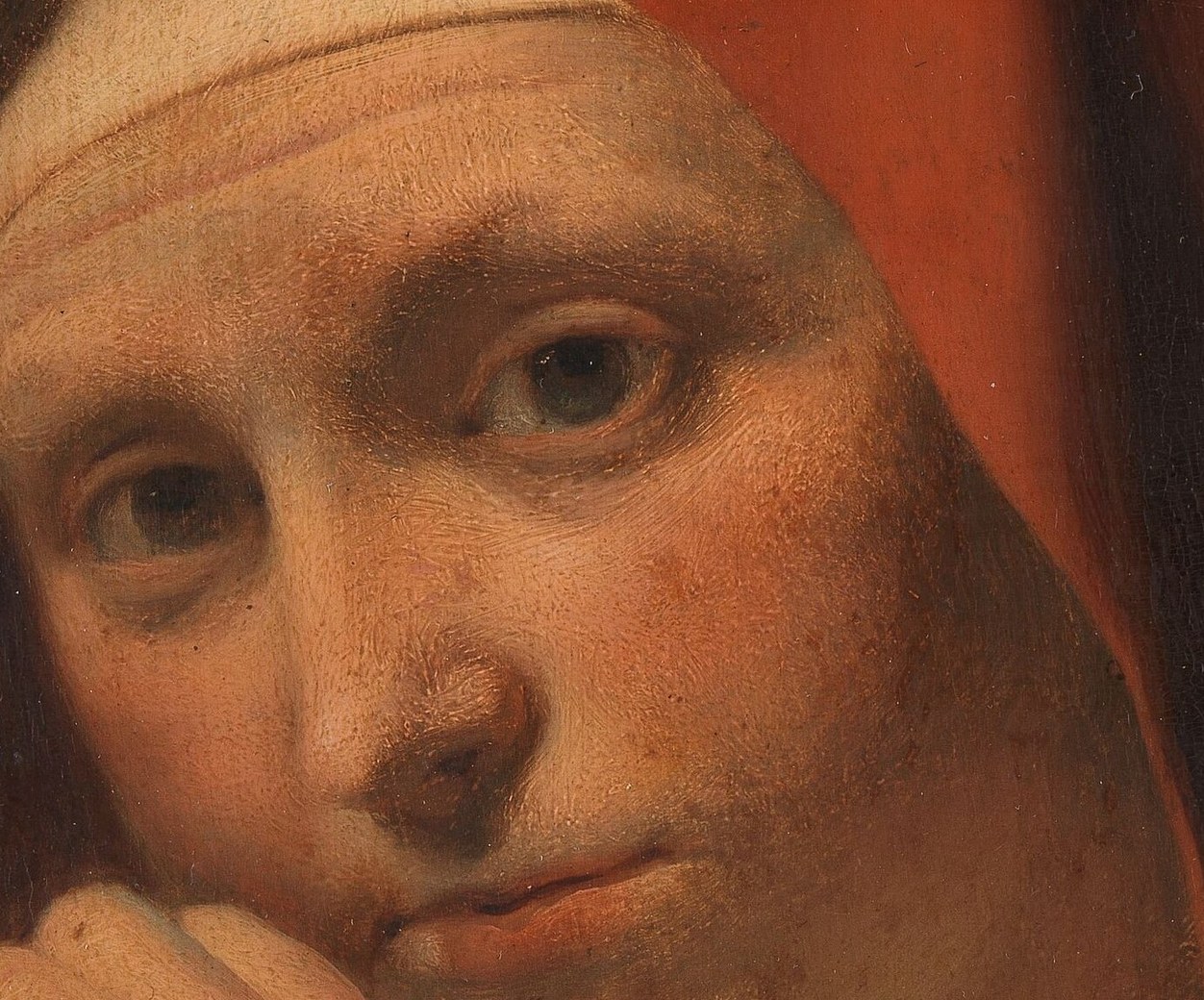
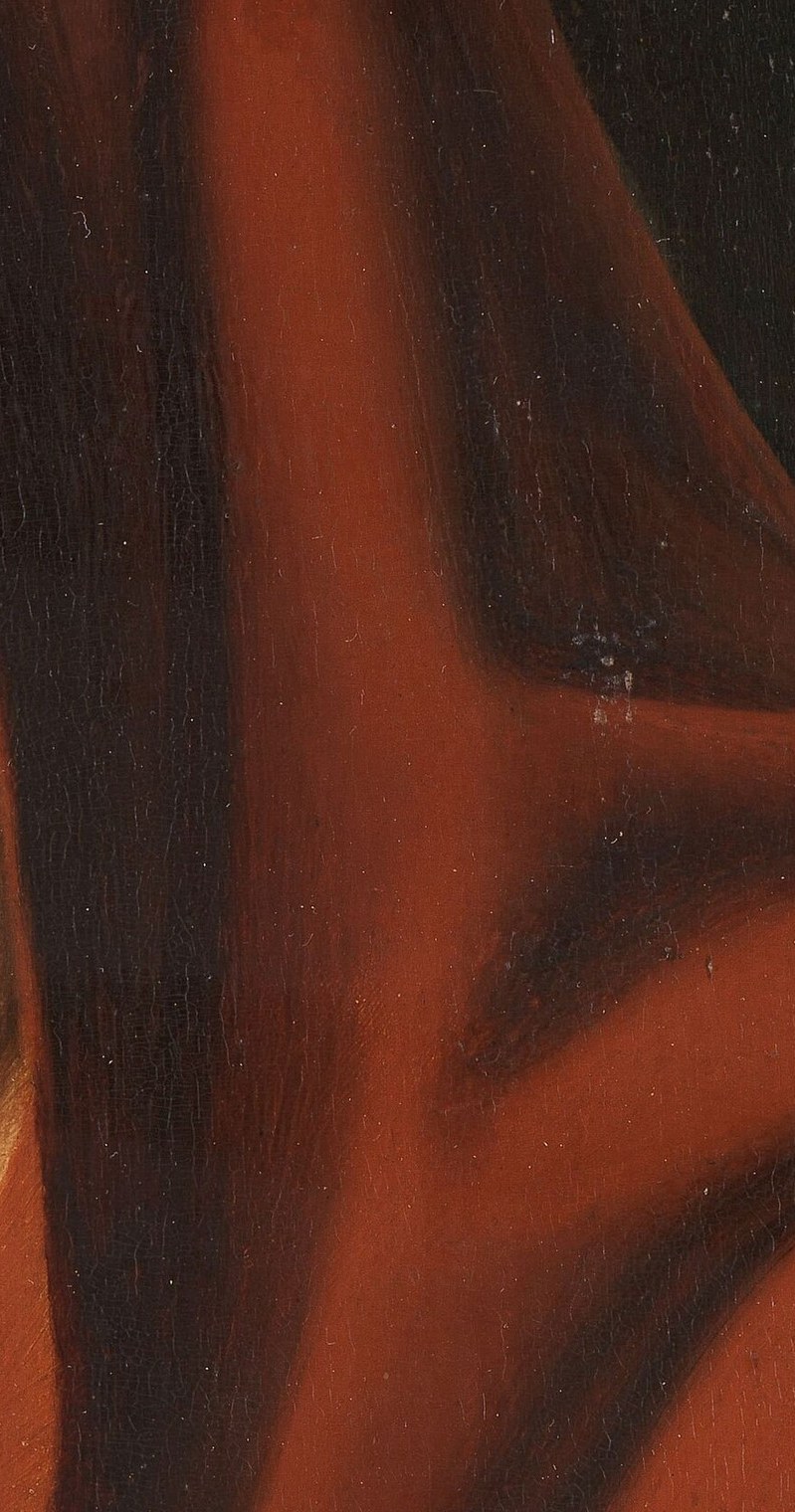
Notice how the artist expertly illuminates the woman's face and the rich folds of her red hood, while allowing the background to recede into shadow. This technique creates a powerful sense of three-dimensionality and intimacy, drawing the viewer into her private moment of devotion.
Van Everdingen, a Dutch Golden Age painter, used oil paint to achieve these subtle gradations of tone and soft modeling of features. While he is better known for his historical compositions, this portrait demonstrates his early skill in capturing individual piety and emotion.
The masterful control of light makes this painting feel incredibly present. What do you notice in the way the light falls?
Details
Transcript
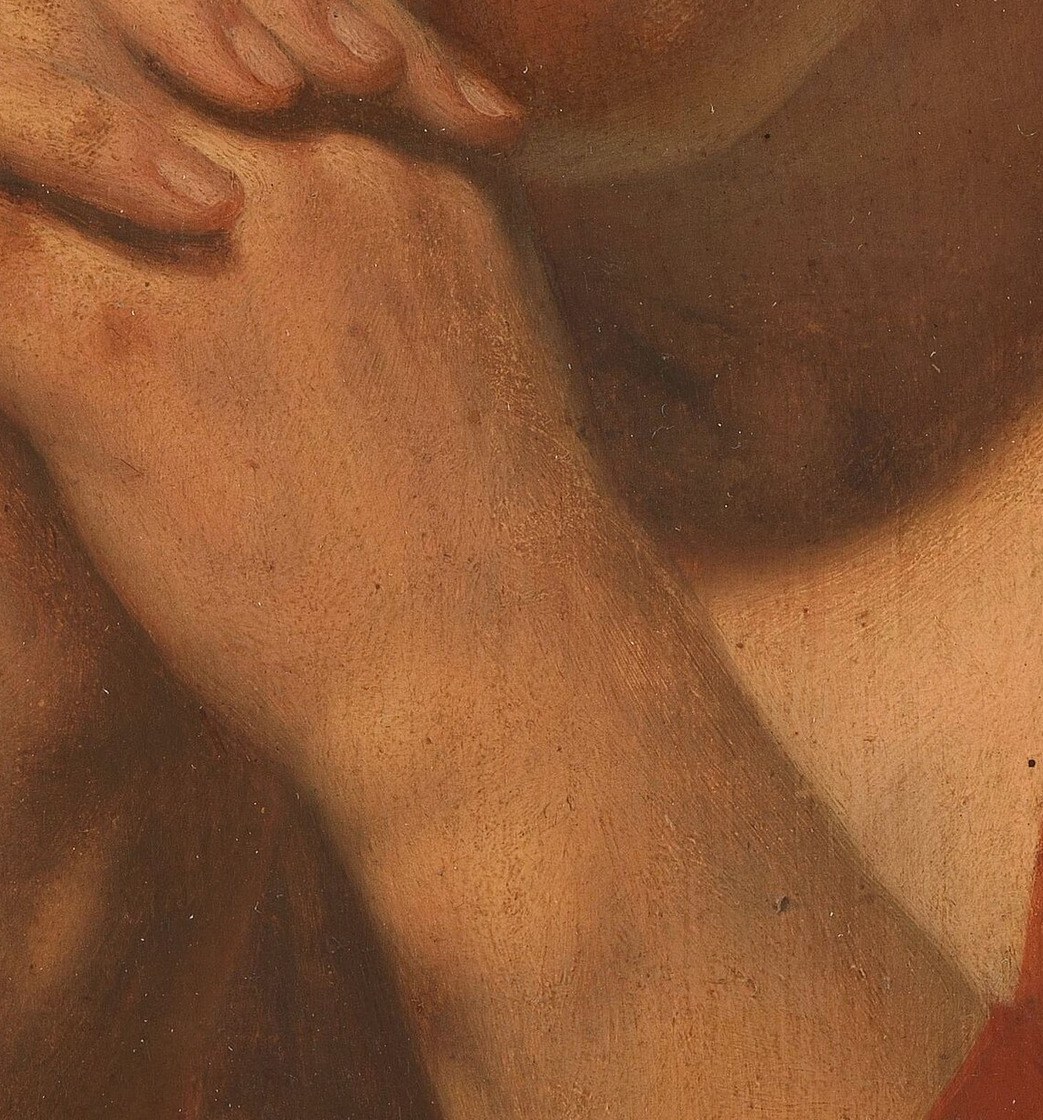
This painter was a master of light and shadow. See how light falls on her face, but not her eyes? A deep shadow under her chin creates real depth. The heavy red fabric catches light in dramatic folds. This masterful play of light gives her form and weight.