La Salle's Party Entering the Mississippi in Canoes. February 6, 1682 by Catlin, George
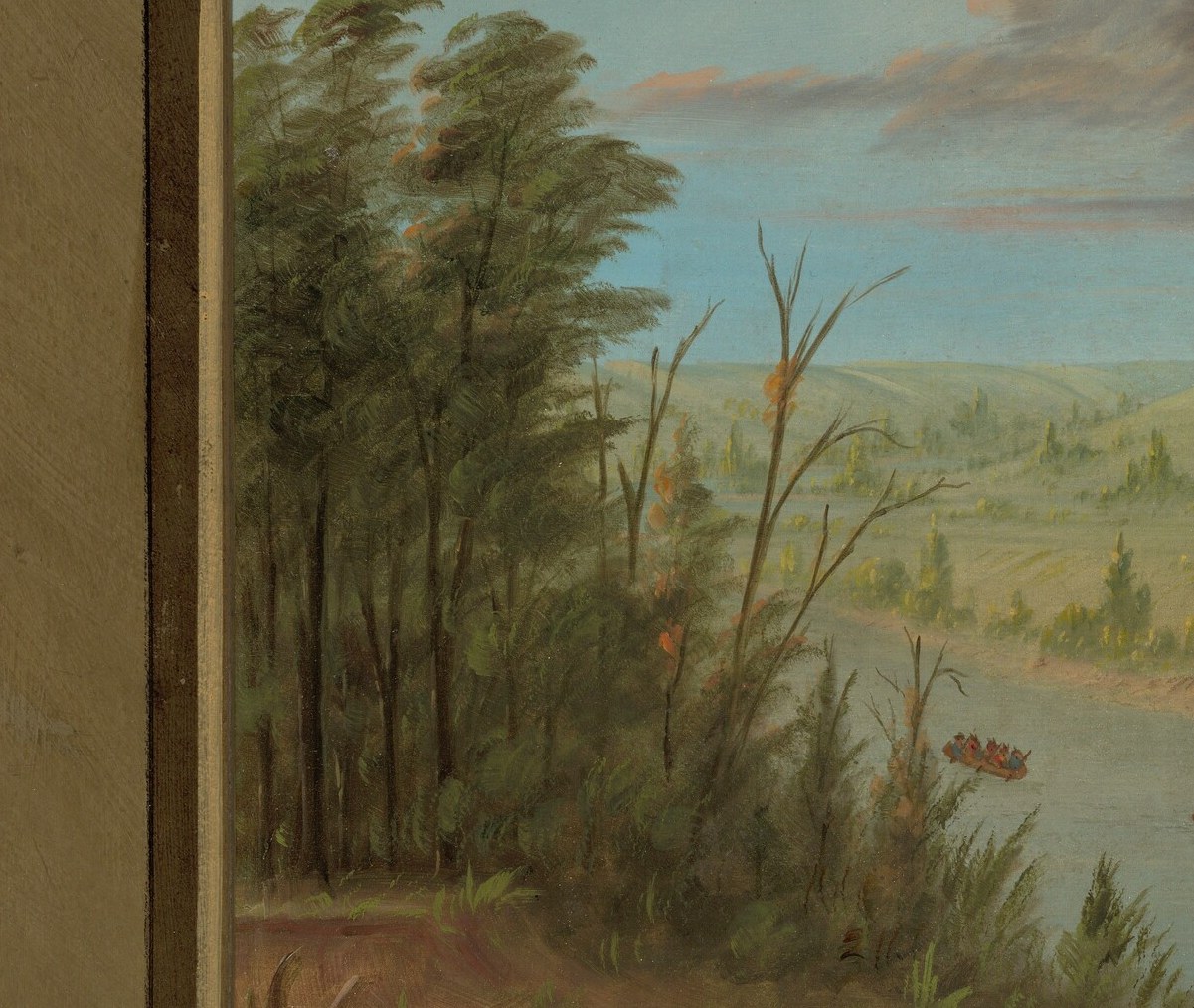
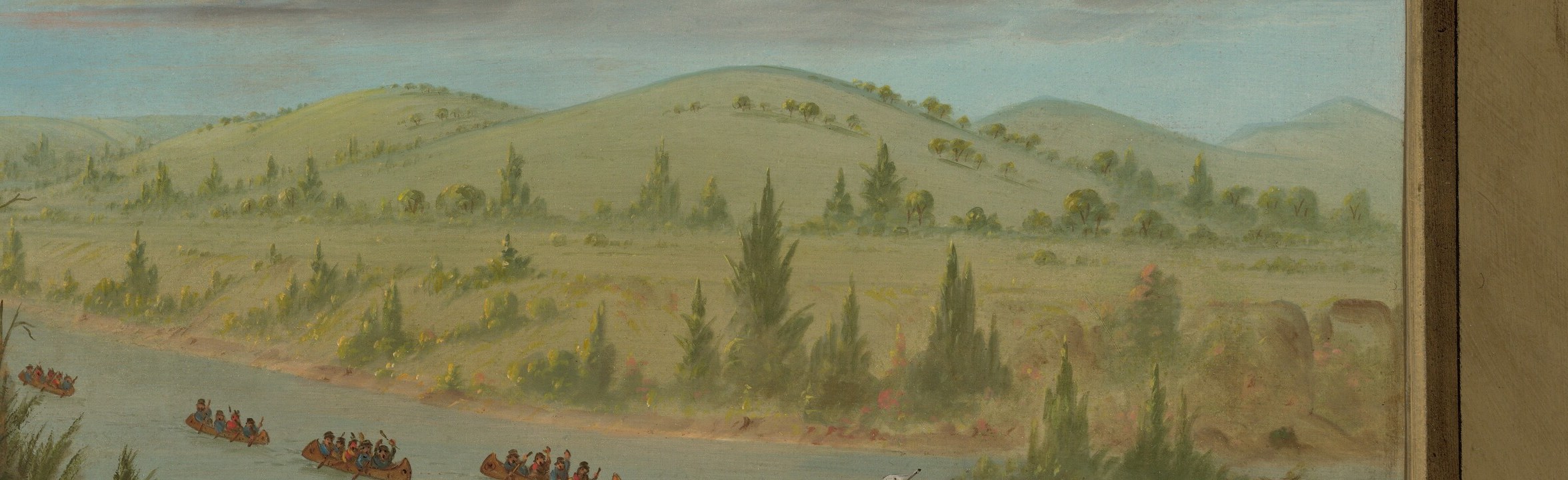
George Catlin's 1848 oil painting, "La Salle's Party Entering the Mississippi in Canoes. February 6, 1682," at the Smithsonian American Art Museum, captures a pivotal moment in early American exploration. Though painted long after the actual event, Catlin imagined the scene as a vast and untamed wilderness, full of natural details.
Look closely at the distant hills, and you'll spot a subtle herd of animals, hinting at the untouched landscape. In the foreground, a fallen log in the water reinforces the raw, natural environment that La Salle's expedition encountered.
Catlin, a lawyer-turned-painter, was known for documenting Plains Indian life and frontier landscapes. This historical work showcases his broader interest in the American continent's history and its indigenous inhabitants, blending historical accounts with his artistic interpretation.
It’s a powerful reconstruction, inviting us to reflect on the early encounters with North America's immense waterways.
Details
Transcript
This painting shows La Salle's expedition entering the Mississippi in 1682. George Catlin painted it in 1848, long after the event. He reimagined a vast, untamed American wilderness. But look closely at the distant hills. A herd of animals still roams free, untouched by man. And in the foreground, nature remains wild, raw.